Cosmic Collisions in the Early Universe May Explain the Rapid Emergence of Supermassive Black Holes and Mysterious Little Red Dots

The rapid emergence of gargantuan black holes in the infancy of the universe has long represented one of the most significant challenges to standard cosmological models. Conventional astrophysical theories dictate that black holes require billions of years of gradual accretion and mergers to reach "supermassive" status—those behemoths weighing millions or billions of times the mass of the sun. However, observations from the James Webb Space Telescope (JWST) have consistently identified these massive objects existing less than a billion years after the Big Bang, creating a "time crunch" that defies traditional formation timelines. New research published in The Astrophysical Journal on October 26 offers a compelling solution to this mystery, suggesting that high-frequency stellar collisions in the primordial, densely packed universe acted as a catalyst for the creation of massive black hole "seeds."
The Chronology of an Accelerated Universe
To understand the implications of these findings, one must consider the state of the universe during the Epoch of Reionization, roughly 400 million to one billion years after the Big Bang. During this period, the cosmos was not the structured, orderly expanse observed today. Instead, it was a chaotic environment characterized by extreme density and intense star-formation activity.
While the modern universe is dominated by spiral and elliptical galaxies with well-defined gravitational structures, the early universe was a collection of proto-galactic clusters. In these crowded regions, stars were packed together at densities far exceeding anything found in our local galactic neighborhood. Scientists have long hypothesized that these regions were the birthplaces of the first structures, but the specific mechanisms of how these regions produced "over-massive" objects remained elusive until now.
The Mechanism of Stellar Mergers
The research team, led by investigators from the University of California, Los Angeles (UCLA), utilized advanced numerical simulations to model the behavior of stars in these early, high-density environments. The simulations reveal a recurring pattern: stars in these crowded clusters were frequently subjected to close encounters.
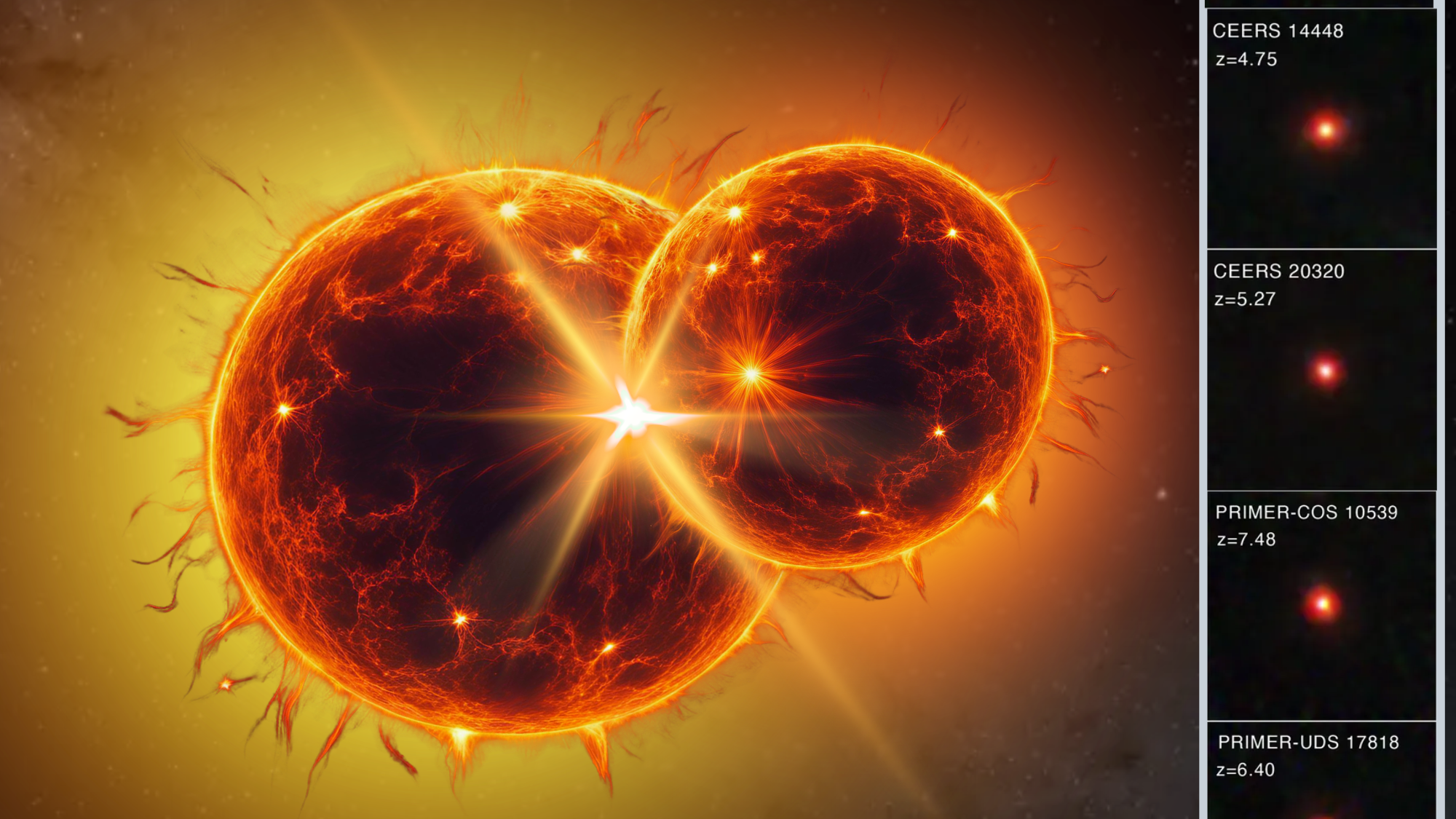
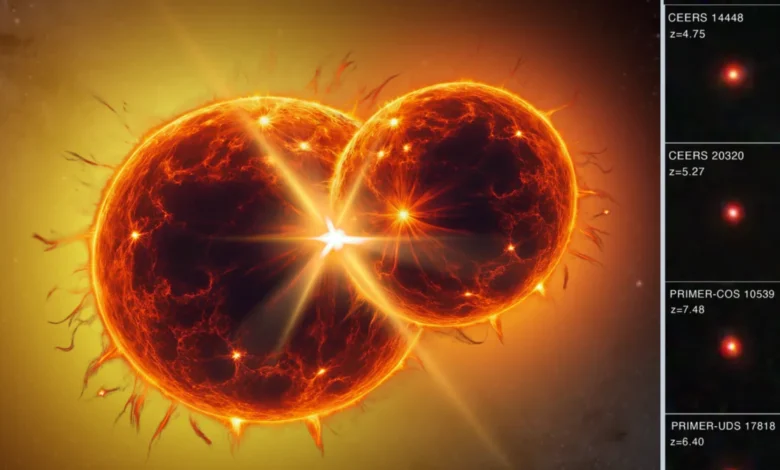
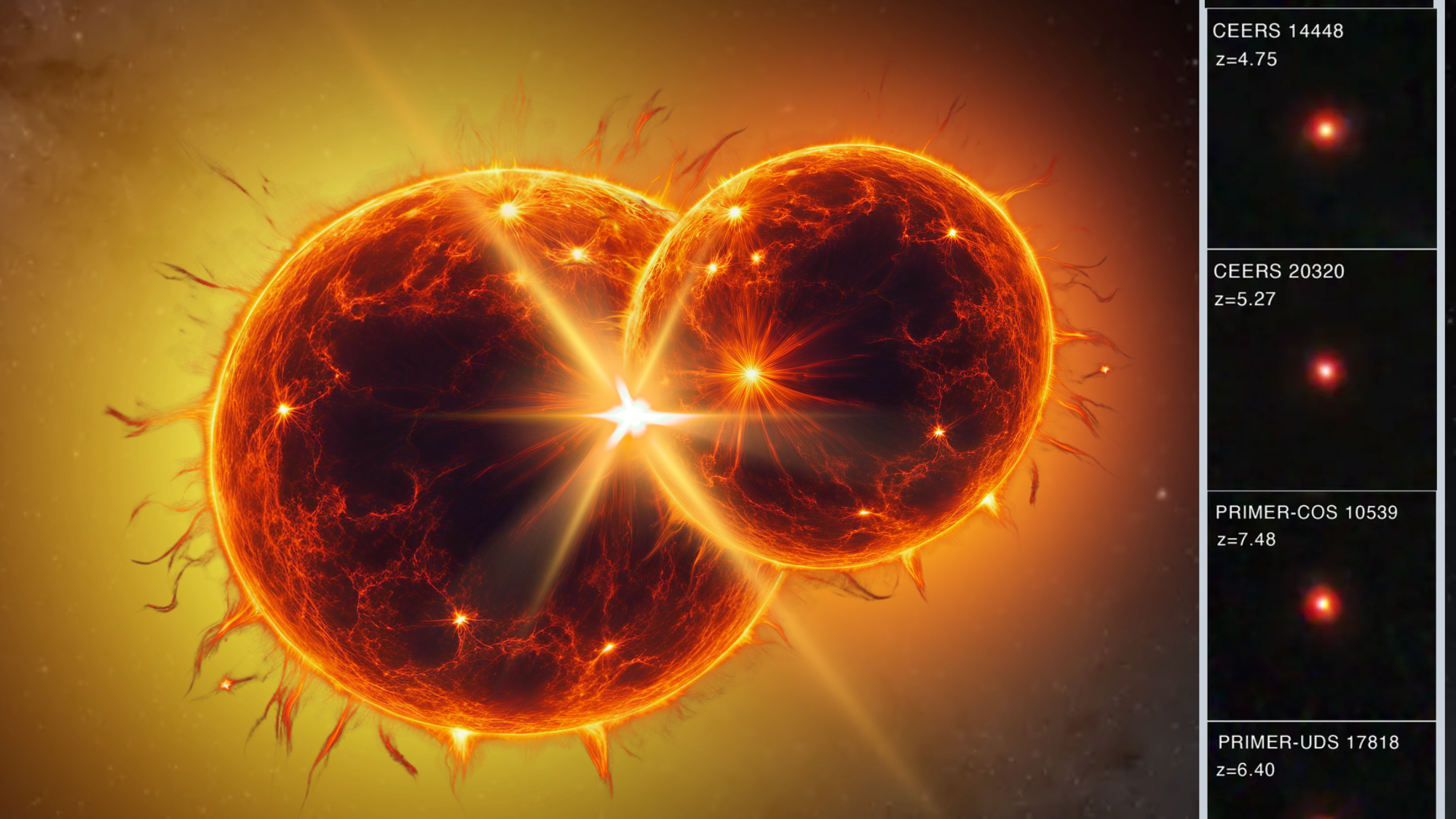
In the modern, mature universe, stellar collisions are rare and usually catastrophic, often resulting in the disruption of the stars involved. However, the conditions in the early universe allowed for a more "constructive" type of interaction. In cases where the relative velocities of the stars were sufficiently low, the gravitational attraction between them led not to destruction, but to repeated, stable mergers. These mergers effectively "fed" the stars, allowing them to grow into gargantuan, ultra-massive stellar entities.
When these stars reached the end of their lifecycle, they did not undergo the standard supernova process that typically leaves behind a modest stellar-mass black hole (10 to 100 times the mass of the sun). Instead, their immense mass necessitated a direct collapse into an intermediate-mass black hole, ranging from 100 to 100,000 solar masses. These objects serve as the perfect "seeds" that, when combined with later gas accretion, could rapidly grow into the supermassive black holes detected by the JWST.
Little Red Dots: Unmasking a Cosmic Enigma
The research also addresses the nature of the "Little Red Dots"—a class of compact, exceptionally bright, and mysterious objects identified by the JWST. These objects have perplexed the scientific community because of their strange spectral signatures and their apparent disappearance from the cosmic record after the universe reached two billion years of age.
"Little Red Dots are a hot topic in astronomy," noted UCLA researcher and team member Smadar Naoz. "You can compare studies of people trying to understand Little Red Dots to the tale of blind people who are trying to describe an elephant by touching it; each person describes it differently based on what part they are touching."
The team’s simulations suggest that these dots are essentially the physical manifestation of the dense, chaotic star clusters described in their model. The intense light observed by the JWST from these objects is likely the byproduct of the high-energy environment created by repeated stellar collisions and the subsequent formation of an intermediate-mass black hole at their centers.
The reason these objects "disappeared" by the two-billion-year mark is a consequence of the universe’s evolution. As the cosmos expanded and cooled, the gravitational dynamics within these clusters shifted. The extreme density required to fuel such frequent, constructive stellar mergers was no longer sustainable. As the clusters reached a state of relative equilibrium and transitioned into more stable galactic structures, the "Little Red Dot" phase ceased to exist.
Supporting Data and Theoretical Implications
The implications of this research are far-reaching. If intermediate-mass black holes are the natural result of dense stellar environments in the early universe, then the "missing link" in black hole evolution is solved.
Historically, astronomers have struggled to explain the gap between stellar-mass black holes and supermassive black holes. The intermediate-mass variety has been notoriously difficult to detect, often termed the "missing link" of black hole growth. By demonstrating that dense star clusters provide a natural incubator for these seeds, the study provides a robust framework that aligns with current JWST data.
Furthermore, the model addresses the feedback loops inherent in galaxy formation. A cluster that is dense enough to facilitate the birth of a massive black hole seed is also an environment rich in the gas and surrounding stars necessary to sustain the growth of that black hole. This "two-for-one" process—where the environment creates the seed and then provides the "food" for its subsequent expansion—accounts for the rapid maturation observed in early galactic centers.
The Role of Gravity in Modern Galactic Cores
A critical distinction highlighted in the study is why we do not observe this process in the modern universe. In the hearts of galaxies like our own Milky Way, there is already a supermassive black hole present. The immense gravitational pull of this central object accelerates surrounding stars to extremely high velocities.

In this high-velocity environment, any stellar collisions that do occur are violent and high-speed, leading to the destruction of the stars rather than the constructive mergers required to build massive seeds. Thus, the mechanism that built the early universe’s giants is effectively "turned off" in the modern era, as the presence of existing black holes prevents the formation of new, over-massive ones through this specific channel.
Expert Perspectives and Future Directions
The publication of these findings in The Astrophysical Journal provides a significant theoretical foundation for upcoming JWST observation cycles. By connecting the dots between stellar dynamics, black hole evolution, and the specific signatures of Little Red Dots, the researchers have provided a testable hypothesis that can be scrutinized against more detailed spectral data.
While the simulation results are compelling, the broader astronomical community continues to investigate other potential contributors to early black hole growth, such as direct gas collapse (Direct Collapse Black Holes, or DCBHs). The current study does not necessarily negate these theories but adds a new, vital layer to the understanding of how the early universe "jump-started" its most massive objects.
The research underscores a fundamental shift in how we perceive the early cosmos: rather than viewing it as a place of static evolution, we must view it as a highly dynamic, collision-prone laboratory. The extreme density of these early star-forming regions acted as a cosmic forge, hammering together the materials necessary to seed the massive gravitational anchors that define the galaxies we inhabit today. As further observations continue to push back the frontiers of the observable universe, these findings offer a clearer picture of how the first billion years of cosmic history set the stage for the rest of time.