JetBlue Becomes the First U.S. Carrier to Raise Baggage Fees Twice in 2026 Amid Surging Fuel Costs

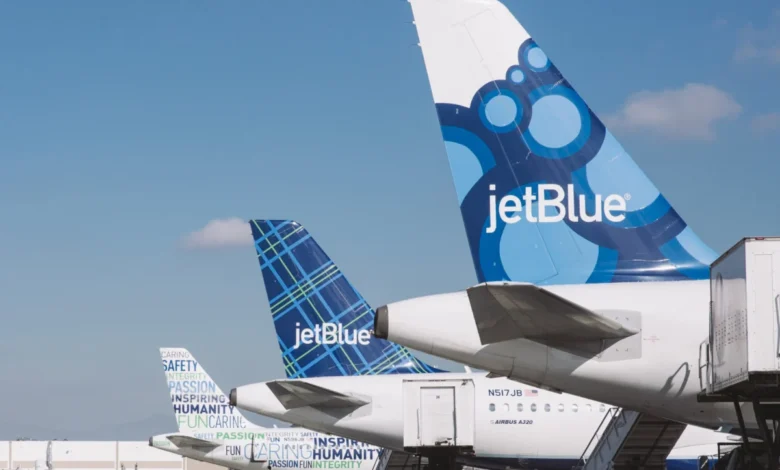
JetBlue Airways has announced another upward adjustment to its checked baggage fees, cementing its position as the first major U.S. carrier to hike luggage prices twice within a single calendar year. The latest pricing structure highlights the mounting financial pressures facing the aviation sector, driven largely by volatile and surging jet fuel prices that continue to erode carrier profitability across the domestic market.
Under the revised policy, economy passengers checking a bag more than 24 hours prior to departure will now pay $50, an increase from the previous rate of $45. For travelers who wait until within 24 hours of departure to check their bags, the fee climbs further to $60. Furthermore, during designated peak travel periods—historically associated with high-demand holidays and summer weekends—standard checked bag fees will rise to $55, up from $49. Passengers checking a bag within 24 hours of a peak-period flight will face an even steeper charge of $70.
This aggressive pricing update underscores the delicate economic balancing act airlines must perform as operating costs escalate. Ancillary fees, long viewed as a reliable revenue stream for low-cost and legacy carriers alike, are increasingly being leveraged to offset macroeconomic headwinds that threaten to wipe out corporate earnings.
A Closer Look at the New Fee Structure
The tiered nature of JetBlue’s baggage fees reflects an ongoing industry trend toward dynamic, behavior-based pricing designed to encourage pre-trip planning and streamline airport operations. By penalizing last-minute bag declarations, airlines attempt to mitigate bottlenecks at check-in counters and baggage drop kiosks.
To understand the scope of the latest increase, a granular breakdown of the updated policy reveals:
- Standard Advance Check (More than 24 hours before departure): Increased from $45 to $50.
- Standard Last-Minute Check (Within 24 hours of departure): Set at $60.
- Peak Period Advance Check: Increased from $49 to $55.
- Peak Period Last-Minute Check: Reaches a high of $70.
These changes apply directly to economy-tier passengers who do not hold elite status in JetBlue’s TrueBlue loyalty program, hold qualifying co-branded credit cards, or purchase higher-fare ticket classes that include complimentary checked baggage allowances.
The Macroeconomic Catalyst: Surging Fuel Costs
The primary driver behind JetBlue’s consecutive fee hikes in 2026 is the persistent volatility and upward trajectory of global energy markets. Jet fuel represents one of the single largest variable operating expenses for commercial airlines, often rivaling or exceeding labor costs depending on the quarter.

Throughout 2026, geopolitical tensions, supply chain disruptions, and shifting crude oil production outputs have combined to keep jet fuel prices elevated. When fuel expenditures spike unexpectedly, airlines frequently find themselves forced to either absorb the costs—thereby risking quarterly losses—or pass the financial burden onto consumers through higher base fares and ancillary fees.
Because domestic airfares are notoriously sensitive to consumer demand and heavily scrutinized by price-conscious travelers via online aggregators, carriers often find it difficult to raise base ticket prices without sacrificing passenger volume. Consequently, ancillary fees such as baggage charges, seat selection fees, and priority boarding have emerged as the primary valve for releasing financial pressure.
Historical Context of Airline Baggage Fees
To fully appreciate the significance of JetBlue’s recent move, it is instructive to examine how ancillary fees have evolved within the United States commercial aviation landscape over the past two decades.
Prior to 2008, checking one or even two bags was standard practice included in the price of an economy ticket across nearly all major U.S. carriers. However, following the 2008 global financial crisis and an unprecedented spike in crude oil prices—where oil approached $150 per barrel—American Airlines became the first legacy carrier to introduce a fee for the first checked bag on domestic flights.
Other airlines quickly followed suit, transforming what was once a complimentary service into a multi-billion-dollar ancillary revenue engine. Over the subsequent years, fees steadily crept upward from $15 to $25, then to $30, and eventually past the $40 threshold by the mid-2020s.
JetBlue, which historically marketed itself as a more consumer-friendly alternative with its "Even More Space" legroom and free snacks, gradually aligned its business model with industry standards as competition intensified and profit margins narrowed. The decision to raise fees twice in a single year, however, marks a distinct acceleration of this historical trend, signaling a potentially tougher economic environment than previous post-crisis recovery periods.
Industry Implications and Competitor Reactions
JetBlue’s status as the first U.S. airline to implement two separate baggage fee increases in 2026 places intense scrutiny on its competitors. Major network carriers such as Delta Air Lines, United Airlines, and American Airlines, as well as fellow low-cost and ultra-low-cost competitors like Southwest Airlines, Spirit Airlines, and Frontier Airlines, will be closely monitoring consumer reaction and financial yields.
Historically, when one major carrier successfully implements a fee increase without suffering a catastrophic loss in market share, competing airlines frequently follow suit within weeks. If fuel prices remain stubbornly high, industry analysts widely anticipate that Delta, United, and American may announce comparable adjustments to their own checked luggage policies to protect their operating margins heading into the final quarters of the fiscal year.

Conversely, airlines with distinct business models face different strategic calculations. Southwest Airlines, long distinguished by its "Bags Fly Free" policy allowing two checked bags per passenger, has faced mounting investor pressure to reevaluate its ancillary revenue strategies amid rising operational costs. While leadership has historically defended the policy as a cornerstone of the airline’s brand identity, the broader macroeconomic climate continues to test the limits of traditional passenger perks.
Consumer Advocacy and Public Reception
The continuous escalation of baggage fees has predictably drawn criticism from consumer advocacy groups and frequent flyers alike. Critics argue that ancillary fees obfuscate the true cost of air travel, making it difficult for consumers to accurately compare ticket prices during the booking process.
Consumer watchdogs point out that when mandatory taxes, seat selection fees, and baggage charges are factored into a standard economy ticket, the final cost of travel can increase significantly above the advertised base fare. Furthermore, the penalty structure for last-minute bag checks disproportionately affects travelers facing unexpected schedule changes, family emergencies, or business trip alterations.
In response to public friction, airlines consistently defend the fees by emphasizing that they allow price-sensitive travelers to customize their itineraries and only pay for the specific services they use. Under this argument, a passenger traveling light with only a personal item avoids subsidizing the baggage handling costs of fellow travelers.
Financial Analysis and Outlook for JetBlue
For JetBlue, the double fee increase is a calculated maneuver aimed at stabilizing its balance sheet. The carrier has been navigating a complex operational turnaround, marked by network optimization, fleet harmonization around its all-Airbus narrowbody configuration, and a renewed focus on profitable core routes following the blocked merger with Spirit Airlines.
Financial analysts note that while ancillary revenue is vital for offsetting fuel volatility, excessive fee hikes carry a reputational risk. If customer satisfaction metrics decline or passengers defect to competitors maintaining lower baggage rates, the short-term revenue gains from increased fees could be offset by long-term passenger attrition.
Nevertheless, in an era where airline profitability is increasingly dictated by external commodity markets rather than purely operational efficiency, carriers have limited strategic options. JetBlue’s pioneering move in late 2026 serves as a bellwether for the broader aviation industry, illustrating the profound challenges of maintaining financial viability in a high-cost operating environment.
As the industry moves forward, the success or failure of JetBlue’s updated baggage fee structure will likely dictate whether other domestic carriers adopt a similar aggressive stance on ancillary pricing, fundamentally reshaping the financial economics of modern air travel for the American consumer.
Related posts: