Byron Allen Executes Strategic Exit from Starz Stake Realizing Nearly 80 Percent Return on Investment

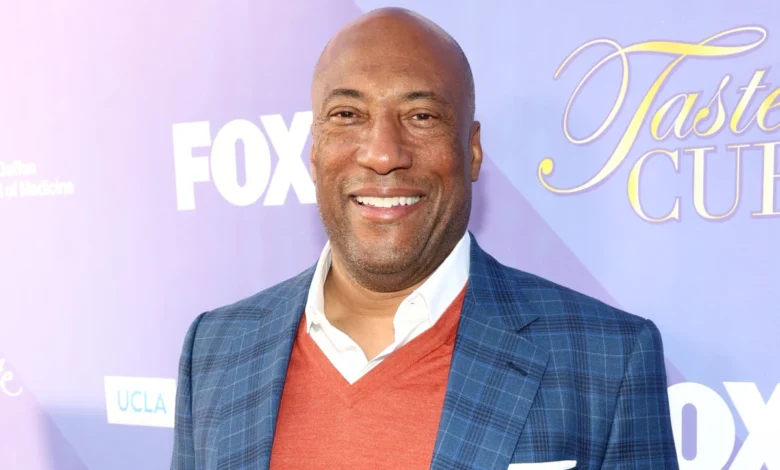
Investor and media entrepreneur Byron Allen has officially concluded his brief but highly profitable venture into Starz equity, divesting his entire 1.8 million-share position over the course of August and September 2026. The transaction, confirmed by SEC filings released this past Thursday, marks the culmination of a high-stakes trade that saw the Allen Family Capital investment arm exit its position with a total windfall of $44.9 million. This figure represents a gain of approximately $19.9 million over the initial $25 million investment, reflecting a return on investment of nearly 80 percent in just over six months.
The divestment strategy mirrors the classic "buy low, sell high" philosophy, cementing Allen’s reputation as a shrewd opportunist in the media and entertainment landscape. By offloading his 10.7% stake—originally acquired from former Treasury Secretary and Hollywood producer Steve Mnuchin’s Liberty 77 Capital—Allen has managed to extract significant value from a company that has spent the better part of 2026 navigating the turbulent waters of the post-Lionsgate separation.
A Chronology of the Starz Acquisition and Divestiture
The trajectory of this investment began in March 2026, when Allen Family Capital initiated a private transaction to purchase a 10.7% stake in Starz from Mnuchin’s investment vehicle. At the time, the move was viewed by industry analysts as a strategic bet on the long-term viability of mid-sized streaming platforms, even as Starz struggled with the structural challenges of standing on its own following its spin-off from the film and television powerhouse Lionsgate.
The timeline of the investment is as follows:
- March 2026: Allen Family Capital secures a 10.7% stake in Starz through a private deal with Liberty 77 Capital for $25 million.
- April–July 2026: Starz undergoes operational restructuring, aiming to stabilize its streaming subscriber base and refine its content production costs.
- August 2026: Allen begins a systematic liquidation of his position as market conditions for media stocks show modest signs of volatility.
- September 2026: The final tranches of the 1.8 million shares are sold, completing the exit.
- October 2026: SEC filings are processed, officially documenting the $44.9 million total return.
This rapid turnaround suggests that Allen’s intent was likely not long-term institutional stewardship, but rather a calculated short-to-medium-term play based on the perceived undervaluation of Starz assets during the early months of the year.
Financial Performance and Market Context
The timing of Allen’s exit coincides with the release of Starz’s third-quarter 2026 earnings report, which was published on the same day the SEC filings were made public. The report provides a granular look at the company’s health, revealing a mixed bag of results that likely influenced the broader market appetite for the stock.
Starz reported a narrowed net loss of $34.8 million for the quarter, an improvement over the $52.6 million net loss recorded in the same period a year prior. While the bottom-line improvement is a positive signal for shareholders, the company’s top-line growth remains stagnant. Overall revenue remained flat at $322.4 million, underscoring the difficulties faced by legacy premium cable brands attempting to pivot entirely toward the streaming model.
Despite the flat top-line performance, streaming revenue grew by 1.7% year-over-year to $226.6 million. This growth, while incremental, highlights that Starz is successfully migrating its audience to digital platforms, though the rate of acquisition is not yet sufficient to achieve a rapid, transformative impact on the company’s market valuation. The contrast between Allen’s exit and the company’s modest operational progress suggests a disconnect between the investor’s tactical financial goals and the company’s long-term organic growth strategy.
The Broader Portfolio of Allen Media Group
Byron Allen’s activities in the Starz market are but one facet of his rapidly expanding media empire, Allen Media Group (AMG). As the chairman and CEO, Allen has been one of the most aggressive acquirers in the media sector, overseeing a portfolio that includes 13 broadcast television stations and 10 networks, most notably The Weather Channel.
The divestiture from Starz provides Allen with significant liquid capital that could be redeployed into other high-profile ventures currently under the AMG umbrella. Chief among these is his recent acquisition of a controlling 51% stake in BuzzFeed, a deal that has been characterized by significant internal friction and organizational restructuring.
In that transaction, Allen paid $20 million in cash at closing, supplemented by a $100 million promissory note due within five years, bearing a 5% annual interest rate. The acquisition was immediately followed by a period of severe cost-cutting. In July 2026, BuzzFeed implemented a workforce reduction affecting 35% of its staff—roughly 180 employees—across its HuffPost and Tasty divisions. The influx of cash from the Starz exit provides a cushion for Allen to continue the difficult process of integrating BuzzFeed into his existing media ecosystem while managing the debt obligations associated with the purchase.
Cultural and Media Influence: The CBS Comedy Block
Beyond his corporate acquisitions, Allen has continued to assert his influence in the content production space. Demonstrating his versatility as both a businessman and a media personality, the former standup comedian has successfully secured a two-hour nightly comedy block on CBS.
This prime-time programming shift involved taking over the time slot historically occupied by the late-night staple "Late Night With Stephen Colbert." The new lineup features "Comics Unleashed With Byron Allen," followed by the light-hearted game show "Funny You Should Ask." This move into traditional broadcast late-night, a space dominated for decades by entrenched talk show formats, represents a unique strategic pivot for Allen, leveraging his own production house to provide cost-effective, high-volume content directly to a major network audience.
Implications of the Starz Exit
The implications of Allen’s exit from Starz are multi-fold. For Starz, the departure of a major stakeholder like Allen, while not necessarily damaging to daily operations, signals a lack of long-term conviction from a high-profile media investor. It forces the company to look toward other institutional investors to provide the stability required to compete in the hyper-saturated streaming landscape.
For Allen, the transaction serves as a validation of his capital allocation strategy. In an era where media stocks are often viewed with skepticism due to the "streaming wars" and the erosion of linear cable revenue, Allen has proven that substantial returns can still be generated through opportunistic trading. However, the contrast between the quick profit from Starz and the long-term, high-labor, and high-risk integration of BuzzFeed suggests that Allen is balancing two distinct strategies: one based on financial engineering and the other on operational turnaround.
Industry analysts will be watching closely to see where the $44.9 million in proceeds from the Starz sale is directed. Given the current economic climate, where interest rates remain a factor in the viability of large-scale media debt, the reinvestment of these funds will likely signal Allen’s next major target. Whether he chooses to shore up the balance sheets of his current acquisitions—such as the struggling BuzzFeed divisions—or seeks out a new, undervalued media asset, the move will undoubtedly reflect his ongoing commitment to aggressive growth.
Furthermore, the exit provides a cautionary note to investors tracking the post-Lionsgate landscape. While Starz has successfully reduced its net losses, the flat revenue trajectory remains a hurdle. Allen’s departure at this specific juncture—immediately following a quarter where the company showed progress in narrowing losses—might be interpreted as an indication that he believes the "low-hanging fruit" of the company’s recovery has already been picked. As Starz moves forward, it will need to demonstrate that it can generate sustainable, organic revenue growth to attract the next wave of institutional investment, independent of the volatility associated with individual opportunistic traders.
Ultimately, Byron Allen’s journey with Starz—from the acquisition in March to the final sale in September—highlights the fluid and high-stakes nature of modern media ownership. It is a reminder that in the current climate, media assets are frequently treated as tactical instruments rather than legacy holdings, subject to the rapid shifts of the market and the strategic maneuvering of those who lead them.