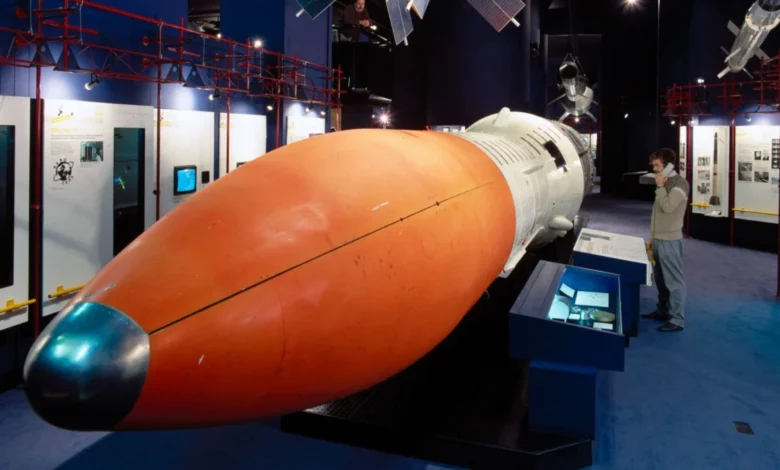
On October 28, 1971, the United Kingdom achieved a singular milestone in the history of global space exploration when it launched its first and only satellite using a domestically developed carrier rocket. The mission, which carried the Prospero satellite—also designated as the X-3—into orbit from the Woomera Range Complex in Australia, remains the definitive moment for British sovereign launch capability. While the United Kingdom had previously placed satellites into orbit, those six prior missions were facilitated entirely through collaborations with the United States and utilized American NASA launch vehicles. The launch of Prospero on the Black Arrow rocket marked a brief, albeit significant, era in which Britain operated as a fully independent spacefaring nation.
The Genesis of the Black Arrow Program
The development of the Black Arrow rocket was rooted in the post-World War II push for aerospace dominance. During the 1960s, the United Kingdom’s Ministry of Aviation and the Royal Aircraft Establishment (RAE) sought to establish a reliable method for placing small scientific satellites into low Earth orbit (LEO). The resulting Black Arrow vehicle was a three-stage, kerosene-and-hydrogen-peroxide-fueled rocket. Standing roughly 13 meters tall, it was an evolution of the earlier Black Knight research rocket, which had been used extensively for high-altitude ballistic trajectory testing.
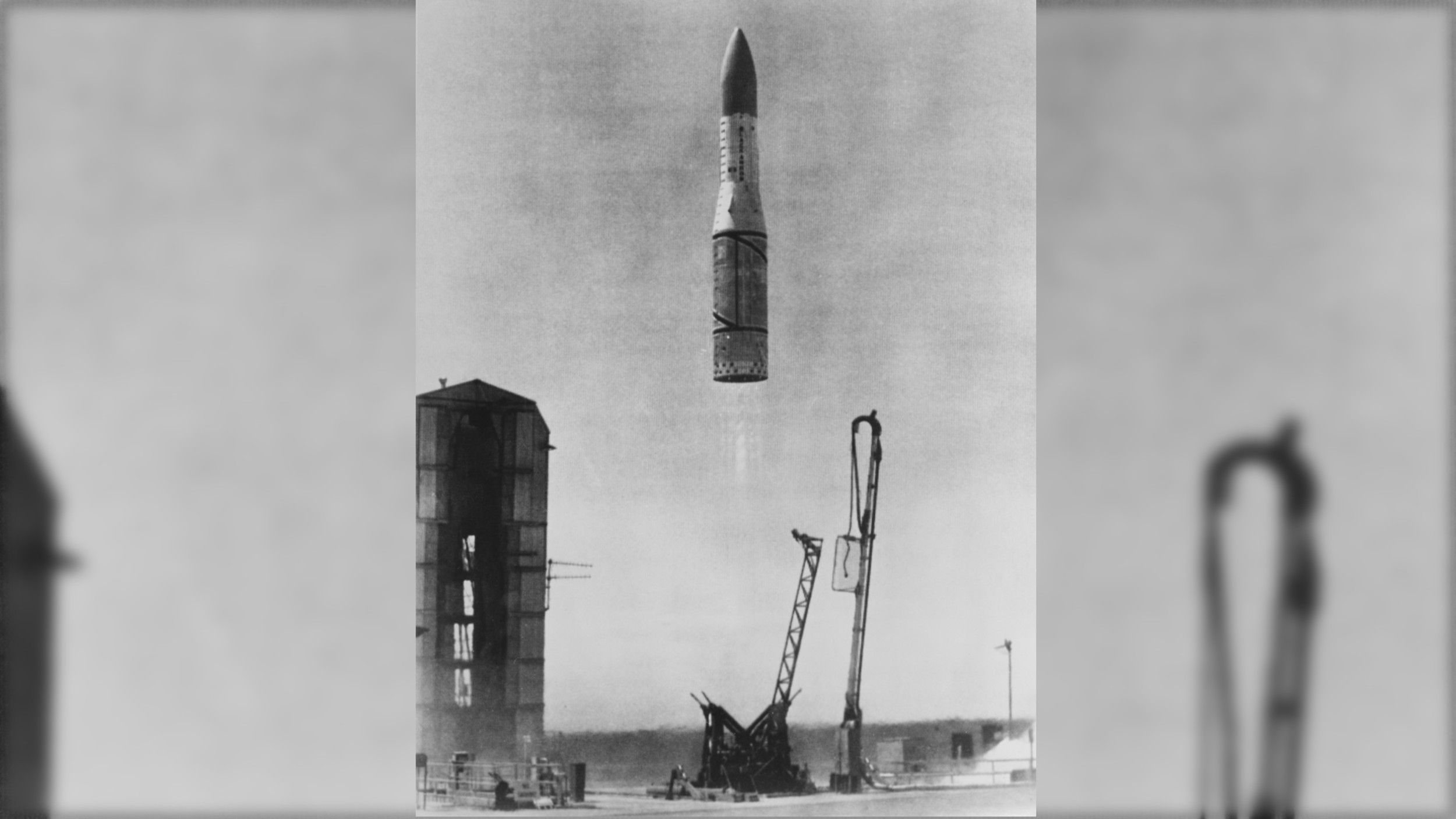
The program was designed with modularity in mind. The first stage utilized eight Gamma 8 engines, the second stage featured two Gamma 2 engines, and the third stage, known as Waxwing, employed a solid-fuel motor to finalize orbital insertion. Despite the sophistication of the design, the project faced intense scrutiny regarding costs and strategic necessity. Between 1969 and 1971, the program experienced a series of mixed outcomes: two successful test flights were offset by two failed attempts to reach orbit. The October 28, 1971, mission was, in many ways, the final attempt to prove that the platform was viable.
Mission Chronology and Technical Execution
The Prospero mission commenced at the Woomera Range Complex in South Australia, a site chosen for its remote location and favorable geography for orbital insertion. The launch sequence proceeded according to plan, with the three-stage rocket successfully clearing the pad and delivering the 66-kilogram satellite into an elliptical orbit ranging between 522 kilometers and 1,300 kilometers.
However, the mission was not without its complications. Following the separation of the final rocket stage, a collision occurred between the spent booster and the satellite. This impact resulted in the loss of one of the spacecraft’s four radio antennas. Despite the mechanical damage, the satellite’s telemetry and communications systems remained largely functional. Prospero was equipped with a suite of sophisticated instrumentation designed to characterize the space environment. Its primary objectives included measuring the performance of solar cells in vacuum conditions and utilizing a micrometeoroid detector to assess the density of small particles that might jeopardize future spacecraft.
The data gathered during the initial phase of the mission was invaluable, providing British scientists with firsthand information on the radiation environment and thermal conditions of low Earth orbit. Prospero continued to provide useful scientific data until 1973, when its primary mission phase was officially concluded. Even after the cessation of active, daily contact, the satellite remained a point of interest for ground stations; communications were intermittently re-established at least once annually through 1996, serving as a testament to the durability of the onboard electronics.
Historical Context and Strategic Withdrawal
The success of the Prospero mission arrived at an ironic juncture in British aerospace history. Just weeks before the successful launch, the British government had already decided to cancel the Black Arrow program. Economic pressures and a shift in national policy toward prioritizing international collaborative projects—such as those coordinated through the European Space Research Organisation (ESRO), which later became the European Space Agency (ESA)—rendered the maintenance of an independent, domestic launch system financially unpalatable to the government of the time.
The decision to terminate the program remains a subject of historical debate. Proponents of the program argued that it provided the UK with strategic autonomy, while critics pointed to the superior launch capacities offered by the United States and the emerging international consortia. Following the 1971 launch, the UK essentially surrendered its sovereign launch capability for decades, relying instead on foreign launch providers to deploy British-built hardware.
Broader Impact and Future Implications
The legacy of Prospero extends beyond its two-year operational lifespan. It stands as a technological "bookend," representing the peak of 20th-century British engineering and the subsequent pivot toward multinational space integration. For nearly 50 years, the satellite has occupied a silent, persistent orbit around the Earth, becoming a symbol of both what was achieved and what was abandoned.
In recent years, the discourse surrounding Prospero has shifted from historical commemoration to active environmental stewardship. As the problem of orbital debris becomes increasingly acute, the presence of long-defunct satellites like Prospero in stable orbits has drawn the attention of modern space startups. Among these is the Scottish aerospace firm Skyrora. In 2021, the company announced an ambitious proposal to utilize its own "space tug" technology to rendezvous with Prospero, capture the aging satellite, and perform a controlled deorbit maneuver to burn it up in the Earth’s atmosphere.
The proposal serves as a proof-of-concept for the burgeoning field of active debris removal (ADR). By targeting the very first British satellite, proponents argue that the UK can demonstrate its renewed commitment to space sustainability. Volodymyr Levykin, founder and CEO of Skyrora, has framed the mission as a moral responsibility. "By recovering Prospero, we are not only coming together as a space nation and taking responsibility for what we have launched into orbit, but also confirming our commitment to the sustainable use of outer space," Levykin stated during the announcement.

Analysis: A Shift Toward Sovereignty
The modern efforts to retrieve Prospero are occurring alongside a broader resurgence in British domestic launch capabilities. With the development of the Saxavord Spaceport in the Shetland Islands and the progress made by companies like Skyrora and Orbex, the United Kingdom is actively seeking to regain the launch autonomy it relinquished in 1971.
The implications of this shift are twofold. First, it reflects the global trend of "NewSpace," where commercial entities take on roles previously reserved exclusively for state actors. Second, it highlights the changing perception of orbital assets. In 1971, the primary concern was the successful insertion of a satellite into orbit; today, the concern is the long-term management of that orbit.
The Prospero mission serves as a critical case study in aerospace policy. It demonstrates that while the technical achievement of reaching space is a milestone, the ability to sustain a launch program depends on more than just engineering prowess—it requires a consistent long-term vision, economic commitment, and a clear understanding of the geopolitical landscape.
As the global community faces the challenges of managing thousands of satellites in LEO, the story of the X-3 provides a poignant reminder of the early days of the space race. It was a mission born of ambition and technical ingenuity, briefly interrupted by political pragmatism, and now, perhaps, destined to be the catalyst for a new, more responsible era of space exploration. Whether the retrieval of Prospero becomes a reality or remains a symbolic project, the satellite itself remains a testament to the foundational role the United Kingdom played in the infancy of the satellite age. It stands as a silent witness to a journey that began in the Australian desert in 1971 and continues to influence the strategies of the modern space sector today.
Related posts: