India’s largest online travel agency, MakeMyTrip, is strategically pivoting its growth engine toward non-air sectors—specifically hotels, holiday packages, buses, and cab services—in response to a cooling domestic aviation market. Despite encountering headwinds in the country’s airline sector during the second quarter of its fiscal year, the Gurugram-headquartered travel tech giant delivered robust financial metrics, underscoring the resilience and diversification of its overarching business model.
According to financial results released for the September quarter, MakeMyTrip posted gross bookings of $2.7 billion, representing a strong 21% year-over-year increase on a constant-currency basis. Concurrently, the company’s adjusted operating profit climbed to $46.2 million, signaling that management’s deliberate shift toward higher-margin non-air verticals is yielding sustainable profitability. This pivot comes at a crucial juncture for the Indian travel and tourism ecosystem, as shifting consumer habits, changing macroeconomic variables, and evolving airline industry dynamics reshape how Indians plan, book, and experience travel.
Navigating Headwinds in the Indian Domestic Aviation Market
The strategic recalibration by MakeMyTrip is largely a direct response to a softer-than-expected domestic air travel environment. During the September quarter, the Indian aviation sector witnessed a noticeable contraction in volume. Official metrics and company disclosures indicated that domestic air departures in India fell by 7%, while international departures dropped by 4%.
Compounding the volume decline, airfares across major domestic and regional routes surged significantly, registering year-over-year increases of roughly 25% to 30%. Industry analysts attribute this fare inflation to capacity constraints, lingering supply chain and maintenance issues affecting aircraft fleets across major domestic carriers, and elevated jet fuel prices. Higher ticket prices naturally created friction for price-sensitive leisure travelers, temporarily dampening demand for domestic flight bookings.
Despite these headwinds, MakeMyTrip successfully maintained its formidable market dominance in the skies. The company reported that it retained a commanding market share of more than 30% in India’s domestic air-ticketing segment. However, rather than relying solely on airline volume to drive top-line expansion, executive leadership leveraged the slower air travel environment to accelerate cross-selling and deepen customer engagement across alternative travel categories.
Accelerating the Non-Air Pivot: Hotels, Buses, and Cabs
MakeMyTrip’s calculated bet centers on the belief that the true long-term growth and margin expansion opportunities within India’s burgeoning travel market lie outside of aviation. This thesis is clearly reflected in the company’s gross bookings mix. For the September quarter, non-air businesses accounted for 63.2% of MakeMyTrip’s total gross bookings, marking a measurable expansion from the 61.5% recorded during the same period in the previous fiscal year.
Hotels and holiday packages now constitute approximately 40% of the company’s entire business portfolio. Stand-alone hotel room nights experienced impressive growth, surging by 18.6% year over year. Notably, domestic hotel room nights performed even stronger, registering growth in excess of 20%. This robust domestic hotel demand indicates that while consumers may be balking at inflated airfares or altering their flight habits, they remain eager to travel domestically for weekend getaways, staycations, and leisure holidays, opting frequently for road trips or rail journeys supported by cab and bus bookings.
Ground transport services—including intercity bus ticketing and app-based cab rentals—also played an instrumental role in bolstering the non-air segment. As infrastructure improvements, such as the rapid expansion of India’s national highway network, make road travel faster and more reliable, MakeMyTrip has captured a growing share of consumers booking multi-modal journeys.
Contextualizing the Growth: The Skift India Summit and Strategic Vision
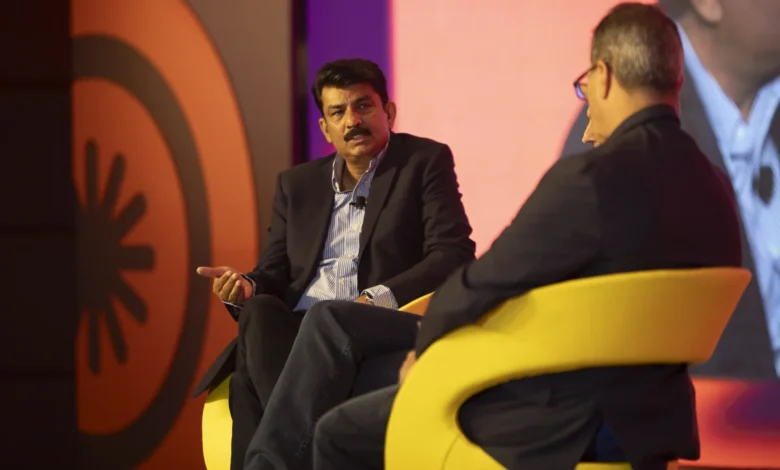
The broader trajectory of MakeMyTrip was a focal point of industry discussions earlier this year, notably at high-profile forums such as the Skift India Summit. During the event, MakeMyTrip Group CEO Rajesh Magow outlined the company’s long-term vision to build a comprehensive, frictionless travel super-app capable of capturing every facet of the Indian consumer’s journey.
Magow and other senior executives have consistently emphasized that India’s travel economy is undergoing a structural transformation. With rising disposable incomes, expanding digital penetration into Tier-2, Tier-3, and Tier-4 cities, and a rapidly growing middle class, the demand for organized, digitally booked accommodation and ground transport is expanding at an unprecedented rate. By aggressively acquiring customers through its dominant flight portal, MakeMyTrip has successfully established a massive top-of-funnel audience, which it now systematically cross-sells into higher-margin hotel stays and ground transport options.
This multi-year strategy has evolved through distinct phases. In the early years following its founding in 2000, MakeMyTrip established itself as the pioneer of flight bookings in India. Following its landmark merger with rival Goibibo in 2017 and subsequent backing by tech conglomerate Tencent and global investors, the company shifted its focus toward supply-side consolidation in the fragmented Indian hotel market. Today, the platform features everything from luxury hotel chains to budget homestays, alongside comprehensive rail and bus booking capabilities, positioning it as an indispensable end-to-end travel ecosystem.
Financial Resilience and Market Implications
The financial metrics reported for the September quarter validate the prudence of MakeMyTrip’s diversification strategy. Achieving $2.7 billion in gross bookings alongside a $46.2 million adjusted operating profit demonstrates that the company can absorb macroeconomic and sector-specific shocks—such as a contraction in domestic air travel—without sacrificing overall financial health.
Industry analysts and market observers have noted several key implications of MakeMyTrip’s recent performance:
- Margin Expansion: Hotel and holiday package bookings inherently yield higher take-rates and better profit margins for online travel agencies compared to air-ticketing, where airline commissions are minimal or non-existent. As non-air segments outpace air growth, MakeMyTrip’s blended margin profile is expected to strengthen further.
- Insulation from Airline Volatility: By reducing its revenue concentration in the volatile aviation sector—which is frequently vulnerable to fuel price spikes, regulatory changes, and airline financial distress—MakeMyTrip provides greater stability to its shareholders.
- Deepening Moat in Tier-2 and Tier-3 Cities: Ground transport and budget hotel bookings are heavily driven by users outside of India’s top metropolitan areas. The growth in domestic hotel room nights suggests that MakeMyTrip’s localized marketing, vernacular language support, and regional supply partnerships are successfully capturing India’s next wave of digital consumers.
- Competitive Pressures: While MakeMyTrip remains the undisputed market leader, competitors such as EaseMyTrip, Ixigo (which recently went public), and global giants like Booking.com and Agoda are closely monitoring these shifts, intensifying competition in the non-air and alternative accommodation spaces.
Outlook for the Indian Travel Ecosystem
Looking ahead, MakeMyTrip’s management remains optimistic about the remainder of the fiscal year. While domestic aviation capacity is expected to gradually normalize as airlines resolve fleet shortages and take delivery of new aircraft ordered from major manufacturers like Boeing and Airbus, the structural shift toward non-air travel is expected to persist.
India’s broader travel and tourism sector is projected to contribute significantly to the nation’s gross domestic product over the coming decade, driven by government investments in airport infrastructure, highway construction, and religious tourism corridors (such as newly developed pilgrim hubs). MakeMyTrip’s proactive pivot positions the company not merely as an online ticket aggregator, but as a central infrastructure layer for the entire Indian mobility and hospitality economy.
As consumer preferences continue to evolve and regional travel demand matures, MakeMyTrip’s ability to balance its dominance in air ticketing with aggressive expansion in hotels, buses, and cabs will serve as a definitive benchmark for digital commerce platforms operating in high-growth emerging markets.