From Ancient Rituals to Modern Peer Support: How Collective Healing Transformed the Landscape of Grief

The pain of loss extends far into the depths of human history, predating written records and forming a universal thread that binds all civilizations together. From the earliest recorded societies to the modern era, the ways in which human beings process trauma, mourning, and bereavement have evolved significantly. Societal and religious traditions of lamentation have existed for millennia, illustrating that grief has never been meant to be an isolated endeavor. Evidence from the Old Kingdom of Egypt around 2600 BC indicates that mourning a loss was a prominent public experience, often marked by elaborate ceremonies, particularly within the wealthy ruling classes. Similarly, fifth-century Greek tragedies functioned as large-scale public rituals designed to facilitate the cathartic expression of trauma. These theatrical and civic traditions transformed personal grief into a communal obligation, a concept that later resonated through Nordic and Germanic storytelling traditions and public remembrances.
As societies advanced, structured religious and cultural frameworks began to dictate how communities handled death. The rise of organized public funerals during the spread of Christianity and other global religions further institutionalized mourning. However, it was not until the late nineteenth and early twentieth centuries that grief entered the realm of formal clinical study. Sigmund Freud’s seminal 1917 work, Mourning and Melancholia, established the first major psychological theory of grief, emphasizing the necessity of “letting go” of the deceased to achieve emotional recovery.
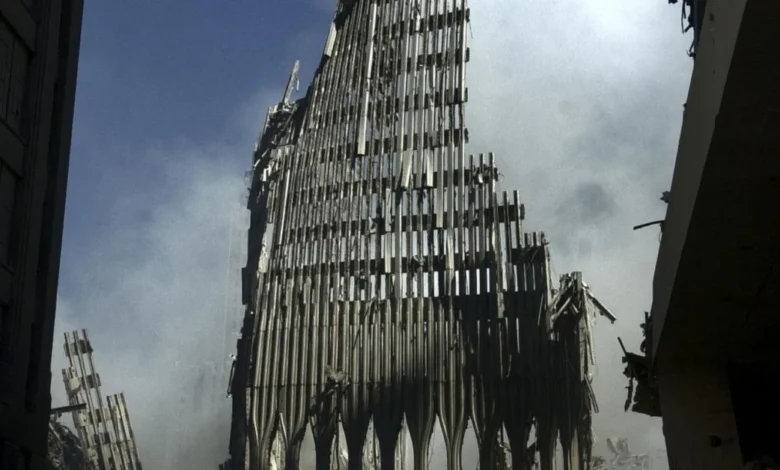
In contemporary psychology, Freud’s notion of absolute detachment has faced substantial critique. Modern psychological frameworks increasingly favor the concept of “reattachment” or continuing bonds, a perspective championed by researchers such as Klass, Silverman, and Nickman in 1996. This evolving understanding reinforces historical precedents: throughout time, successful grieving has relied on shared experiences and public acknowledgment rather than concealment and denial. While history is rich with examples of communal mourning, the modern era has crystallized the philosophy of collective remembrance through specific watershed moments, most notably the tragedies of September 11, 2001.
The Evolution of Bereavement Support Near the 25th Anniversary of 9/11
As society approaches the solemn 25th anniversary of the September 11 terrorist attacks, a retrospective analysis reveals the immense scale of loss that continues to reverberate globally. The attacks claimed thousands of innocent lives, left countless first responders and survivors grappling with chronic illnesses, and fundamentally altered the trajectories of military families through subsequent decades of conflict. Organizations stepped forward in the wake of these crises to address the unprecedented wave of trauma. For instance, the Tragedy Assistance Program for Survivors (TAPS) has provided vital support to more than 100,000 bereaved family members since its founding, including 14,858 military family members affected directly by 9/11-related losses.
To manage such an extraordinary volume of grief, institutional mental health structures had to adapt. Traditional models relying exclusively on licensed mental health clinicians proved insufficient for the sheer scale of the crisis. Consequently, organizations like TAPS pioneered and expanded the adoption of peer support models, recognizing that professional therapy, while essential, represents only one pillar of comprehensive recovery.
Defining the Peer Support Model
Within behavioral health and trauma recovery, peers are defined as individuals who share a common denominator, most notably lived experiences. When individuals who have successfully navigated profound personal crises receive proper training, they can function effectively in a peer support capacity. According to guidance from the Substance Abuse and Mental Health Services Administration (SAMHSA), peer supporters utilize the powerful bond of shared experience to establish immediate credibility, authentic empathy, and enduring hopefulness.
In the aftermath of the 2001 attacks, specialized peer support networks were mobilized to assist military families and civilian survivors. The core strength of this methodology lies in the dynamic between the newly bereaved and those who have walked the same path and emerged on the other side of profound sorrow. TAPS formalized this approach through structured training programs that guide survivors through a non-linear bereavement framework, emphasizing companionship and mutual understanding over rigid recovery timelines.
Historical Chronology of Grief Support and Evolution
To understand the current state of trauma recovery, it is helpful to examine the historical progression of how society and science have addressed loss:
- 2600 BC (Old Kingdom of Egypt): Mourning is documented as a public, highly ritualized experience, particularly for the ruling elite, establishing early precedents for communal grief expression.
- 5th Century BC (Ancient Greece): Tragic drama serves as a civic ritual for the cathartic release of collective trauma, integrating personal loss into public life.
- 1917 (The Birth of Modern Psychology): Sigmund Freud publishes Mourning and Melancholia, introducing the first formal psychological framework centered on detachment and "letting go."
- 1996 (The Shift in Psychological Thought): Klass, Silverman, and Nickman publish Continuing Bonds, challenging older psychoanalytic theories and advocating for ongoing psychological connection with the deceased.
- September 11, 2001: A modern historical watershed moment that alters global security paradigms and generates an unprecedented need for large-scale, long-term trauma and grief support systems.
- Present Day: Peer support models, endorsed by federal agencies like SAMHSA, are scaled globally—reaching from American military families to conflict zones such as Ukraine—proving that shared-experience recovery is universally effective.
Data, Impact, and Broader Implications
The implementation of peer support networks has yielded measurable positive outcomes across various demographics. Data compiled by public health agencies and survivor advocacy groups indicate that individuals engaged in peer-led grief support report lower levels of prolonged grief disorder, reduced isolation, and faster integration of their loss into a meaningful daily life.
Experts note that the implications of these findings extend far beyond domestic tragedy. The principles developed and refined over decades of supporting 9/11 and military families are now being adapted for international crises, including ongoing conflicts in Ukraine and other global hotspots where populations face mass trauma and displacement. This cross-cultural application underscores a fundamental truth: human grief, regardless of its geopolitical or domestic origin, responds best to empathetic companionship.
Contributing authors Cherie Castellano, CSW, Vice President for Survivor Services at TAPS and a veteran of the New York Emergency Services 9/11 Delegation to England and Ireland, alongside Lisa Zucker, MSW, Senior Director of Education at TAPS, emphasize that the core tenets of recovery remain consistent across borders. Bonnie Carroll, Founder and President of TAPS and recipient of the Presidential Medal of Freedom in 2015, alongside Dr. George S. Everly, Jr., PhD, MA, of The Johns Hopkins School of Medicine—who served on NYPD and Columbia University initiatives at Ground Zero post-9/11—have long advocated for integrative models that combine clinical expertise with grassroots peer support.
The Enduring Promise of Survivors Caring for Survivors
Decades of field experience alongside bereaved families confirm that peer support possesses a uniquely therapeutic quality. It eliminates the exhausting burden of explanation. A peer understands intimately that mourning follows no predictable timetable and that healing does not mean forgetting. Instead, it offers living proof that human beings can survive devastating losses while continuing to carry love forward into the future.
As the quarter-century mark of September 11 approaches, foundational institutional promises remain unchanged. No individual mourning the death of someone who served their nation—or who has experienced sudden, catastrophic loss of any kind—should ever be forced to walk that road in isolation. The foundational ethos of survivors caring for survivors stands as a testament to human resilience, offering an enduring framework of hope and healing. Ultimately, modern science has reaffirmed ancient wisdom: healing from loss should never be a solitary burden, but a shared journey illuminated by those who have traveled it before.