A serene vacation on Kauai, Hawaii’s "Garden Isle," often promises a tapestry of lush landscapes and vibrant flora, yet even in such an idyllic setting, the intricate workings of human perception can lead us to overlook the most spectacular displays. This phenomenon was strikingly illustrated during a recent botanical gardens tour, where the subtle pressures of timely arrival, combined with environmental challenges, profoundly shaped what was initially observed—and what was completely missed—by visitors.
The Unseen Beauty: A Botanical Encounter on Kauai
The experience unfolded on a typical Hawaiian summer day, marked by intermittent rain showers that lent a mystical, verdant sheen to the island. For one couple, navigating the winding, often muddy dirt roads of Kauai’s interior to reach a secluded botanical garden was the first challenge of their much-anticipated excursion. The rain, a common feature of the island’s microclimates, not only made visibility difficult but also imbued a sense of urgency and caution into their drive. Their jeep ascended slowly, tires gripping the slick terrain, finally arriving at a rustic parking area flanked by what appeared to be nondescript outbuildings. The primary focus, a common human response to novel and slightly challenging environments, was singular: locate the correct meeting point for their scheduled two-hour tour.
Upon disembarking, their attention was drawn to an open-air hut, its roof partially obscured by greenery, with an arrangement of chairs and a podium suggesting it was the assembly area. With the clock ticking and a desire to avoid being late, they quickly found seats within the indoor-outdoor structure, ready to absorb the guide’s introductory remarks. The tour then commenced, leading them through an enchanting two-hour journey across stunning horticultural displays. They sampled exotic chocolates sourced globally, savored the pungent freshness of cloves and cinnamon directly from their plants, and tasted the unique ambrosia of cacao fruit. Each step was a sensory immersion, an awakening to the intricate beauty and flavors of the plant kingdom.
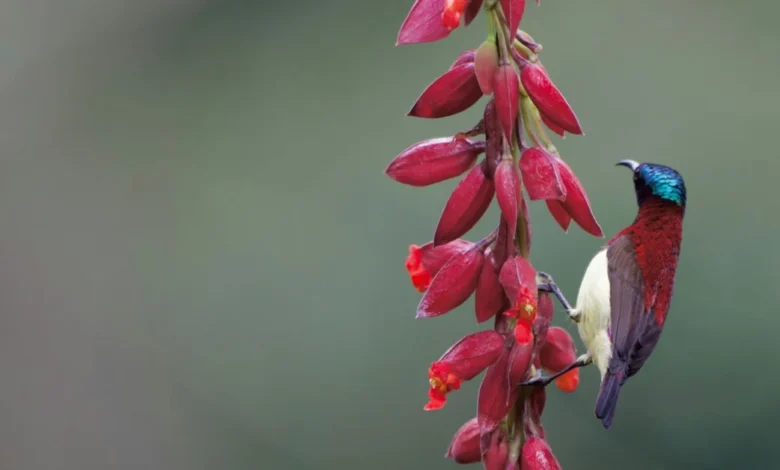
It was only upon their return to the initial meeting point, after their senses had been thoroughly engaged and their minds relaxed by the tour’s immersive experience, that a profound realization struck. The rustic hut, which they had barely registered in their hurried arrival, was now revealed in its full, astonishing glory. Cascading in abundant streams of vibrant color, a spectacular vine adorned the entire structure. Its bright yellow and striking red flowers, reminiscent of delicate wind chimes, draped luxuriantly, transforming the unassuming entrance into a breathtaking floral archway. The guide identified them as Indian Clock Vines, scientifically known as Thunbergia Mysorensis, renowned for their dramatic and intricate blooms. The irony was palpable: they had come specifically to view plants, yet had completely overlooked one of the most magnificent specimens literally hanging before their eyes. The shared experience was confirmed by another tour participant, who exclaimed, "I didn’t notice them either! Aren’t they gorgeous?" This collective oversight highlighted a powerful, yet often unrecognized, aspect of human cognition: how our state of mind profoundly dictates what we perceive.
The Psychology of Perception: When Stress Narrows Our View
The initial failure to observe the resplendent Indian Clock Vines was not a failure of vision, but rather a compelling demonstration of the intricate interplay between stress, attention, and perception. In the moments leading up to the tour, the mild stress associated with navigating unfamiliar terrain in adverse weather conditions and the objective of arriving punctually had a powerful, albeit subtle, effect on the couple’s cognitive processes. This scenario provides a vivid, real-world example of how even minor psychological pressures can significantly alter our engagement with our surroundings.
The Dual Nature of Stress: Enhancing Focus, Impairing Broad Vision
Stress, often perceived solely as a detrimental force, possesses a complex duality. At lower, acute levels, it can actually enhance certain cognitive functions, particularly those related to task-focused attention and processing speed. Research by Shields et al. (2019) indicated that mild acute stress can improve response speed without compromising accuracy in selective attention tasks. This adaptive mechanism allows individuals to prioritize and respond quickly to immediate threats or critical objectives. In the context of the Kauai tour, this mild stress likely sharpened the couple’s focus on essential tasks: driving safely through the rain and accurately identifying the parking and meeting locations. Their brains effectively created a "tunnel vision," funneling all available cognitive resources towards these immediate goals.
However, this heightened, narrow focus comes at a cost. When attention is intensely directed toward a specific objective, other stimuli, no matter how prominent or beautiful, are relegated to the background. This phenomenon, known as selective attention, is an indispensable executive brain function (Schneider, 2019). It enables us to filter out irrelevant information and concentrate on what matters most in a given situation. While crucial for efficient functioning—for instance, navigating a busy intersection or completing a complex report—it simultaneously renders us oblivious to details outside our immediate attentional spotlight. The Indian Clock Vines, for all their splendor, fell squarely into this ‘irrelevant background’ category during the initial, task-oriented phase of arrival.
Conversely, higher levels of chronic or acute stress can significantly impair cognitive processing, leading to reduced efficiency and an increased susceptibility to errors (Khodami et al., 2026). When the stress response overwhelms, it can disrupt working memory, inhibit problem-solving abilities, and even distort sensory perception more broadly. This emphasizes a critical distinction: mild, acute stress might refine focus, but sustained or intense stress erodes overall cognitive capacity, making us prone to overlooking even critical details, not just aesthetic ones. The "fight or flight" response, while vital for survival, evolved to handle immediate physical threats, not the nuanced demands of modern life, which often involve complex information processing under sustained pressure.
Selective Attention: The Brain’s Crucial Filter
The brain’s ability to selectively attend is a cornerstone of human cognition. It allows us to sift through the constant deluge of sensory information and prioritize what is relevant to our current goals and intentions. This filtering mechanism is not passive; it actively shapes our reality. Before the botanical tour, the couple’s objective was logistics: safe arrival and prompt meeting. Their brains, in effect, constructed a perceptual filter that prioritized road conditions, signage, and the appearance of the meeting hut over the ornamental details surrounding it. The Indian Clock Vines, despite their vividness, were simply not coded as relevant information for the task at hand.
However, the two-hour immersion in the botanical gardens served as a powerful recalibration of their attentional framework. By actively engaging with plants, smelling, tasting, and observing their various forms and functions, their brains shifted their attentional schema. Their objective transitioned from "logistics" to "botanical appreciation." When they returned to the starting point, their minds were primed to notice flora, and suddenly, the once-invisible vines burst into vivid perception. This demonstrates that attention is not a fixed state but is highly dynamic, shaped by our stress levels, expectations, and immediate objectives. The transformation in their perception underscores the malleability of our internal reality, revealing how easily our experiences can be colored or dulled by our mental state.
Anxiety’s Shadow: Distorting Reality Beyond the Immediate Task
While the initial experience on Kauai involved mild, task-oriented stress, the implications extend significantly to the realm of anxiety. Anxiety, particularly when prolonged or intense, can create a more pervasive and debilitating distortion of perception, affecting not only what we see but also how we interpret the world around us.
The Feedback Loop: Physical Symptoms and Cognitive Bias
When individuals experience anxiety or panic, their bodies often manifest a range of physical symptoms: sweating, dizziness, a rapid heart rate, shortness of breath, or gastrointestinal disturbances. These physiological responses are part of the body’s natural stress reaction. However, in anxious states, these symptoms are frequently misinterpreted. People may catastrophize, viewing these sensations as evidence of a severe underlying medical condition or an impending personal catastrophe. This exaggerated negative interpretation creates a vicious feedback loop: the physical symptoms fuel anxious thoughts, which in turn intensify the physical symptoms, further distorting an individual’s perception of reality. The objective reality of the body’s response is overshadowed by subjective, often irrational, conclusions. For example, a slightly elevated heart rate, a normal response to exertion, might be perceived as a sign of an imminent heart attack, leading to panic and further physiological arousal.
Cognitive Impairment: How Chronic Stress Affects Memory and Judgment
The impact of stress and anxiety extends beyond immediate perception, profoundly affecting higher-order cognitive functions such as memory and decision-making. Research, including findings highlighted by Girotti (2024), indicates that prolonged exposure to stress can significantly impair these critical cognitive abilities. Chronic stress can diminish an individual’s capacity to concentrate, making it difficult to sustain attention on tasks or absorb new information effectively. Memory recall also suffers, as stress hormones can interfere with the brain’s ability to consolidate and retrieve information.
Furthermore, decision-making under stress becomes compromised. Individuals may find it harder to evaluate situations objectively, leading to impulsive choices or an inability to weigh pros and cons effectively. Under pressure, there is a tendency to jump to conclusions, misinterpret events, or overlook crucial details that would otherwise be apparent. This can have far-reaching consequences in personal and professional life, from making poor financial decisions to misjudging social cues. The nuanced information required for sound judgment is often lost amidst the noise of an overactive stress response. This cognitive degradation means that not only are we less likely to notice things, but we are also less capable of processing and understanding what we do perceive accurately.
Beyond the Botanical Garden: Real-World Implications
The lesson learned from the Indian Clock Vines on Kauai is not confined to the realm of botanical tours; it holds profound implications for how we navigate our daily lives, particularly in our social interactions and personal well-being. Our perceptions are not infallible cameras; they are actively constructed realities, heavily influenced by our internal states.
Navigating Social Perceptions: The Impact on Relationships
One of the most significant areas where selective attention and anxiety can distort reality is in our relationships. When we are under stress or experiencing anxiety, our perception of others can become skewed. We might interpret neutral or even positive actions as negative, assume harsh judgment where none exists, or perceive rejection based on subtle cues that are amplified by our internal state. For instance, a friend’s momentary distraction might be perceived as disinterest or contempt, leading to feelings of hurt or resentment. Anxious individuals may magnify perceived social threats, leading to unnecessary worry, self-consciousness, and ultimately, avoidance of social situations, which can then exacerbate feelings of isolation and further perpetuate the cycle of anxiety. This perceptual bias can erode trust, foster misunderstandings, and strain interpersonal bonds, creating a self-fulfilling prophecy of social difficulties. The reality of a social interaction becomes less about what objectively occurs and more about what our anxious mind interprets it to be.
The Imperative of Skepticism: "Don’t Believe Everything You See"
The overarching message from this analysis is a critical one: our perceptions of reality are inherently limited and often biased. We are prone to filtering, interpreting, and even distorting information based on our emotional state, prior experiences, and immediate objectives. The popular adage, "Don’t believe everything you think," is valuable, but perhaps equally pertinent is the recommendation to "Don’t believe everything that we see." This doesn’t advocate for outright distrust of our senses but rather encourages a healthy skepticism and a mindful awareness of the filters through which we experience the world. Recognizing that our attention is a finite resource, constantly shaped by internal and external pressures, empowers us to question our initial interpretations and seek a broader, more objective view. It encourages us to pause, reflect, and actively expand our field of attention, rather than passively accepting the narrow slice of reality presented by our immediate focus.
Cultivating Clarity: Strategies for Enhanced Perception and Well-being
Given the pervasive influence of stress and anxiety on our perception and cognitive functions, cultivating effective daily management practices is not merely about feeling better; it is about seeing more clearly and engaging more fully with the richness of life.
Mindful Living: Reclaiming Our Observational Capacity
Integrating practices such as mindfulness into daily routines can be profoundly beneficial. Mindfulness involves intentionally focusing on the present moment, observing thoughts, feelings, and sensations without judgment. This practice trains the brain to be more flexible with its attention, moving away from rigid, task-focused tunnel vision towards a more open, expansive awareness. Regular mindfulness meditation has been shown to enhance attentional control and reduce reactivity to stress, thereby improving our capacity to notice details that might otherwise be overlooked.
Beyond formal meditation, simple acts of "mindful noticing" can be powerful. Taking a few moments each day to consciously engage with sensory details—the texture of a cup, the sounds of birds, the patterns of light—can gradually retrain our brains to be more observant. This practice helps to counteract the automatic tendency to filter out anything not immediately relevant to a specific task.
Physical exercise is another cornerstone of stress management. Regular physical activity reduces stress hormones, improves mood, and enhances cognitive functions, including attention and memory. Good sleep hygiene is equally vital, as sleep deprivation significantly impairs attention, concentration, and emotional regulation, making individuals more susceptible to perceptual distortions and heightened anxiety.
Finally, relaxation in nature, much like the couple’s eventual immersion in the botanical garden, offers profound benefits. Spending time in green spaces has been shown to reduce stress, improve mood, and restore attentional capacity. The natural environment provides a wealth of non-demanding stimuli that can gently engage our senses without overwhelming them, allowing our minds to wander and then return refreshed, ready to perceive more broadly and deeply. These practices collectively foster a state of mind that is more open, less stressed, and ultimately, more capable of appreciating the subtle and spectacular beauties that often lie hidden in plain sight.
The experience on Kauai serves as a powerful reminder of the intricate and often deceptive nature of human perception. It underscores that our reality is not just "out there," but is dynamically constructed within us, shaped by the ebb and flow of our internal states. By understanding the influence of stress and attention, and by actively engaging in practices that cultivate mental clarity, we can move beyond mere observation to truly see, appreciate, and find joy in the myriad wonders that surround us, much like being joyfully gobsmacked by a stunning Indian Clock Vine.
References
Milena Girotti, Sarah E. Bulin, Flavia R. Carreno, Effects of chronic stress on cognitive function – From neurobiology to intervention, Neurobiology of Stress, Volume 33, 2024,100670,ISSN 2352-2895, doi.org/10.1016/j.ynstr.2024.100670.
Mohammad Ahsan Khodami, Giulio Contemori, Luca Battaglini, Maryam Jansarvatan, Stress effects on cognition: Evidence for stress-related disruption of attention and inhibitory control, Heliyon, Volume 12, Issue 4, 2026, e44660, ISSN 2405-8440, doi.org/10.1016/j.heliyon.2026.e44660.
McGonigal, K. 2015. The Upside of Stress: Why Stress is Good for You (and How to get Good at it). London: Vermillion.
Schneider, D.W. Alertness and cognitive control: Testing the spatial grouping hypothesis. Atten Percept Psychophys 81, 1913–1925 (2019). doi.org/10.3758/s13414-019-01764-x
Shields GS, Rivers AM, Ramey MM, Trainor BC, Yonelinas AP. Mild acute stress improves response speed without impairing accuracy or interference control in two selective attention tasks: Implications for theories of stress and cognition. Psychoneuroendocrinology. 2019 Oct;108:78-86. doi: 10.1016/j.psyneuen.2019.06.001. Epub 2019 Jun 8. PMID: 31229636; PMCID: PMC6707871.
Related posts: