Austin Abrams and Zach Cregger Team Up for a Blockbuster Resident Evil Reboot That Shatters Franchise Records

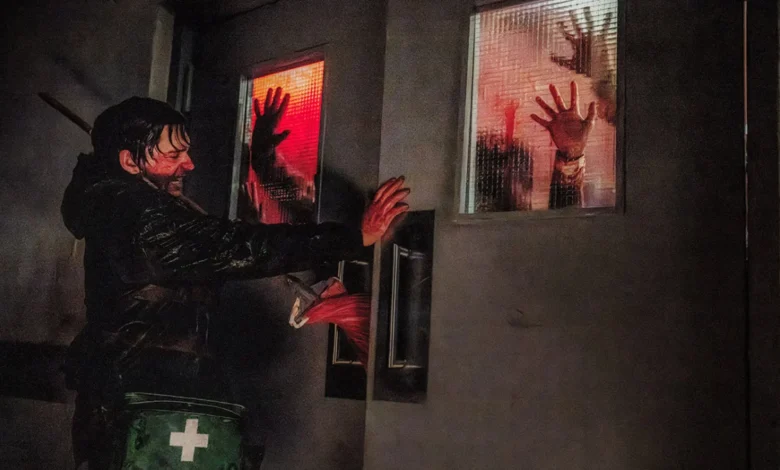
The cinematic landscape of modern horror and genre filmmaking has a new defining partnership, as actor Austin Abrams and writer-director Zach Cregger follow up their critical success in 2023 with a record-shattering box office triumph. Cregger’s newly released reboot of the iconic video game franchise Resident Evil has dominated domestic and international box offices, pulling in an impressive $60 million during its opening weekend alone. This milestone marks the highest-grossing opening weekend and best overall critical reception in the history of the cinematic property. For Abrams, who anchors the film as the beleaguered medical courier Bryan, the project represents a significant ascension into leading-man status, cementing a stellar career trajectory that spans more than half his life.
The path to this collaboration traces back to the turbulent production of Cregger’s previous genre hit, Weapons. In 2023, industry-wide strikes caused severe scheduling disruptions, leading to a complete turnover of the film’s original cast. Abrams remained loyal to the writer-director, bypassing several other attractive commercial opportunities. This calculated risk yielded immense dividends: Weapons became both a critical darling and a commercial smash, ultimately earning Amy Madigan an Academy Award nomination for Best Supporting Actress. Recognizing Abrams’ dedication and range, Cregger tapped him to lead the high-profile Resident Evil project, a decision that has paid off handsomely for Sony Pictures and the filmmakers alike.

A Chronology of Survival: Unpacking the Plot of Resident Evil
Zach Cregger’s vision for the Resident Evil universe diverges significantly from traditional action-heavy adaptations, favoring a grounded, agonizingly slow-burn descent into terror. The narrative begins on an ordinary day for Bryan, a medical courier balancing a critical organ delivery with a deeply personal crisis. While driving, he remains on his cell phone with his girlfriend, Michelle, who has just revealed her unexpected pregnancy. Hesitant to embrace the monumental changes of impending fatherhood, Bryan urges Michelle to maintain the status quo, prompting her to retreat to a friend’s house to give him space for reflection.
This domestic tension is abruptly shattered on the road to Raccoon City General Hospital. Bryan accidentally strikes a pedestrian wearing a sundress, a bloodied woman who is soon revealed to be the initial vector of a localized t-virus outbreak. Complications escalate when a responding police officer’s vehicle overturns, plunging Bryan directly into the nightmare. Forced to navigate a gauntlet of infected citizens, rabid animals, and crumbling infrastructure, Bryan makes his way on foot through abandoned tunnels and rural farmhouses.
Along the journey, he crosses paths with Umbrella Corporation operatives who reveal the catastrophic lab leak responsible for the chaos and inform Bryan that his delivery contains the neutralizing base necessary to synthesize a cure. Despite enduring numerous near-death encounters, including an attack by an infected child, Bryan perseveres. He reaches the hospital’s 28th-floor laboratory just in time to deliver the critical compound, only to watch helplessly as bumbling scientists fail to finalize the antidote before the infection claims him. In a shocking, nihilistic finale that subverts traditional audience expectations, Bryan succumbs to the virus and mutates into a grotesque amalgamation monster—serving as the tragic origin story for one of the franchise’s standard creatures.

Risk-Taking and Subverting Genre Tropes
The decision to deny the protagonist a triumphant survival arc represents a calculated and daring gamble by Cregger and the studio. In an era where test screenings and audience metrics often dictate sanitized, crowd-pleasing resolutions, Resident Evil opts for emotional devastation. Abrams has expressed deep admiration for this creative fearlessness, noting that contemporary Hollywood blockbusters frequently shy away from unadulterated tragedy.
The narrative sting is further amplified by the fate of Bryan’s relationship with Michelle. Prior to losing his humanity, Bryan records a poignant voice memo in the hospital parking garage, retracting his initial hesitation, expressing his love, and affirming his desire to start a family. However, because network connectivity is non-existent, the message is never transmitted. Michelle is left with the tragic misconception that Bryan rejected their child, unaware of his emotional evolution. This profound disconnect introduces a layer of classical tragedy rare within the horror genre, subverting the expectations of viewers accustomed to last-minute redemptions.
Furthermore, Abrams deliberately crafted Bryan as the antithesis of the stoic, hyper-competent action hero. Eschewing vanity, the actor allowed his character to display raw panic, genuine confusion, and visceral fear. Rather than portraying an elite operative unfazed by supernatural horrors, Abrams channeled the realistic response of an everyday individual thrust into an incomprehensible catastrophe. This approach draws thematic parallels to classic survival-comedy hybrids like Shaun of the Dead, making the terror more relatable and the stakes palpable.

A Banner Season for Austin Abrams
The autumn of 2026 marks an unprecedented professional milestone for the 30-year-old actor, who has worked in the industry since the age of 13. In addition to his grueling physical demands on the set of Resident Evil—which included running through Prague night-shoots and narrowly avoiding a swinging 150-pound blood bag during production—Abrams also leads the survival thriller Whalefall. Directed by fellow genre specialist and Cregger collaborator Brian Duffield, Whalefall presents Abrams with another harrowing one-man crucible, casting him as a scuba diver swallowed whole by a sperm whale.
Reflecting on his transition to leading-man status, Abrams remains grounded, dismissing notions of an ego trip in favor of a continued commitment to challenging material. Despite the intense physical toll exacted by both productions—ranging from the restrictive constriction of wetsuits to grueling stunt work—Abrams has praised the collaborative environments fostered by both filmmakers.
Broader Implications for Genre Cinema
The commercial and critical triumph of the Resident Evil reboot signals a shifting paradigm for video game adaptations in Hollywood. Historically plagued by narrative incoherence and critical disdain, the genre has recently experienced a renaissance, prioritizing auteur-driven visions and atmospheric dread over superficial fan service. By enlisting a visionary filmmaker like Zach Cregger—known for his ability to seamlessly blend tension, dark comedy, and existential dread—Sony Pictures has demonstrated that high-concept horror can achieve both box office dominance and critical acclaim.

Moreover, the film’s willingness to embrace a bleak, uncompromising ending challenges industry orthodoxies regarding audience satisfaction. By choosing emotional resonance and thematic integrity over a conventional Hollywood resolution, Cregger and Abrams have delivered a defining genre entry that lingers in the cultural consciousness long after the credits roll. As Resident Evil continues its robust theatrical run nationwide, it firmly establishes both men as premier forces in contemporary cinema, proving that audiences are more than ready to embrace stories that are willing to take risks, break hearts, and redefine the boundaries of terror.