Ke Huy Quan Recalls Receiving a Life-Changing $100,000 Residual Check for Indiana Jones and the Temple of Doom at Age 12

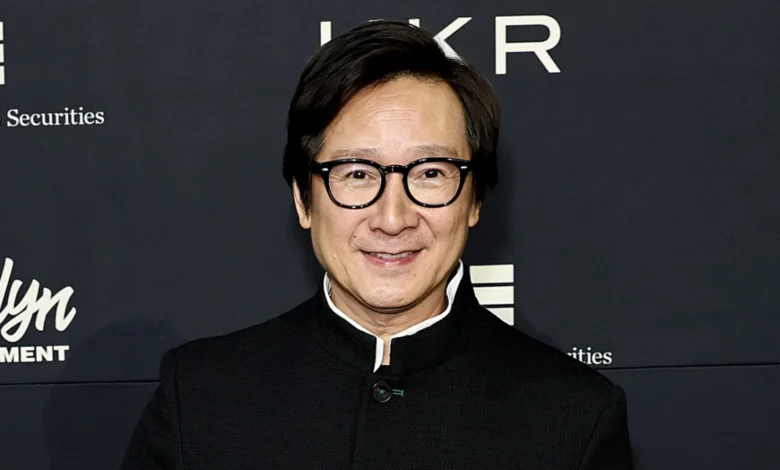
Academy Award winner Ke Huy Quan has shared a heartwarming and defining moment from his childhood in his newly released memoir, Never Say Die, offering readers an intimate glimpse into the inner workings of Hollywood during the 1980s. Published on Tuesday, the memoir details Quan’s unexpected discovery that his very first residual check for his breakout role in Steven Spielberg’s 1984 blockbuster Indiana Jones and the Temple of Doom amounted to a staggering $100,000.
For a twelve-year-old child actor who had accidentally stumbled into the industry, the sudden influx of wealth was nothing short of incomprehensible. The revelation sheds new light on the generosity of filmmakers Steven Spielberg and George Lucas, who ensured that a first-time juvenile performer was granted a financial stake in the movie’s monumental box office success—a rare practice even by contemporary industry standards.
The Discovery in the Family Kitchen
In Never Say Die, Quan recounts the exact afternoon he walked into his family home and discovered his parents standing together by the kitchen table, wearing expressions that blended utter shock with sheer disbelief. His mother was holding an envelope bearing his name, while his father examined the official documents housed inside.
"They handed everything to me," Quan writes in the memoir. "It was a check from Lucasfilm. It was for almost $100,000, an amount that didn’t make any sense to me."
At the age of twelve, Quan had completed his work on the highly anticipated sequel to 1981’s Raiders of the Lost Ark, portraying the spirited, quick-witted sidekick Short Round. Having already been compensated according to his initial casting agreement, the young actor possessed no understanding of how additional monetary compensation could materialize long after filming had wrapped. Once his parents explained the concept of residuals—payments made to actors for subsequent broadcasts, home video releases, or syndication of a project—the sheer magnitude of the figure began to sink in.
Looking back on the moment, the Everything Everywhere All at Once star characterizes the inclusion of a residuals clause for a child actor as a deliberate, quiet gesture of profound kindness orchestrated by Spielberg and Lucas.
Unprecedented Generosity in the Golden Era of Blockbusters
To fully understand the weight of the $100,000 check, industry analysts must examine the standard compensation practices of Hollywood during the mid-1980s. Back-end profit participation and robust residual structures were almost exclusively reserved for top-tier, bankable movie stars with immense box office leverage. For a juvenile actor making his professional acting debut in a major studio motion picture, participating in the film’s financial upside was virtually unheard of.
Furthermore, Indiana Jones and the Temple of Doom was not an obscure independent feature or a low-budget passion project where profit-sharing might be distributed liberally among the cast. It was the direct, heavily promoted sequel to one of the most successful adventure films in cinematic history. Expectations for its commercial performance were astronomical, and the film ultimately grossed over $333 million worldwide against a production budget of roughly $28 million.
Knowing that the project was guaranteed to generate massive revenues makes the decision by Spielberg and Lucas to extend profit participation to a newcomer even more remarkable. Quan notes in his memoir that this small, unexpected share proved to be entirely life-changing for his immigrant family, providing a level of financial stability that fundamentally altered their circumstances during a critical period of his upbringing.
A Journey from Child Stardom to Hollywood Wilderness
Ke Huy Quan’s entry into the entertainment industry is a well-documented piece of Hollywood lore. Born in Saigon, Vietnam, in 1971, Quan’s family fled the country as political refugees in 1978, eventually settling in the United States after spending time in a refugee camp in Hong Kong.
His casting in Indiana Jones and the Temple of Doom came about almost by chance in 1983. Accompanied by his younger brother to an open casting call in Los Angeles, Quan was merely there to support his sibling. However, a casting director noticed the young boy coaching his brother from the sidelines and promptly asked Quan to audition. Within weeks, he found himself whisked away to set to work alongside Harrison Ford and under the visionary direction of Steven Spielberg.
Following his unforgettable turn as Short Round, Quan capitalised on his early momentum by securing another iconic role: Data in the 1985 Richard Donner-directed adventure comedy The Goonies. To millions of children growing up in the 1980s, Quan was the embodiment of youthful cinematic heroism, ingenuity, and charm.
However, the transition from child star to adult actor proved to be treacherous. As he aged out of youthful roles, Quan faced the systemic barriers and stark lack of representation that plagued Asian actors in Hollywood throughout the late 1980s, 1990s, and early 2000s. Faced with vanishing opportunities in front of the camera, Quan pivoted behind the scenes, working as a stunt choreographer, assistant director, and production coordinator alongside industry giants like action director Corey Yuen. For decades, the prospect of returning to acting full-time felt like an impossible dream.
Gratitude and the Enduring Legacy of Steven Spielberg
Despite stepping away from the spotlight for over two decades, Quan never forgot the foundational role that Steven Spielberg played in launching his career and providing financial security for his family during their most vulnerable years.
This deep sense of gratitude was broadcast to a global audience in January 2023, when Quan took the stage at the 80th Golden Globe Awards to accept the trophy for Best Supporting Actor in a Motion Picture for his triumphant return to acting in Everything Everywhere All at Once. With tears in his eyes, Quan specifically addressed Spielberg, who was sitting in the audience.
"I was raised to never forget where I came from and to always remember who gave me my first opportunity," Quan said during his emotional acceptance speech. "I am so very happy to see Steven Spielberg here tonight. Thank you!"
The mutual respect between the legendary director and his former child star underscores a lifelong bond forged on the perilous, fantastical sets of 1980s cinema. Spielberg, known for championing young talent and fostering loyalty among his collaborators, helped set a standard of care that extended far beyond the final cut of the film.
The Broader Implications of Never Say Die
The publication of Never Say Die serves as more than just a nostalgic retrospective for fans of 1980s pop culture; it offers a rare, transparent look at the economic realities of child acting during a transformative era of studio filmmaking. As conversations surrounding the compensation of juvenile performers, work-hour protections, and financial trust accounts (such as the Coogan Act) continue to evolve in the modern entertainment landscape, Quan’s anecdote highlights the profound impact that ethical, empathetic leadership can have on a young artist’s life.
For Quan, the $100,000 check was not merely a windfall of cash, but a tangible manifestation of belief from industry titans who saw potential in a refugee child from Chinatown. It provided his family with breathing room, funded essential milestones, and laid the groundwork for a life that would eventually circle back to the silver screen in historic fashion.
Today, as an Academy Award winner and a prominent fixture in major modern franchises like Marvel’s Loki and Disney+’s American Born Chinese, Quan stands as living proof that resilience, combined with early acts of profound human kindness, can weather decades of uncertainty. Through Never Say Die, readers are invited to reflect on the butterfly effects of generosity—reminding the entertainment industry that how it treats its most vulnerable, entry-level participants can echo across a lifetime.