Canada and France Forge Strategic Alliance in Space and Energy Amid Shifting North American Geopolitics

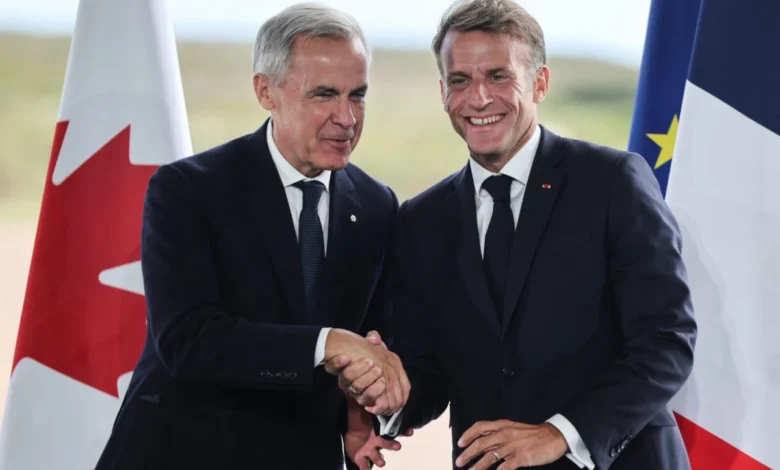
In a move that signals a significant pivot in Canadian foreign policy, Prime Minister Mark Carney and French President Emmanuel Macron met on Sunday to formalize a sweeping expansion of strategic cooperation across space, defense, energy, and economic sectors. The meeting, which took place in the French territory of Saint-Pierre-et-Miquelon, marks a definitive step by Ottawa to diversify its international partnerships, as the Canadian government seeks to mitigate risks associated with its heavy reliance on the United States.
The summit underscored a burgeoning "transatlantic pivot," as both nations move to secure supply chains, technological sovereignty, and energy independence in an era of heightened global volatility. For Canada, the discussions represent more than mere bilateral cooperation; they are a calculated maneuver to align with European institutional frameworks to buffer the nation against the unpredictability of current American trade policies.
A Chronology of Diplomatic Realignment
The meeting between Carney and Macron is the latest in a series of rapid diplomatic developments that have redefined the North Atlantic landscape over the past few months.
- Mid-2024: Mounting tensions regarding U.S. trade policy, including the imposition of aggressive tariffs and rhetoric concerning the potential integration of Canada into the U.S. political fold, lead the Canadian administration to review its long-term strategic dependencies.
- Early Last Week: Prime Minister Carney delivers a landmark speech to the European Parliament, publicly championing the concept of Canada becoming the European Union’s first associate member—a move aimed at creating a deeper, more integrated economic and security bloc.
- Late Last Week: President Macron arrives in Saint-Pierre-et-Miquelon, the French archipelago off the coast of Newfoundland, to facilitate high-level talks on regional security and Arctic cooperation.
- Sunday: The formal summit concludes with the signing of a cooperative framework aimed at shared infrastructure in aerospace and energy sectors.
Deepening Integration: Space, Defense, and Technology
The cornerstone of the Sunday agreement is a commitment to joint infrastructure development. Prime Minister Carney confirmed that both nations have directed their respective space agencies and defense ministries to embark on a collaborative roadmap. This involves the shared use of launch systems and ground-based reception facilities, effectively integrating Canada’s northern geographic advantage with France’s established aerospace capabilities.
The partnership extends into the high-tech sector, with a specific focus on quantum computing, satellite communications, and supercomputing. By pooling research and development resources, Paris and Ottawa aim to compete with the dominant technological powerhouses of the U.S. and East Asia. The integration of defense infrastructure is equally significant, as both nations seek to bolster their Arctic surveillance and security presence, a region where geopolitical competition—particularly involving Russia and China—has intensified.
The Energy Imperative: Securing European Supply
Beyond defense and space, the energy sector emerged as a primary driver of the summit. As the ongoing conflict in the Middle East continues to disrupt global oil and gas markets, France is under intense pressure to secure stable, long-term energy sources to replace historical reliance on volatile regions.
"Canada is a country with significant resources of critical minerals and rare earths," President Macron stated during the joint briefing. "It is also a major oil and natural gas producer. What we want to do is conclude agreements to secure more liquefied natural gas (LNG) that can be shipped to Europe’s Atlantic coast."
This energy partnership is expected to involve significant investments in infrastructure to facilitate the transport of Canadian LNG across the Atlantic. For Canada, this provides a vital outlet for its natural resources, reducing its dependence on the U.S. market, which has historically been the sole buyer of Canadian energy exports. By diversifying its export destinations, Canada gains a stronger negotiating position in trade disputes, effectively hedging against the risk of economic coercion.
Navigating the Shadow of U.S. Policy
The impetus for this deepening of ties is inextricably linked to the current trajectory of U.S. policy under President Donald Trump. Recent months have seen a series of escalations that have rattled Ottawa, including persistent threats of tariffs and the administration’s vocal suggestions that Canada should pursue closer political integration with the U.S.
The recent deal regarding Greenland—which allows for an expanded U.S. military footprint on the island while maintaining Danish sovereignty—served as a catalyst for the Canada-France talks. While President Macron offered a diplomatic nod to the agreement, citing that "international law is being respected," the subtext of the meeting was clear: both France and Canada are working to maintain a rules-based order in the North Atlantic that is not dictated solely by Washington.
Prime Minister Carney’s push for associate membership in the European Union is the most ambitious manifestation of this strategy. By seeking to integrate into the EU’s economic and political structures, Canada aims to insulate itself from the volatility of U.S. domestic politics. "Canada and Europe will build an alliance for the future that will strengthen our collective resilience so we can live our lives as we choose based on the values that we share," Carney remarked.
Strategic Implications and Economic Analysis
The economic implications of this pivot are substantial. By moving toward a deeper integration with the European market, Canada is attempting to leverage the EU’s regulatory power and economic scale to protect its industries.
Data from the past fiscal year suggests that while the U.S. remains Canada’s largest trading partner—accounting for over 70% of total merchandise trade—the volatility of this relationship has resulted in significant fiscal uncertainty. Expanding the trade relationship with France, and by extension the European Union, provides a necessary diversification.
Furthermore, the focus on critical minerals and rare earths is a strategic priority. With global demand for these materials surging due to the transition to green energy and the requirements of the defense industry, Canada’s vast deposits make it a key player in the Western supply chain. France, which seeks to reduce its dependence on Chinese mineral processing, views Canada as a secure, long-term strategic partner.
Challenges to the New Alliance
Despite the optimism displayed by both leaders, the path forward is not without challenges. The physical logistics of transporting LNG from Western Canada to the European Atlantic coast remain complex and costly, requiring significant capital investment in pipelines and liquefaction facilities.
Furthermore, integrating defense infrastructure requires navigating the delicate balance of NATO requirements and individual national sovereignty. Critics in both countries may also express concerns regarding the financial burden of these collaborative projects, particularly if they are perceived as prioritizing long-term geopolitical security over immediate domestic economic relief.
However, the political will appears robust. Both Carney and Macron have signaled that this is not a temporary reaction to current events, but a fundamental realignment of their respective nations’ roles in the global order.
Conclusion: A New Atlanticism
The meeting in Saint-Pierre-et-Miquelon signifies the birth of a "New Atlanticism," where the traditional power dynamics of the West are being re-evaluated. By choosing to deepen ties with Europe, Canada is signaling that it is prepared to move beyond the comfort—and the constraints—of the status quo.
As the summit concludes, the focus now shifts to the implementation phase. Technical teams from both countries are expected to begin working on the specifics of the aerospace and energy agreements in the coming weeks. The success of these initiatives will likely serve as a blueprint for Canada’s future interactions with the international community, marking a definitive shift away from a U.S.-centric foreign policy toward a more multi-polar, integrated global strategy.
Whether this alliance can effectively navigate the pressures of an increasingly fractured global landscape remains to be seen, but the intent of both Paris and Ottawa is clear: to build a resilient, shared future that transcends the traditional borders of North America and Europe.
Related posts: