Melissa Barrera Reflects on Evolving Solidarity in Hollywood as Industry Protests Gain Momentum

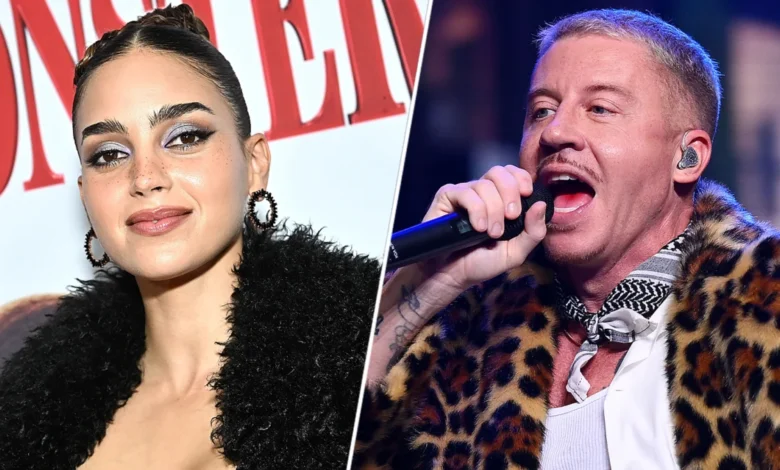
Nearly three years after her high-profile dismissal from the Scream horror franchise, actress Melissa Barrera is observing a distinct shift in how the entertainment industry handles public discourse regarding the Israeli-Palestinian conflict. The actress, who was removed from the Spyglass Media Group production in November 2023 for social media posts expressing support for Palestinian rights, recently spoke to the Associated Press about the evolving landscape of activism among high-profile artists.
Barrera’s comments follow a notable series of events surrounding the Ed Sheeran Loop Tour, where multiple opening acts—including Finneas and a collective of supporting musicians—withdrew from their commitments. The mass exit was triggered by the decision of tour organizers to drop rapper Macklemore from the lineup, a move reportedly prompted by his public advocacy for a "Free Palestine." Reflecting on these developments, Barrera expressed a sense of catharsis, noting that the collective action taken by her peers stands in stark contrast to the isolation she faced during her own controversy.
"It was so beautiful to see Finneas and the band and all the opening acts pulling out in support of Macklemore. It made me emotional," Barrera told the Associated Press. "I didn’t get that when it happened to me. I didn’t have any of that happen. It was too soon. People were too scared. But it’s good to see that almost three years later, at least things have changed."
The Chronology of a Hollywood Schism
The trajectory of Barrera’s career and the subsequent instability of the Scream franchise serves as a case study in the intersection of celebrity, corporate policy, and geopolitical discourse. In November 2023, Spyglass Media Group released a statement confirming that Barrera would not be returning to the seventh installment of the slasher series. The company cited concerns over her social media activity, which included references to the ongoing conflict in Gaza.
In their official statement, Spyglass declared a "zero tolerance" policy regarding antisemitism and the incitement of hate, specifically categorizing some of the actress’s posts as "false references to genocide, ethnic cleansing, [and] Holocaust distortion." The decision prompted immediate backlash from various activist groups and fans of the franchise, who argued that Barrera’s comments were a legitimate exercise of free speech and political critique.
The fallout was rapid and cascading. Shortly after Barrera’s departure, Jenna Ortega, who played the character Tara Carpenter alongside Barrera’s Sam Carpenter, exited the project. While officially attributed to scheduling conflicts regarding her work on the series Wednesday, industry insiders noted the timing was deeply intertwined with the production’s internal turmoil. Ortega later remarked that the sequel was "all kind of falling apart" following the loss of the two leads. The instability continued as director Christopher Landon announced his departure from the project in December 2023, citing the toxic environment and disclosing that he had received "highly aggressive and really scary" death threats directed at his children.
Restructuring the Franchise
Following the departure of its primary leads and director, Spyglass opted to pivot the creative direction of the franchise. In March 2024, the studio announced that Neve Campbell, who had been absent from the sixth film due to a well-publicized salary dispute, would return to the franchise as Sidney Prescott. The company also secured Kevin Williamson, the original screenwriter of the 1996 Scream, to step into the director’s chair.
This move was viewed by analysts as a strategic attempt to stabilize a brand that had become synonymous with controversy rather than its cinematic output. Despite the return of a legacy character, the impact of the 2023 firing remained a point of contention. When the film eventually premiered in February 2026, the red carpet was met with coordinated protests. Demonstrators organized by various pro-Palestinian groups lined the entrance to Paramount Studios, calling for a boycott of the film in solidarity with Barrera.
Quantitative Trends in Industry Activism
The shift that Barrera noted—from the isolation of individual dissenters to the collective withdrawal of support—is supported by broader trends in how modern musicians and actors leverage their platforms. In the post-2020 landscape, the "cancel culture" discourse has increasingly given way to organized, industry-wide boycotts.
Data from entertainment industry analysts suggest that while corporate sensitivity toward political messaging remains high, the cost of firing prominent figures has also increased. The loss of a star like Barrera and the subsequent departure of a rising talent like Ortega resulted in significant creative reworkings for the Scream franchise, which carried both financial and reputational risks. When artists act in unison, as seen with the Sheeran tour, the leverage shifts from the corporate entity to the talent. If a headline act loses multiple opening supports, the financial viability of a tour can be compromised, forcing organizers to contend with the potential for lost ticket sales and negative press.
Institutional Responses and Corporate Responsibility
The conflict between creative expression and corporate policy remains a defining tension in modern media. Spyglass’s decision to adopt a "zero tolerance" policy is reflective of a wider trend where production companies attempt to mitigate risk by enforcing strict communication guidelines for their talent. However, the efficacy of these policies is increasingly debated.
Legal and public relations experts point out that the definition of "hate speech" in the context of political conflict is frequently contested. By explicitly referencing "genocide" or "ethnic cleansing" in relation to the Israel-Hamas war, activists often argue they are utilizing terms rooted in international law, while organizations like Spyglass often view such rhetoric through the lens of corporate liability and public image management.
The incident with the Sheeran tour further illustrates that corporations are now forced to navigate the political leanings of their entire roster. When musicians like Finneas exercise their personal agency, they create a ripple effect that complicates the logistics of global touring. This suggests that in the coming years, contracts and rider agreements may include more stringent clauses regarding political activism, though as Barrera’s recent comments indicate, the appetite for such restrictive measures among artists may be waning.
Broader Implications for Hollywood
The trajectory of the Scream franchise and the recent solidarity shown toward Macklemore underscore a fundamental transformation in how Hollywood handles political volatility. In the past, the industry often demanded neutrality from its stars to maintain a broad, international appeal. Today, the demographic shift toward a younger, more politically active audience has necessitated a change in strategy.
For actors like Barrera, the current climate offers a modicum of validation. The transition from being perceived as a liability to being recognized as a catalyst for a larger movement suggests that the "scared" silence she once described is being replaced by a more assertive culture of solidarity. As the industry looks toward the next cycle of film productions and international tours, the lesson from the last three years appears to be that individual actions—whether they result in termination or widespread support—now possess the power to influence the trajectory of major multi-million dollar projects.
The ongoing conversation regarding the boundary between personal belief and professional employment remains unresolved. However, as more artists follow the lead of the musicians who walked away from the Loop Tour, the traditional corporate "zero tolerance" model faces an unprecedented challenge. Whether this leads to a more permissive environment for political discourse or a new wave of industry-wide crackdowns remains to be seen. What is clear, however, is that the era of quiet, individual resignation is giving way to a more visible, collective approach to industry ethics, one that Melissa Barrera is now documenting from a position of renewed perspective.