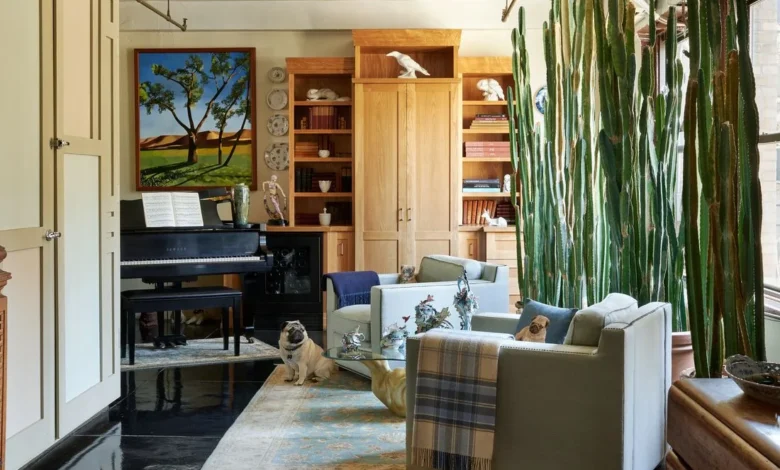
Right across the street from the bustling epicenter of Madison Square Garden, there exists a tranquil, verdant anomaly that defies the frantic pace of the Manhattan cityscape. Located 13 stories above the pavement, this 2,000-square-foot loft—housed within a historic 1927 building that once served as a specialized fur atelier—functions as a private, elevated sanctuary. For residents Bill Farmer, an artist, and Stewart Rahtz, a retired modeling-industry executive, the apartment is not merely a residence but a living, breathing testament to five decades of urban adaptation, artistic curation, and botanical persistence.
A Chronology of Transformation
The trajectory of this residence mirrors the evolution of the surrounding neighborhood. In 1980, when Farmer and Rahtz first encountered the space through a classified advertisement in the Village Voice, the area around Madison Square Garden was defined by high crime rates, the presence of the Guardian Angels, and a transient population that felt far removed from the polished Midtown of today.
At the time, the building was transitioning away from its industrial past. Most of the original furriers had departed, leaving behind cavernous, raw spaces that were quickly being repurposed as music studios and artist lofts. Securing the lease required a significant financial gamble for Farmer. Reflecting on the uncertainty of the era, Farmer recalls seeking legal counsel through the widely advertised services of Jacoby & Meyers. The advice he received proved prophetic: "Do it. In 20 years, you will be the envy of every friend you have."
The renovation process was intensive and transformative. The couple employed sledgehammers to dismantle the remnants of the building’s fur-trading history, including heavy-duty refrigerated vaults once used to store pelts. They stripped the space to its structural bones, creating the expansive, open-plan environment that serves as the backdrop for their collection of art and artifacts.
The Botanical Architecture
Central to the apartment’s design identity is its living wall of giant, spindly cacti. These specimens, which now reach from the floor to the ceiling, serve a dual purpose: they act as a natural, ever-evolving privacy screen and a functional alternative to traditional window treatments.
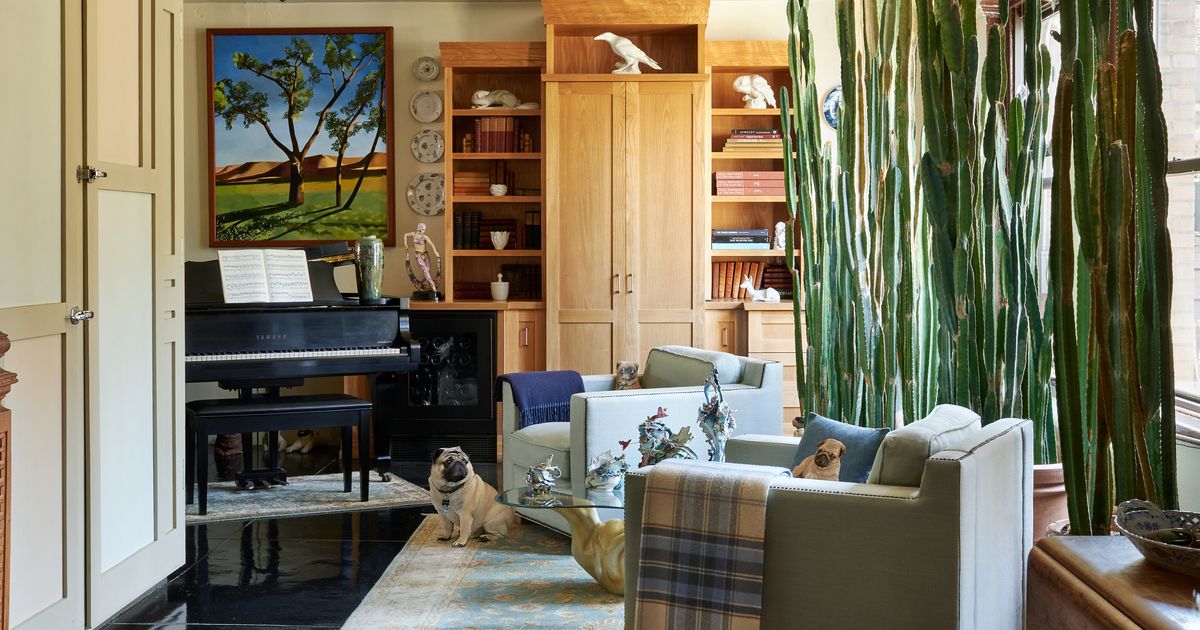
Rahtz explains the pragmatic origin of the garden: "They were meant to provide shade without having to bother with curtains, which we found never worked." The collection began modestly, with a six-inch starter plant salvaged from the street. Over the ensuing decades, the plants have thrived in the south-facing light, requiring minimal intervention. According to Farmer, the cacti are watered only twice a year. Their biological cycle is a highlight of the home’s interior life; when they bloom, the resulting fragrance is so potent and sweet that it permeates the space until sunrise.
A Curated Interior Landscape
The interior design of the loft is a mosaic of personal history and international discovery. The furniture serves as a tangible record of the couple’s family lineages. For example, several 1960s swivel armchairs, originally upholstered in green vinyl, were sourced from Farmer’s family home in Kansas, where his father operated as an oil wildcatter. Other pieces reflect Rahtz’s heritage; his maternal grandfather was a vaudevillian who founded a film production company in Astoria in the 1910s, and various heirlooms passed down through that line occupy the space.
The walls feature murals by David Friday, an artist who was granted creative freedom in the space while the couple traveled. One particularly striking installation is a nude painting above a dresser, executed by Farmer himself. The residence is also filled with objects collected from extensive global travels, including Venetian masks, as well as artifacts from Sri Lanka and Myanmar. These items are interspersed with Nymphenburg porcelain birds and animals from the collection of Ted Muehling, creating a dialogue between the high-end decorative arts and the couple’s own artistic output.
From Urban Oasis to Social Hub
During the height of Rahtz’s career in the fashion industry, the apartment was a renowned venue for high-density social gatherings. The terrace, which overlooks the intersection of Midtown, became a focal point for their entertainment strategy. At the time, the couple was famous for hosting parties that regularly drew over 100 guests, utilizing a vintage bathtub—originally a remnant from a professional photography shoot in the building—as a vessel for cooling large quantities of vodka and Champagne.
In recent years, the nature of their entertaining has shifted. As they spend more time at their secondary residence in Woodstock, the Midtown loft has transitioned into a quieter, more contemplative space. When they are in the city, the focus turns toward the cultural offerings of the theater district and the maintenance of their botanical collection.
Broader Implications of Adaptive Reuse
The story of the "Cactus Apartment" is a case study in the broader trend of urban adaptive reuse in New York City. The transition from industrial manufacturing spaces to residential lofts has been a defining feature of Manhattan’s real estate evolution over the last 50 years. By preserving the structural integrity of the 1927 building while reimagining its interior function, Farmer and Rahtz have participated in the stabilization and gentrification of the neighborhood surrounding Madison Square Garden.

Data from the New York City Department of Buildings indicates that such conversions often prioritize the retention of high ceilings and large window bays—features that are highly coveted in the modern luxury market. However, few such spaces maintain the level of personal, non-commercial aesthetic curation found in this loft. The integration of a private, high-maintenance garden into an urban apartment environment also touches on the increasing value of biophilic design in densely populated environments.
The Maintenance of a Legacy
The most recent challenge for the home’s exterior garden involved navigating municipal building codes. Earlier this year, the couple oversaw a major replanting project, necessitated by building-wide structural updates required by city regulators. The current iteration of the terrace includes a tricolored willow, a red maple, and a variety of annual flowers, providing a contrast to the stark, architectural lines of the nearby stadium.
As they look toward the future, the couple continues to maintain the space with a philosophy of light-touch preservation. The "Chloe" dolls, created by the late visual director of the boutique Jeffrey, Dustin Poché, remain a focal point of their collection, symbolizing a bygone era of Manhattan’s retail and fashion culture.
Ultimately, the apartment serves as a static point in a rapidly shifting city. While the neighborhood outside has undergone complete demographic and commercial overhaul—from a hub of the fur trade to a nexus of tourism, transit, and sports entertainment—the loft remains an outlier. It is a space where the rhythm of the city is dictated not by the schedule of events at the Garden across the street, but by the slow, deliberate growth of a wall of cacti and the memories preserved within the walls of a former furrier’s atelier. The legacy of their commitment to this space, solidified by the advice of a lawyer decades ago, has resulted in a home that remains, as predicted, the envy of those who value the intersection of history, art, and nature in the heart of New York.