Trump Administration Allocates $84,000 for Controversial Warning Signs at the Smithsonian National Museum of American History

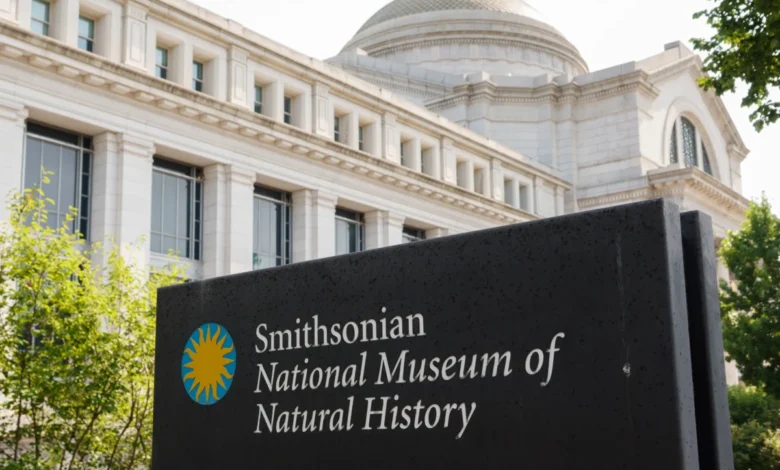
The federal government is moving forward with an $84,000 initiative to install prominent warning signs outside the Smithsonian National Museum of American History, a project driven by the executive branch’s ongoing campaign against what it characterizes as partisan bias and progressive ideology within federal cultural institutions.
According to correspondence released by the Department of the Interior, the planned installation represents a novel intervention in the administration of national museums. The initiative aims to caution visitors against exhibits that officials argue promote divisive narratives and challenge traditional values regarding race, gender, and national history. The dispute marks a significant escalation in the ongoing debate over how public cultural institutions curate and present the complex history of the United States.
Chronology of Executive Actions and Policy Shifts
The deployment of federal warning signage stems from a series of presidential directives targeting cultural and educational institutions. The sequence of events reflects a sustained federal effort to reshape the curation of American history:
- March 2025: President Donald Trump signs an executive order titled “Restoring Truth and Sanity to American History.” The directive mandates the removal of what the administration defines as improper ideologies from all properties operated by the Smithsonian Institution, citing a departure from objective historical scholarship.
- July 2025: A subsequent executive order is issued, formally authorizing the placement of temporary explanatory signage at Smithsonian entrances. The administration argues that such measures are necessary to counteract what it labels a race-centered ideology that portrays Western values as inherently oppressive.
- September 2026: Interior Secretary Doug Burgum details the implementation plans in a letter obtained by media outlets, confirming an allocation of $84,000 to construct and install permanent or semi-permanent external warning signs at the National Museum of American History.
Core Contentions and Curatorial Disputes
At the heart of the administration’s grievance is the Smithsonian Institution’s approach to interpreting sensitive aspects of the American past, particularly the history of racial inequality, civil rights, and evolving social norms.
For decades, the Smithsonian has expanded its curatorial scope to include comprehensive examinations of slavery, segregation, and systemic discrimination. These efforts have encompassed dedicated facilities such as the National Museum of African American History and Culture, as well as updated permanent collections across the National Mall.
Administration officials, however, contend that these modern curatorial frameworks place an excessive emphasis on historical grievances, thereby undermining national unity. In official statements and executive texts, the White House has argued that contemporary exhibits promote narratives that present American democratic institutions in a persistently negative light.
Furthermore, the dispute extends beyond racial history to encompass contemporary social debates. Letters from the Interior Department indicate that the proposed signage will specifically address exhibits acknowledging transgender and gender non-conforming individuals. The administration maintains that certain displays feature ideological viewpoints inconsistent with traditional biological definitions, specifically regarding sex and gender identity, and contends that visitors—particularly parents with young children—should be formally alerted before entering the facilities.
Financial and Administrative Details
The $84,000 expenditure allocated for the warning signs covers the design, fabrication, and installation of the physical displays on federal property surrounding the museum. While modest in the context of the broader federal budget, the allocation has drawn attention for its symbolic nature, representing a direct financial commitment by the executive branch to challenge the autonomy of an independent cultural trust.
The Smithsonian Institution, established in 1846 through an act of Congress and funded by a combination of federal appropriations, private endowments, and trust funds, operates under the governance of a Board of Regents comprising the Chief Justice of the United States, the Vice President, members of Congress, and private citizens. Historically, the institution has maintained a degree of structural independence designed to insulate curatorial decisions from direct political interference by whichever administration holds office.
Official Responses and Stakeholder Reactions
The administration’s decision has elicited varied responses from historians, museum professionals, and political figures.
Supporters of the initiative, including conservative advocacy groups and lawmakers aligned with the executive branch, praise the action as a necessary measure to restore accountability to public institutions. Proponents argue that taxpayer-funded museums have a responsibility to reflect mainstream values and historical consensus rather than advancing contemporary social theories or partisan viewpoints.
Conversely, museum associations, academic historians, and civil liberties organizations have expressed concern over the precedent set by placing executive-mandated political warnings outside a national museum. Critics argue that the intervention constitutes political interference in scholarly research and public education, potentially chilling free expression and undermining global perceptions of the Smithsonian as an objective repository of knowledge.
Broader Implications for Cultural Institutions
The installation of warning signs at the National Museum of American History highlights broader questions regarding the governance of public institutions in an era of intense political polarization.
As cultural agencies increasingly grapple with diverse perspectives on history and identity, the intersection of federal oversight and curatorial independence remains a contentious domain. Observers note that the administration’s actions establish a significant precedent for how future executive branches might leverage federal authority to influence public education and historical memory.
The debate also underscores the changing role of the National Mall in the nation’s political discourse, transforming historically neutral educational spaces into focal points for broader ideological conflicts over national identity, patriotism, and the interpretation of the American past.
Related posts: