Trump Defies Public Sentiment and Industry Experts by Championing Unrestricted AI Development as Midterm Pressures Mount

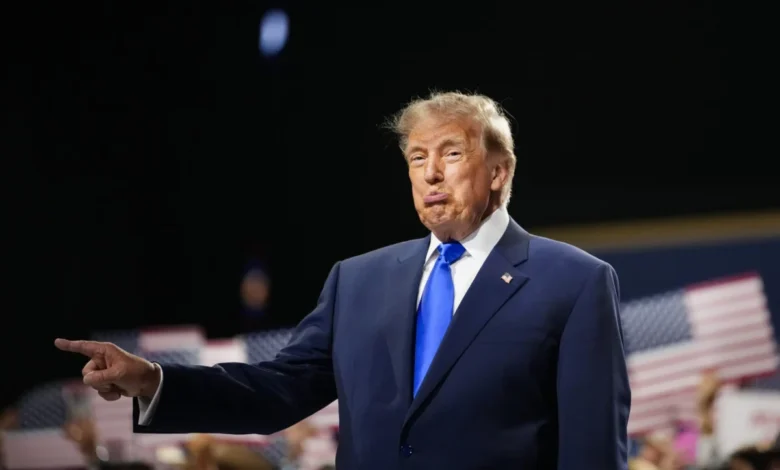
President Donald Trump has staked out a combative position in the burgeoning debate over artificial intelligence, flatly rejecting calls for restrictive safety "guardrails" and dismissing public skepticism toward massive data center infrastructure. In a series of posts on Truth Social, the President characterized the movement for AI oversight as a "sick conspiracy" and explicitly identified himself as the only necessary regulator, asserting that a "Strong and Smart (High IQ!) President" is the only control mechanism the industry requires.
This intervention comes at a volatile moment for the administration. With midterms approaching, the White House faces a shrinking majority in Congress and declining public approval ratings, complicating an agenda that increasingly finds itself at odds with mainstream voter sentiment. By positioning AI development as a national security imperative—and framing any slowdown as a gift to China—the President has transformed a technical, philosophical debate into a central campaign issue.
The Geopolitical Stakes of the AI Arms Race
The President’s core argument centers on the concept of a "Golden Goose"—the massive data centers that power modern AI models. He has cautioned communities resisting the construction of these facilities that they risk economic stagnation, suggesting that local opposition will leave them "backwards and poor" while regions that embrace the infrastructure will capture the lion’s share of investment and job creation.
Central to this rhetoric is the "whoever wins AI, wins" doctrine. Trump argues that any deceleration in domestic development, whether through internal industry safety protocols or federal regulatory intervention, serves as a strategic victory for Beijing. This framing aligns with his broader interventionist approach to economic policy, which has already seen the federal government take active roles in the semiconductor and steel industries.
The administration’s involvement in the AI sector is already well-documented. A significant executive order issued in June directed national security agencies to establish rigorous benchmarks for the cyber capabilities of advanced models. It also mandated that developers provide the government with access to "covered frontier models" before public deployment. This move followed a high-profile dispute with Anthropic, which had previously restricted government access to its advanced models, Fable and Mythos 5, citing security and ethical concerns regarding military application.
A Trifecta of Unpopularity
While the administration views its stance as a bold, pro-growth strategy, internal polling suggests a disconnect with the electorate. According to data from the Annenberg Public Policy Center at the University of Pennsylvania, 61% of Americans oppose the placement of new data centers in their immediate communities. Perhaps more alarmingly for the Republican base, 54% of GOP voters share this opposition.
This friction is not isolated to AI infrastructure. The administration is currently grappling with a "trifecta of unpopularity" across several policy areas:
- The Iran War: With public support hovering near 25%, the ongoing conflict has been a drag on the administration’s polling, exacerbated by a 44% spike in gasoline prices since the onset of hostilities in February.
- Surveillance and Privacy: Trump has publicly praised the expansion of "Flock-style" automated license plate readers. However, current surveys indicate that 46% of Americans oppose the deployment of such surveillance technology in their neighborhoods, with only 38% in support.
- Data Center Proliferation: As noted, the majority of the public views the rapid buildout of energy-intensive AI infrastructure with significant local skepticism.
These headwinds arrive as the Republican party prepares for a perilous November. With a razor-thin margin in the House and a narrow path in the Senate, the party is highly vulnerable. Democrats require only three House seats and four Senate seats to flip both chambers, and with presidential approval ratings hitting record lows, the political environment is increasingly unfavorable for incumbents.
The Industry Divide: Safety vs. Speed
The AI industry itself is far from unified. The debate over "pacing the frontier" has migrated from academic circles at UC Berkeley to the highest levels of corporate governance. Anthropic CEO Dario Amodei has been a vocal proponent of caution, urging the industry to slow down to ensure safety as model capabilities expand. This stance has found support among other industry titans, including OpenAI CEO Sam Altman and SpaceX CEO Elon Musk, both of whom have advocated for mandatory, capability-based safety requirements.
However, Vice President JD Vance has framed these calls for regulation as a "Trojan horse" for regulatory capture. The logic, echoed by market analysts like Gil Luria of D.A. Davidson, is that the high costs associated with government-mandated safety compliance—such as hiring specialized legal teams and safety researchers—act as a "moat" that protects incumbents like OpenAI and Anthropic from smaller, more agile competitors.
Market Volatility and Financial Implications
Wall Street has reacted to this regulatory uncertainty with significant volatility. On the Monday following the President’s latest commentary, chip manufacturing stocks, led by Nvidia, saw a decline of more than 3%. Investors are weighing the potential that if frontier labs are forced to "pace" their development, the massive demand for specialized AI hardware could cool, undermining the infrastructure buildout that has fueled much of the recent tech-sector growth.
Conversely, shares in the cybersecurity sector, including companies like CrowdStrike, saw surges of 15% or more. This movement reflects a market expectation that as AI development continues at a breakneck pace, the demand for sophisticated defensive and monitoring tools will only accelerate, regardless of whether the government or the labs themselves dictate the rules of the road.
A Pattern of Intervention
The administration’s approach to AI is consistent with its broader economic philosophy of state-managed capitalism. When the federal government allowed Nvidia to resume advanced chip sales to China, it did so under the condition that the state would take a percentage of the revenue. Similarly, Trump has openly mused about the government taking equity stakes in AI firms, signaling a willingness to trade traditional market autonomy for direct federal oversight and profit-sharing.
As the midterm elections loom, the administration is betting that the economic benefits of AI leadership—jobs, investment, and national security supremacy—will eventually outweigh the local concerns regarding surveillance and data center impact. Whether this gamble pays off remains to be seen. The disconnect between the White House’s "full speed ahead" mandate and the public’s growing apprehension toward the social and environmental costs of AI remains one of the most significant, and under-discussed, fault lines in American politics.
For now, the policy trajectory is clear: the administration is doubling down on its "Strong and Smart" approach. By framing the conversation as a choice between national dominance and "backwards" decline, the White House is seeking to compel the public to trust its vision, even as the regulatory, financial, and social costs of that vision continue to mount. Whether voters will be convinced by this argument in November, or whether they will treat it as another example of an administration out of step with their daily realities, will likely define the outcome of the midterms and the future of the American technology landscape.
Related posts: