Scrunch vs Ahrefs Brand Radar The 2026 Guide to AI Visibility and Answer Engine Optimization

The digital marketing landscape has reached a definitive inflection point as search behavior shifts from traditional keyword-based queries to conversational, AI-driven interactions. As of 2026, the rise of Answer Engine Optimization (AEO) has forced enterprise brands to reconsider their visibility strategies, moving beyond the standard search engine results pages (SERPs) to secure citations within Large Language Models (LLMs). In this competitive environment, two primary platforms have emerged as leaders in brand monitoring: Scrunch and Ahrefs Brand Radar. While both tools aim to solve the problem of "dark" AI traffic and brand representation, they represent fundamentally different philosophies in technical execution and strategic focus.
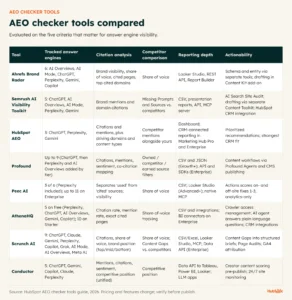
Scrunch has positioned itself as a purpose-built AEO platform, designed specifically for teams that view AI visibility as a distinct discipline from traditional SEO. It prioritizes the monitoring of AI citations, the auditing of site crawlability for bots, and the active optimization of how AI agents experience a website’s content. Conversely, Ahrefs Brand Radar serves as a specialized add-on to the established Ahrefs SEO ecosystem. It is built for marketing teams that prefer a unified dashboard, layering AI visibility data alongside traditional search metrics, backlink profiles, and social mentions from platforms like Reddit and YouTube.
The Evolution of Search: A Brief Chronology of AEO
To understand the necessity of these tools, one must look at the timeline of search evolution over the last four years. The launch of ChatGPT in late 2022 served as the catalyst, but the real shift occurred in 2024 and 2025 with the integration of AI Overviews (SGE) by Google and the rapid adoption of Perplexity as a primary research tool. By early 2026, industry data indicated that nearly 30% of traditional search volume had migrated to AI-native interfaces.
In response, the marketing technology sector pivoted. Early adopters initially relied on manual "prompt engineering" to see if their brands appeared in AI answers. This proved unscalable, leading to the development of automated monitoring solutions. Scrunch entered the market focusing on the technical "handshake" between websites and LLM crawlers, while Ahrefs leveraged its massive historical database of web mentions to provide a longitudinal view of brand health in the age of generative AI.
Technical Data Methodology: Synthetic vs. Real-World Signals
One of the most significant points of divergence between Scrunch and Ahrefs Brand Radar lies in how they collect and interpret data. For marketing executives, the reliability of these metrics is paramount, as AI visibility reporting often influences high-level content budgets.
Scrunch utilizes a sophisticated blend of browser automation and official platform APIs. By applying machine learning and Natural Language Processing (NLP), the platform surfaces brand mentions and analyzes the sentiment of AI-generated responses. Its prompt architecture is largely "synthetic," meaning it converts specific brand-relevant keywords into prompts to see how an AI responds. This provides granular control for brands that want to track specific buying-stage questions. However, Scrunch’s default refresh cadence of 72 hours—after an initial 14-day daily monitoring period—requires users to be proactive if they need real-time data during a product launch or a PR crisis.
Ahrefs Brand Radar takes a different approach by drawing from a massive pool of over 406 million monthly prompts. These are derived from real user keywords rather than synthetic prompts created by the marketing team. This scale allows Ahrefs users to benchmark their brand against a broader signal of what the general public is actually asking. While this provides a more "organic" view of visibility, third-party audits have noted occasional accuracy gaps in how Ahrefs tracks specific engines like ChatGPT and Perplexity. Furthermore, as of early 2026, Ahrefs lacks coverage for Claude, a significant omission for B2B brands whose audiences use Anthropic’s models for professional and technical research.
Specialized Features and AI Crawlability
For technical SEOs and AEO specialists, the ability to see how a site is "read" by a bot is as important as the final citation. Scrunch offers a suite of tools specifically for this purpose. The "Agent Traffic" tool allows webmasters to distinguish between useful AI traffic (from bots like GPTBot or ClaudeBot) and general web noise. This is paired with "Site Maps," a feature that identifies technical blockers—such as complex JavaScript or restrictive robots.txt files—that might prevent an AI agent from parsing a site’s most valuable content.
Scrunch’s most ambitious feature is its AI Experience Platform (AXP), currently available to Enterprise-tier clients. AXP operates at the "edge" of the content delivery layer, serving a token-optimized, lightweight version of a webpage specifically to AI bots while leaving the human-facing site unchanged. By reducing token loads by up to 26%, Scrunch claims to unblock AI agents that might otherwise struggle with heavy website markup. This dual-delivery architecture represents a high-stakes technical strategy that aims to maximize the "crawl budget" of LLMs.
Ahrefs Brand Radar, while less focused on the edge-delivery of content, excels in cross-platform discovery. It provides a "Brand Radar" dashboard that shows visibility across AI answers, traditional search, and community-driven platforms like Reddit. For many brands, the most valuable AI citations actually come from third-party sources—review sites, forums, and news outlets—rather than the brand’s own website. Ahrefs’ ability to track these mentions across the wider web provides a more holistic view of the "source of truth" that AI models are using to form their answers.
Pricing Structure and Market Positioning
The financial investment required for these tools reflects their different target audiences. Scrunch’s entry-level "Brand Core" plan starts at $250 per month, offering coverage across four major LLMs: ChatGPT, Perplexity, Google AIO, and Microsoft Copilot. This plan includes 125 unique tracked prompts and five site audits. For agencies managing multiple clients, the "Agency Core" plan at $500 per month scales these capabilities, while the Enterprise tier is required for those seeking access to AXP and a broader range of models including Claude, Gemini, and Grok.
Ahrefs Brand Radar offers a lower barrier to entry for teams already within the Ahrefs ecosystem. Standalone pricing begins at $199 per month for entry-level access. For organizations that need the full 406-million-prompt database and coverage across all supported platforms (including Grok), the cost rises to $699 per month. Ahrefs also offers "Custom Prompts" as a modular add-on starting at $50 per month, allowing smaller teams to experiment with AEO without committing to a full enterprise license.
Implications for Marketing Strategy: From Visibility to Pipeline
The ultimate goal of tracking AI visibility is to influence the bottom line. Industry analysts suggest that raw citation counts are a "vanity metric" unless they are tied to sentiment and intent. A brand that is cited frequently but in a negative context—or in response to low-intent queries—will see little ROI from its AEO efforts.
Scrunch addresses this through its "Insights" feature, which moves beyond reporting to provide actionable recommendations. If a competitor is consistently winning a specific category in AI responses, Scrunch identifies the likely sources the AI is citing and suggests content updates to differentiate the brand. This creates a direct workflow from data to content creation. Furthermore, its "Shopping" feature tracks product-level visibility in commerce-related prompts, providing a clearer link between AI answers and purchase intent.
Ahrefs focuses on the broader discovery funnel. By showing how a brand’s AI visibility trends alongside its Reddit mentions and YouTube performance, Ahrefs helps teams understand the "halo effect" of multi-channel marketing. If a brand goes viral on Reddit, Ahrefs allows the team to track how quickly that sentiment is picked up and reflected in AI-generated answers.
Expert Analysis and Industry Reactions
Marketing leaders have expressed varying degrees of risk tolerance regarding these new technologies. "The challenge with AEO is the ‘black box’ nature of LLMs," says one senior digital strategist. "We can optimize our sites for bots, but we are ultimately at the mercy of the model’s training data and current temperature settings."
This sentiment has led many brands to adopt a hybrid approach. For large-scale B2B enterprises, using Ahrefs for broad brand monitoring while employing Scrunch or HubSpot’s AEO tools for targeted content sprints is becoming a standard practice. HubSpot’s free AEO Grader has also become a popular entry point for mid-market companies to benchmark their visibility before investing in a paid platform.
A significant point of discussion among technical SEOs is the risk associated with Scrunch’s AXP dual-delivery system. While it optimizes for bots, it introduces a layer of technical complexity that must be managed carefully to avoid unintended SEO consequences. The consensus among experts is that AEO should complement, not replace, traditional SEO. A brand that ignores its technical foundation for humans while chasing AI citations risks losing its most valuable organic traffic.
Conclusion: Choosing the Right Framework
The decision between Scrunch and Ahrefs Brand Radar depends on the specific problems a marketing team is trying to solve. Scrunch is the superior choice for organizations that have a dedicated AEO budget and a need for deep technical audits and bot-specific optimization. It is a "vertical" tool designed for the specialist.
Ahrefs Brand Radar is the more pragmatic choice for "horizontal" marketing teams that need to see AI visibility as one piece of a much larger discovery puzzle. Its strength lies in its massive dataset and its integration with the tools that SEOs have used for over a decade.
As we move further into 2026, the brands that succeed will be those that treat AI visibility not as a one-time project, but as a continuous cycle of monitoring, optimization, and attribution. Whether through the surgical precision of Scrunch or the broad-spectrum analysis of Ahrefs, the move toward Answer Engine Optimization is no longer optional—it is the new baseline for digital relevance.