Google Accelerates Gemini 4 Training as Sundar Pichai Acknowledges Competitive Gaps in AI Coding and Agentic Capabilities

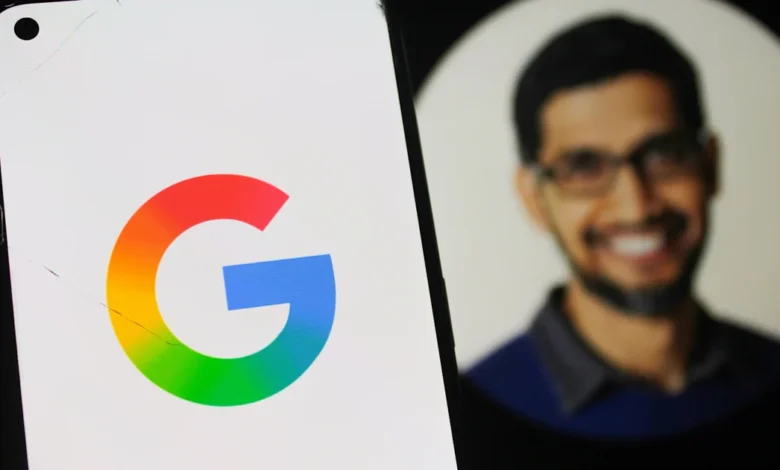
During Alphabet’s Q2 2026 earnings call, Chief Executive Officer Sundar Pichai provided a candid assessment of the company’s current standing in the artificial intelligence sector, signaling a pivotal shift in strategy as Google navigates a landscape of intensifying competition. Pichai emphasized that while Google remains a leader in broad multimodal applications, the company must urgently refine its capabilities in specialized coding and "agentic" workflows—systems designed to perform complex, multi-step tasks autonomously. To bridge this gap and secure a position at the "next frontier" of AI, Pichai confirmed that Alphabet has pivoted its focus toward the development of Gemini 4, a larger, more ambitious base model currently in the pretraining phase.
The CEO’s remarks arrived at a complicated juncture for the tech giant. While the company recently celebrated the release of Gemini 3.6 Flash, its flagship high-performance model, Gemini 3.5 Pro, remains conspicuously absent from public availability. This delay, reportedly stemming from persistent difficulties in meeting internal benchmarks for coding proficiency, has raised questions among investors and industry analysts regarding Google’s ability to keep pace with rivals such as OpenAI and Anthropic, both of whom have made significant strides in developer-centric AI tools over the past year.
A Strategic Pivot Amidst Flagship Delays
The narrative of the Q2 2026 earnings call was defined by a balance of incremental progress and long-term ambition. Pichai’s admission that Google is "a bit behind" in agentic coding echoes sentiments he first shared in May 2026 during an interview on the Hard Fork podcast. At that time, Pichai noted that Google lacked the extensive developer-facing product ecosystem that generates the high-quality usage data enjoyed by competitors. This data is critical for refining models that do not just suggest code snippets, but act as autonomous agents capable of debugging, refactoring, and deploying software.
The struggle to perfect these capabilities is most evident in the timeline of the Gemini 3.5 series. Initially announced at the Google I/O conference in May 2026, the 3.5 series was intended to represent the pinnacle of Google’s mid-year AI offerings. While the lightweight "Flash" version was released immediately, the more robust "Pro" version has faced multiple setbacks. Internal reports suggests that a late June update intended to bolster the model’s coding logic failed to produce the desired results, leading to a decision to keep the model in "partner testing" indefinitely.
Chronology of Gemini Development and Market Entry
To understand the current state of Google’s AI roadmap, it is necessary to examine the sequence of releases and announcements that have shaped the first half of 2026:
- May 2026 (Google I/O): Google officially introduces the Gemini 3.5 architecture. Gemini 3.5 Flash is launched for general availability, promising high-speed inference for enterprise applications. The company pledges that Gemini 3.5 Pro will follow within thirty days.
- June 2026: As the deadline for Gemini 3.5 Pro nears, internal testing reveals that the model struggles with complex software engineering tasks compared to rival models like Claude 3.5 Sonnet. Reports of a "coding bottleneck" begin to circulate.
- Late June 2026: A significant brain drain occurs within Google’s AI divisions. Notable researchers, including Gemini co-lead Noam Shazeer and AlphaFold’s John Jumper, depart for OpenAI and Anthropic, respectively. Sources suggest internal frustration over the pace of deployment for coding-specific tools.
- July 21, 2026: In an effort to maintain momentum, Google releases Gemini 3.6 Flash. This update focuses on efficiency and cost-effectiveness rather than the "frontier" capabilities expected of a Pro or Ultra model.
- July 2026 (Q2 Earnings Call): Sundar Pichai confirms that Gemini 3.5 Pro is still being tested and shifts the focus to Gemini 4, describing it as the necessary engine for the next generation of agentic AI.
Technical Performance and the "Flash" Tier Strategy
While the delay of the Pro model has caused concern, Google has successfully optimized its "Flash" tier, which is designed for high-volume, low-latency tasks. The release of Gemini 3.6 Flash represents a significant technical achievement in model distillation and efficiency. According to company data, 3.6 Flash produces 17% fewer output tokens compared to its predecessor, 3.5 Flash, for the same tasks. This reduction in "token verbosity" directly translates to lower costs for API users and faster response times for consumers using Google Search’s AI features.
On the DeepSWE benchmark—a rigorous evaluation of an AI’s ability to resolve real-world software engineering issues—Gemini 3.6 Flash showed marked improvement, scoring 49%. This is a notable jump from the 37% achieved by Gemini 3.5 Flash just months prior. Despite this progress, industry experts point out that these scores still trail behind the specialized coding models offered by startups that focus exclusively on the developer experience.
To further saturate the market, Google also introduced Gemini 3.5 Flash-Lite. This ultra-low-cost tier is being integrated into the core Google Search infrastructure to power "AI Overviews" at a massive scale, allowing the company to provide generative answers without the prohibitive compute costs associated with larger models.
The Talent War and Internal Pressures
The strategic challenges facing Google are compounded by a highly competitive labor market for AI talent. The departure of Noam Shazeer and John Jumper is particularly symbolic. Shazeer, a co-author of the seminal "Attention Is All You Need" paper that birthed the transformer architecture, was a cornerstone of Google’s research efforts. His move to a competitor suggests a shift in the perceived center of gravity for AI innovation.
Internal morale within Google DeepMind is reportedly under pressure as researchers balance the need for scientific breakthroughs with the commercial demand for product-ready models. The "agentic" gap Pichai mentioned is not merely a software issue but a data issue; without a platform as ubiquitous as GitHub (owned by Microsoft/OpenAI) or a dedicated coding environment like Cursor, Google has had to rely on synthetic data and public repositories, which may not provide the same depth of "reasoning" data found in real-world developer interactions.
Financial Context: Alphabet’s Q2 2026 Performance
The urgency regarding Gemini 4 is also driven by financial realities. Alphabet’s Q2 2026 earnings report showed that while search revenue remains robust, the rate of growth has begun to ease after a year of rapid, AI-driven acceleration. Investors are increasingly looking for "Phase 2" of the AI transition: moving from experimental chatbots to revenue-generating autonomous agents.
Google Cloud, which houses the Vertex AI platform, continues to grow, but its success is tethered to the quality of the Gemini models available to enterprise clients. If developers perceive Google’s models as inferior for coding—the primary use case for many enterprise AI implementations—Alphabet risks losing cloud market share to Microsoft Azure or Amazon Web Services.
Defining the Frontier: What to Expect from Gemini 4
By moving the goalposts to Gemini 4, Pichai is signaling that the company views the current 3.5 generation as a transitional phase. Gemini 4 is being built from the ground up to handle agentic workflows. Unlike traditional LLMs that predict the next word in a sentence, Gemini 4 is expected to incorporate "search-style" reasoning and reinforcement learning from human feedback (RLHF) specifically tuned for task completion.
The pretraining of Gemini 4 is described by Google as its "most ambitious" to date. This process involves massive compute clusters and a more diverse training set that includes proprietary datasets from across Google’s ecosystem, including YouTube transcripts for multimodal understanding and Google Workspace data for administrative task automation. However, the company has refrained from setting a firm release date, likely a move to avoid the reputational damage caused by the missed deadlines of Gemini 3.5 Pro.
Broader Implications for the AI Industry
The admission that a larger base model is required to stay competitive suggests that the industry may not yet have reached the point of "diminishing returns" on model scaling. While some researchers argue that smaller, more efficient models are the future, Google’s pivot to Gemini 4 indicates that for the most complex reasoning and coding tasks, size and compute power still matter.
Furthermore, the focus on agentic AI marks the beginning of the end for the "chatbot era." The next two years will likely see a transition toward "invisible AI"—background processes that manage emails, write software, and organize schedules without constant human prompting. Google’s success or failure in this transition will depend on whether Gemini 4 can move beyond the linguistic fluency of its predecessors and achieve a level of logical reliability that has so far eluded the Gemini 3.5 series.
Looking Forward: Success Metrics for Alphabet
As the third quarter of 2026 begins, the technology sector will be watching two key indicators of Google’s health. First is the eventual release of Gemini 3.5 Pro. If the model arrives with best-in-class coding benchmarks, it will signal that Google has resolved its internal technical hurdles. If it continues to slip, or arrives with underwhelming performance, the pressure on the Gemini 4 team will become immense.
Second is the integration of agentic features into Google Workspace and Android. Google’s advantage has always been its massive distribution network. If Gemini 4 can leverage the billions of users on these platforms to create a seamless, agentic experience, the "data gap" Pichai referenced may quickly close. For now, Alphabet remains a company in a high-stakes race, acknowledging its current limitations while betting its future on a next-generation architecture that is still months, if not a year, away from the public eye.