DMT and the Enigma of Reality: A Deep Dive into Consciousness, Claims, and Scientific Scrutiny

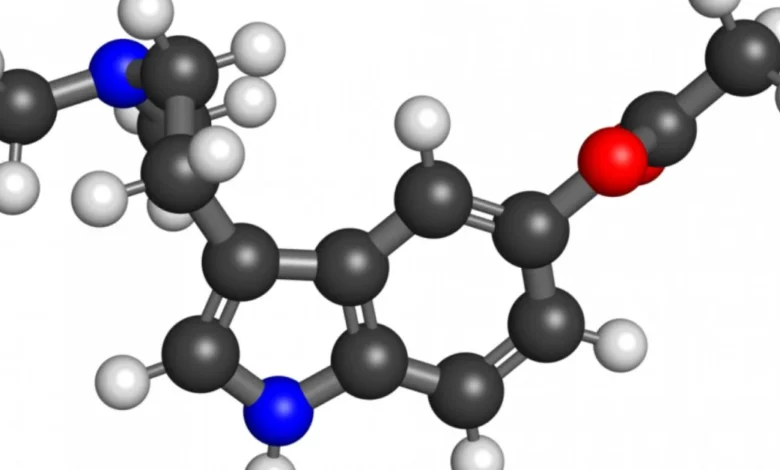
DMT (Dimethyltryptamine) is a potent, naturally occurring psychedelic compound renowned for inducing profound visual and auditory hallucinations, often described as immersive journeys into alternate states of consciousness. Found in a diverse array of plant species and present in trace amounts within the human body, DMT has long captivated researchers and users alike. A significant number of individuals who experience DMT report that their encounters transcend mere "hallucinations," instead characterizing them as vivid visitations to an alternative reality, one that often feels more fundamental or "real" than their waking existence. This perspective fuels ongoing philosophical debates and scientific inquiry into the nature of perception, consciousness, and reality itself.
The Chemical Nexus: Understanding DMT
Dimethyltryptamine, a substituted tryptamine, is structurally similar to serotonin, a neurotransmitter crucial for mood regulation. Its rapid onset and short duration of action, particularly when inhaled or injected, have earned it the moniker "the spirit molecule." Unlike many other psychedelics, DMT’s presence in numerous biological systems—from grasses and trees to mammals—suggests a deeply ingrained role in natural processes, though its exact physiological function in the human body remains largely unknown. Endogenous DMT is thought to be synthesized in the pineal gland, a small endocrine gland in the brain, a hypothesis popularized by researchers like Dr. Rick Strassman, though this remains an area of active investigation and debate within the scientific community. The compound is also the active ingredient in ayahuasca, a traditional Amazonian shamanic brew, where it is orally active due to the presence of monoamine oxidase inhibitors (MAOIs) that prevent its rapid breakdown in the digestive system.
A Historical Glimpse: Pioneers and Early Research
The existence of DMT has been recognized for centuries in indigenous cultures, particularly in South America, where it is a central component of spiritual and healing rituals involving ayahuasca. Modern scientific understanding began to take shape in the mid-20th century. In 1931, Canadian chemist Richard Manske synthesized DMT, though its psychoactive properties were not fully recognized until 1956, when Hungarian chemist Stephen Szára extracted it from the Mimosa hostilis plant and self-administered it, documenting its hallucinogenic effects.
The latter half of the 20th century saw significant, albeit limited, clinical and ethnographic research into DMT. Terence McKenna, an ethnobotanist, philosopher, and psychedelic advocate, was instrumental in bringing DMT into public consciousness during the 1980s and 1990s. His articulate descriptions of DMT experiences, often involving encounters with "machine elves" or self-transforming entities, profoundly influenced the counterculture and psychedelic communities. McKenna championed the idea that psychedelics, especially DMT, could serve as tools for exploring consciousness and accessing hidden dimensions of reality, though his work was largely anecdotal and philosophical rather than empirical science.
Following McKenna, Dr. Rick Strassman conducted groundbreaking clinical research on DMT at the University of New Mexico in the early 1990s. His extensive studies, detailed in his book DMT: The Spirit Molecule, involved administering DMT to human volunteers and meticulously documenting their experiences. Strassman’s work provided the first modern, systematic clinical data on DMT’s effects, exploring its potential roles in consciousness, near-death experiences, and spiritual states. His research reignited scientific interest in the compound and laid a foundation for contemporary psychedelic studies.
The Modern Renaissance: Public Discourse and Expanding Inquiry
In recent years, the conversation around DMT has undergone a significant renaissance, largely propelled by society’s growing acceptance of psychedelic-assisted therapy and the mainstreaming of discussions around altered states of consciousness. This renewed interest is evident in various media, including popular podcasts and documentaries, which have brought once-fringe topics into broader public discourse.
A notable example of this trend is YouTube podcaster Shawn Ryan’s recent interview with independent researcher Danny Goler. Goler, described as a 21st-century DMT pioneer due to his extensive personal experience and unique interpretations, presented a compelling and often provocative perspective on the compound. Having reportedly ingested DMT thousands of times, Goler articulated a worldview where conventional reality is a mere facade, a computationally rendered illusion that pales in comparison to the "true" reality glimpsed through DMT. His discourse touched upon a wide array of philosophical topics, including the fundamental nature of reality, the intricacies of human consciousness, the origins of religious belief, and the essence of spirituality, all informed by his profound DMT experiences.
Goler’s interview generated considerable discussion, particularly around several "reveals" that, while striking, necessitate careful contextualization. Among these were claims that thousands of individuals, while under the influence of DMT and often utilizing lasers, have reportedly perceived "code"—resembling computer programming or an ancient, cryptic language—etched into walls and their surroundings. This observation has purportedly spurred a project aimed at creating a "Rosetta Stone" to decipher these shared symbols. Another significant assertion by Goler, echoing certain philosophical currents, is that our perceived "reality" is computationally generated, rendering the physical world we inhabit as an elaborate illusion. These claims, though sensational, highlight the depth of subjective experience reported by some DMT users and contribute to the ongoing philosophical and scientific debates surrounding the compound.
Navigating the Claims: A Different Reality or Altered Perception?
The profound subjective experiences reported by DMT users, particularly the assertion of accessing an entirely different or more fundamental reality, invite rigorous philosophical and scientific scrutiny. While there is a strong conviction among many users that DMT grants them access to an alternate dimension of reality, the scientific community approaches such claims with caution, emphasizing the distinction between subjective experience and objective verification.
A core question arises: Is it genuinely possible to access an independent, verifiable reality simply by ingesting a chemical compound into our human physiological system? Or are we, even in these wildly altered states, still fundamentally experiencing human reality, albeit through a radically reconfigured perceptual apparatus? Our sensory organs and brain structures are intrinsically designed to process information in specific ways, shaping our understanding of the world. While DMT undoubtedly reconfigures these processes, it remains an open question whether it transcends them to reveal an external, independently existing reality or merely unveils a novel way our internal system can construct and interpret information.
To illustrate this, consider a video game analogy: When Pac-Man consumes a power pellet, he temporarily gains the ability to consume the predatory ghosts that normally pursue him. This changes his experience within the game, altering his capabilities and perception of his environment. However, Pac-Man does not suddenly access the underlying computer code or the reality of the player operating the console. His experience is still confined within the parameters of the game’s design, albeit a heightened or altered state within those parameters. Similarly, DMT might offer a brief excursion into a different mode of experiencing human reality, rather than a literal portal to an entirely separate dimension. The vividness and coherence of the DMT experience do not, by themselves, constitute irrefutable evidence of an external, verifiable alternate reality. They certainly speak to the extraordinary capabilities of the human mind to generate complex, immersive internal worlds.
The "Code" Phenomenon and the Challenge of Subjectivity
Goler’s mention of a "Rosetta Stone" project to identify and codify symbols reportedly seen by DMT users, particularly "code" in the walls with the aid of lasers, introduces another layer of complexity. This endeavor immediately brings to mind the "other minds problem" in modern philosophy, which questions how we can truly know that another person’s subjective experience of something is identical to our own.
Philosopher John Locke famously highlighted this issue by distinguishing between primary qualities (like shape or motion, inherent to the object) and secondary qualities (like color, smell, or taste, which are observer-dependent). Locke argued that while we might both refer to an object as "pink," there’s no way to definitively prove that your internal experience of "pink" is the same as mine; you might be experiencing what I perceive as "green," and vice-versa. We lack the epistemological bridge to confirm identical subjective experiences even under normal, sober conditions.
Extending this to DMT experiences, the challenge is compounded. If we cannot confidently assert shared experience for something as commonplace as color, how can we make such an inference with any certainty when individuals are under the influence of a potent hallucinogen known to drastically alter perception? The "code" that one person reports seeing could be a "squiggle" to another, or something entirely different. The very act of attempting to codify these experiences runs into the fundamental barrier of intersubjectivity. While a shared lexicon of reported symbols might emerge, it would primarily reflect a convergence in descriptions of experience rather than definitive proof of identical underlying perceptual phenomena. The current media landscape, replete with anecdotes of "seeing code," might also contribute to a priming effect, where users, consciously or unconsciously, arrive at the experience with pre-existing expectations or tropes, potentially influencing their perceptions.
DMT and the Simulation Hypothesis: A Critical Examination
A compelling claim made by some DMT researchers, including Goler, links the perception of "code in the walls" during DMT trips to the simulation hypothesis—the idea that our perceived reality is, in fact, a sophisticated computer simulation. While the simulation hypothesis is a profound philosophical and even scientific topic with various arguments supporting its serious consideration, using hallucinogen-induced visions of "code" as empirical evidence warrants critical examination.
The primary objection to this line of reasoning lies in the inherent nature of simulations. In any computational system, the rendered reality (what we see on the screen, the Pac-Man maze) and the underlying programming code that generates it operate on two fundamentally different levels. One does not typically "see" the lines of code within the simulated environment itself. If our reality were a simulation, it would be designed to appear seamless and real to its inhabitants, not to expose its computational scaffolding directly. The "code" would exist at a meta-level, outside our direct perception within the simulation.
A more plausible explanation, from a neurobiological perspective, is that DMT, by profoundly altering brain chemistry and neuronal activity, might be tapping into or overstimulating certain intrinsic mechanisms within the human brain. The brain is an incredibly complex symbol-processing organ, constantly interpreting, categorizing, and generating information. It traffics in patterns, language, and abstract representations. It is conceivable that DMT could be "hacking" into a neuronal system related to language, communication, pattern recognition, or even the fundamental processing of sensory input, causing users to perceive symbolic representations or "code" when this mechanism is hyperactive or dysregulated. This would be an internal phenomenon, a byproduct of the brain’s altered state, rather than an external revelation of the universe’s true nature.
Methodological Challenges and Future Directions
The profound subjective nature of DMT experiences underscores the methodological challenges in conducting rigorous research. The current anecdotal emphasis, while valuable for generating hypotheses, necessitates a stronger empirical foundation. For instance, conducting placebo-controlled studies would be an important step. While a study design involving some participants receiving DMT and others receiving a placebo would still encounter the "other minds problem" (as there’s no definitive way to prove what someone is experiencing with a placebo either), such an approach could begin to establish consistency between genuinely altered states and non-specific psychological effects. It could help researchers differentiate between seeing "something unusual" due to the compound’s direct effects and seeing "nothing unusual" or perhaps only expected phenomena influenced by suggestion.
The "Rosetta Stone" project, despite its philosophical hurdles, could still yield valuable insights into commonalities in human perception under extreme psychedelic states. If a statistically significant number of individuals consistently report seeing similar symbols or patterns, it could suggest universal neurocognitive mechanisms at play, rather than necessarily revealing an external, shared "code" of reality. This might point towards fundamental ways the human brain processes information when its usual filters are suspended.
Further research should also explore the therapeutic potential of DMT, particularly its applications in mental health. While the current focus often gravitates towards LSD, psilocybin, and ketamine in psychedelic-assisted therapy, DMT’s unique pharmacokinetic profile (rapid onset, short duration) might offer distinct advantages for certain therapeutic interventions, potentially allowing for more contained and manageable clinical sessions. Research into its anxiolytic, antidepressant, and anti-addictive properties is nascent but promising.
Broader Implications and Ethical Considerations
The expanding discourse around DMT and other psychedelics carries significant broader implications for society. It challenges conventional understandings of consciousness, mental health, and even spirituality. As research progresses, ethical frameworks must evolve to address questions of informed consent, responsible use, and the potential for psychological distress or misuse. The commercialization of psychedelics also raises concerns about equitable access and the potential commodification of profound spiritual or therapeutic experiences.
Ultimately, DMT stands as a fascinating frontier in neuroscience, psychology, and philosophy. While the claims made by some users, such as visiting other realities or seeing the "code" of a simulated universe, ignite public imagination, scientific inquiry demands a rigorous, evidence-based approach. Distinguishing between deeply meaningful subjective experiences and objectively verifiable truths remains the paramount challenge. The ongoing exploration of DMT promises to not only deepen our understanding of this enigmatic compound but also to shed light on the extraordinary, still largely uncharted territories of the human mind and its relationship to what we perceive as reality.
Related posts: