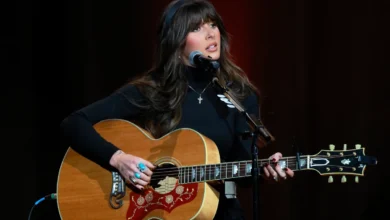
The highly anticipated performance by artist Poppy at the Upheaval Festival in Grand Rapids, Michigan, on Friday, July 17, was significantly impacted by severe wildfire smoke, leading to hazardous air quality conditions and forcing a drastic alteration to her set. While the festival proceeded, the conditions reached a critical point for Poppy, who stated she was "unable to breathe," resulting in her band performing an instrumental set while wearing respirator masks beneath their stage attire. This incident highlights the growing challenges faced by outdoor events and artists due to environmental factors, particularly the increasing prevalence of wildfires.
Background of the Upheaval Festival and Air Quality Concerns
The Upheaval Festival, a prominent rock and metal music event held annually in Grand Rapids, Michigan, is designed to bring together a diverse lineup of artists for an immersive fan experience. However, this year’s event was overshadowed by a significant environmental challenge. Wildfire smoke, originating from numerous blazes across the region and beyond, drifted into Michigan, drastically degrading air quality. On Friday, July 17, the Air Quality Index (AQI) in Grand Rapids soared to levels exceeding 350, a reading classified as "Hazardous" by the U.S. Environmental Protection Agency (EPA).
An AQI of 300 or higher signifies emergency conditions, where the risk of health effects is increased for everyone. Prolonged exposure to such levels can lead to serious respiratory issues, cardiovascular problems, and exacerbate existing health conditions. The EPA’s AirNow website characterizes this range as a "health warning of emergency conditions." This alarming situation immediately raised concerns for the safety of both festival attendees and performers.
Chronology of Events Leading to Poppy’s Modified Performance
The lead-up to Poppy’s scheduled performance on Friday evening was marked by escalating air quality alerts. As the day progressed, monitoring agencies reported a steady decline in air quality across Michigan. By the time Poppy was slated to take the stage, the AQI in the Grand Rapids area had reached critical levels.
Festival organizers, while acknowledging the severity of the situation, initially indicated that the event would continue as planned, with officials monitoring air quality closely. In a pre-event update, they assured attendees that "Your safety is our number one concern," and encouraged concertgoers to "pace yourselves and look out for one another." Organizers also noted that available information suggested air quality might improve throughout the day.
Despite these assurances, the reality on the ground proved more dire for the artists. When Poppy was due to perform ahead of the band Gojira, the environmental conditions were deemed too severe for her to perform vocally. In a move that underscored the extreme nature of the situation, her band members took to the stage wearing respirator masks concealed beneath their usual stage costumes, delivering an instrumental set. This decision was a direct response to the immediate and palpable impact of the poor air quality on the ability to perform.
Poppy’s Statement and Explanation
Following the altered performance, Poppy took to Instagram Stories to address her fans and explain her absence from the vocal performance. Her statement provided direct insight into the severity of the air quality and its impact on her health.
"Due to ‘hazardous’ AQI reaching 350+ around our set time I was unable to join my band on stage," Poppy wrote. "I was unable to breathe in those conditions." She further elaborated on the unusual nature of the performance, stating, "You might’ve noticed our set was instrumental only. For those who braved the conditions – I applaud you." Her words conveyed a sense of regret for not being able to deliver her full performance while also emphasizing the critical health risks she faced.
The U.S. Air Quality Index (AQI) is a standardized system used to report daily air quality. It measures five major air pollutants: ground-level ozone, particle pollution (particulate matter), carbon monoxide, sulfur dioxide, and nitrogen dioxide. Readings are categorized into six levels, from Good to Hazardous. A reading of 350 places the AQI firmly in the Hazardous category, indicating that everyone may experience more serious health effects. This level signifies an urgent need for protective measures and avoidance of outdoor activity.
Broader Context of Wildfire Smoke Impact on Michigan
The hazardous air quality experienced at the Upheaval Festival was not an isolated incident. Michigan, particularly the western part of the state, was under a statewide air quality alert for both Friday, July 17, and Saturday, July 18. These alerts were issued due to elevated levels of fine particulate matter, a key component of wildfire smoke. The West Michigan Clean Air Coalition had forecasted hazardous conditions in certain areas and "very unhealthy" conditions across the Lower Peninsula for Friday.

This situation is reflective of a broader trend impacting North America. Increased frequency and intensity of wildfires, attributed by many scientists to climate change, are leading to widespread smoke plumes that can travel thousands of miles, affecting air quality in areas far from the fire’s origin. This phenomenon has become a recurring concern for outdoor events, affecting everything from music festivals to sporting events and impacting public health advisories.
Analysis of Implications for Live Events and Artists
The incident at the Upheaval Festival has significant implications for the live music industry and the artists who perform. It underscores the vulnerability of outdoor events to environmental factors that are increasingly unpredictable and severe.
Health and Safety Protocols: This event highlights the critical need for robust health and safety protocols at festivals and outdoor concerts. Organizers must be prepared to implement stringent measures, including real-time air quality monitoring, providing adequate ventilation and filtration in enclosed spaces, and having clear contingency plans for severe weather and environmental hazards. The decision by Poppy’s band to wear respirators, while a creative solution, also points to the need for artists to have access to protective equipment and guidance in such situations.
Artist Welfare: The physical and mental well-being of artists is paramount. The inability to perform due to health concerns, as experienced by Poppy, can be deeply disappointing for both the artist and the fans. It raises questions about contractual obligations, potential financial losses, and the emotional toll on performers. Artists may need to build greater flexibility into their touring schedules to account for such unforeseen circumstances.
Economic Impact: Severe air quality events can lead to event cancellations or significant disruptions, resulting in substantial economic losses for organizers, vendors, artists, and local economies that rely on tourism generated by such events. The unpredictability of wildfire smoke makes long-term planning and insurance coverage more complex.
Environmental Responsibility: The incident serves as a stark reminder of the interconnectedness of environmental health and public life. It reinforces the urgency of addressing climate change and its role in exacerbating environmental hazards like wildfires. The music industry, with its significant carbon footprint, also has a role to play in promoting sustainable practices and advocating for environmental protection.
Previous Disruptions and Artistic Momentum
This interruption at the Upheaval Festival is not the first time this festival season that severe conditions have disrupted Poppy’s performances. In May, her set at the Welcome to Rockville festival in Daytona Beach, Florida, was cut short less than a minute into her performance due to severe weather and lightning protocols. These repeated disruptions, while unrelated in their specific cause, highlight a pattern of external factors impacting her ability to deliver full performances.
Despite these challenges, Poppy has been experiencing a notable surge in her career, particularly on Billboard’s rock charts. Her collaboration with Amy Lee of Evanescence and Courtney LaPlante of Spiritbox, titled "End of You," debuted at number one on Billboard’s Hot Hard Rock Songs chart dated September 20, 2025. The track further made history by becoming the first song to feature three women or women-led acts topping the Mainstream Rock Airplay chart. This chart success demonstrates Poppy’s growing influence and popularity within the rock and metal music scenes.
Her artistic output continues to be prolific. Poppy released her seventh studio album, Empty Hands, in January via Sumerian Records. This album followed her 2024 release, Negative Spaces, and continued her exploration of heavy, industrial, and alternative sounds, with production contributions from Jordan Fish and Stephen Harrison. The critical and commercial success of her recent musical endeavors underscores her resilience and creative drive, even amidst challenging external circumstances.
The Upheaval Festival incident, therefore, represents a confluence of a challenging environmental reality impacting a thriving artistic career. It serves as a compelling case study on the increasing need for adaptive strategies within the entertainment industry to navigate a world increasingly shaped by environmental crises. As wildfire seasons become more intense and prolonged, the music industry and its stakeholders will need to prioritize preparedness, flexibility, and a commitment to the health and safety of all involved.