Japan’s Hayabusa2 Mission Achieves Daring Close Flyby of Asteroid Torifune, Revealing Unexpected Contact Binary Structure

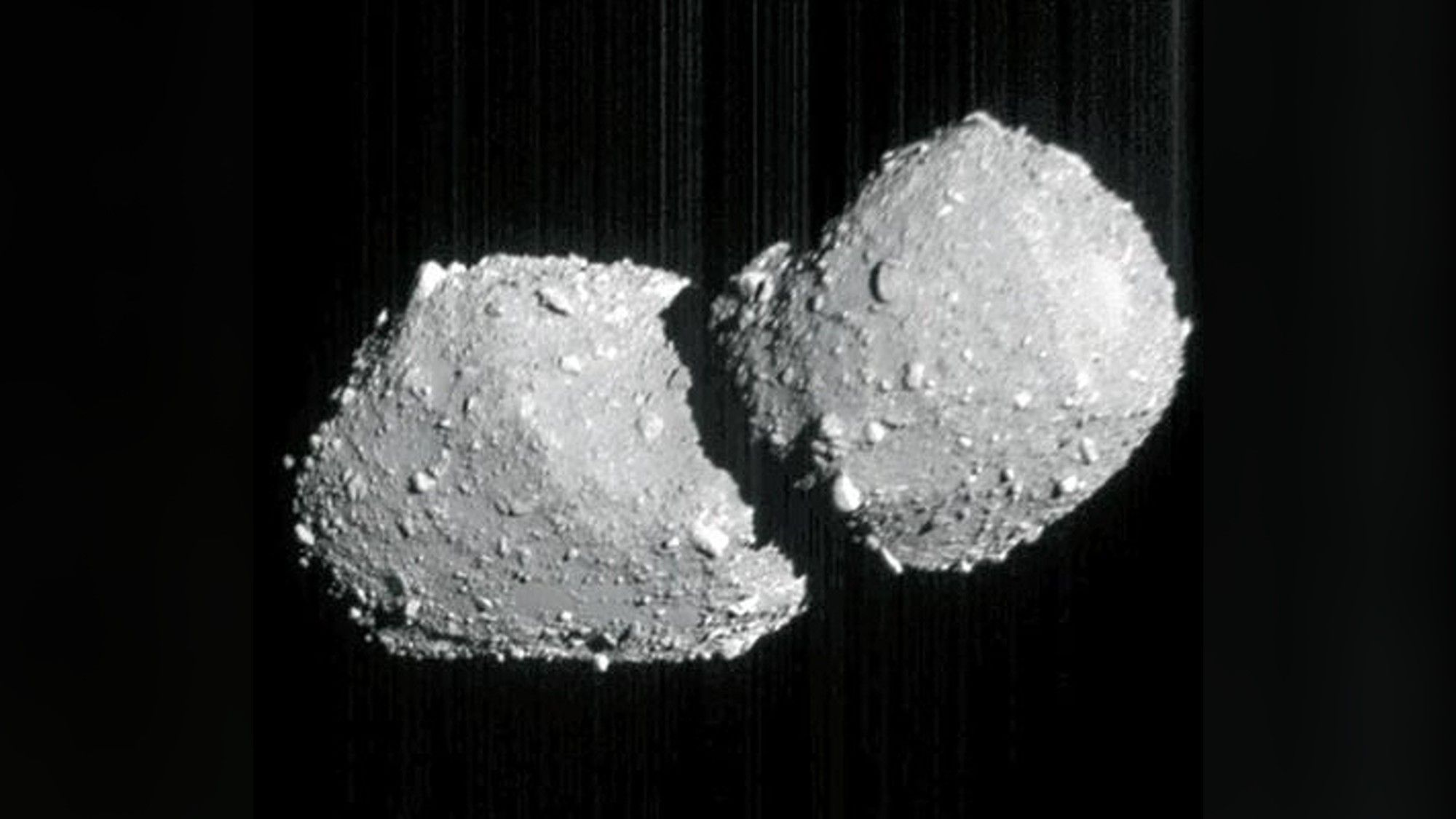
The Japan Aerospace Exploration Agency’s (JAXA) Hayabusa2 spacecraft has successfully executed a series of unprecedentedly close flybys of the near-Earth asteroid Torifune, returning spectacular imagery and scientific data that have ignited both excitement and intense scientific discussion. The daring maneuvers, which pushed the limits of the aging spacecraft’s capabilities, culminated on July 5, 2026, with a super-close encounter that revealed Torifune to be a contact binary – a celestial body formed by the gravitational embrace of two distinct rocky fragments. This discovery, coupled with the unexpectedly large size of the captured images, presented a double surprise to the mission team, highlighting the inherent unpredictability of space exploration and the vital role of meticulous scientific debate in pushing the boundaries of what is possible.
The first inkling of Torifune’s unique nature arrived on the morning of July 6, Japan time, as the initial images beamed back from Hayabusa2 began to populate the mission control screens. Makoto Yoshikawa, a key figure in the Hayabusa2 mission, described the moment of revelation at the Asteroids, Comets and Meteors conference in Poznan, Poland, on July 10. "We did not imagine such a contact binary," Yoshikawa, the former mission manager of Hayabusa2, stated to his scientific peers. The images were not only larger than anticipated but also clearly depicted an asteroid composed of two distinct lobes, suggesting a recent or ongoing gravitational interaction between the two components. This defied initial expectations, which had predicted a more monolithic structure based on earlier, less detailed observations.
A Calculated Risk: The Genesis of the Daring Flyby
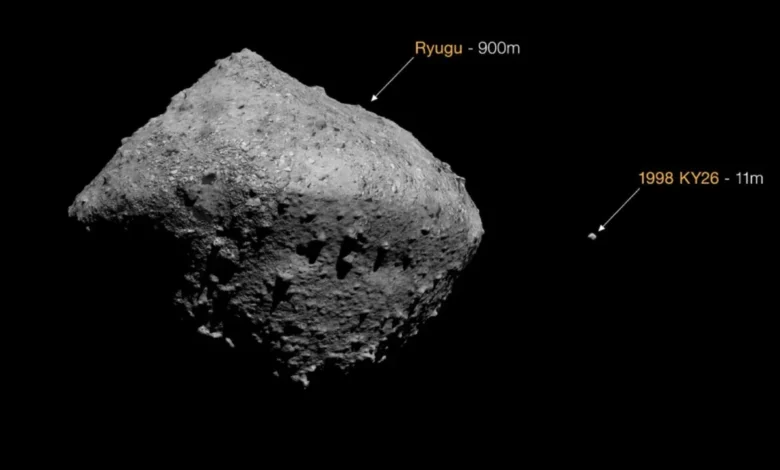
The successful flyby was not a foregone conclusion. It was the culmination of months of rigorous debate and strategic planning between JAXA’s science and engineering teams. The mission, initially designed to rendezvous with and collect samples from the asteroid Ryugu, had already successfully completed its primary objectives, delivering precious samples back to Earth in 2020. Following this triumph, JAXA shifted its focus to extended mission goals, including a planned rendezvous with the tiny asteroid 1998 KY26 in 2031.
However, the opportunity to study Torifune presented itself, prompting a reevaluation of Hayabusa2’s operational parameters. Typically, flybys of asteroids are conducted at a safe distance of around 100 kilometers (approximately 62 miles). This standard protocol, however, was deemed insufficient for acquiring the high-resolution imagery desired by the science team. At such a distance, the cameras aboard Hayabusa2, originally designed for rendezvous and proximity operations like hovering, maneuvering, and landing, would struggle to capture detailed features of the asteroid. Moreover, the spacecraft’s cameras were not optimized for the high-speed slewing required for a rapid flyby, which was projected to occur at approximately 5.3 kilometers per second (3.3 miles per second).
The science team voiced their concerns, emphasizing that a 100-kilometer standoff would yield only a basic understanding of Torifune’s global shape. In response, the engineering team proposed a more ambitious approach: reducing the closest approach distance to 10 kilometers (6.2 miles). This suggestion was met with conditional acceptance from the science contingent, but the engineers continued to explore the feasibility of even closer encounters. Ultimately, they confirmed that Hayabusa2 could safely navigate to within 1 kilometer (0.6 miles) of the asteroid’s center. This prospect was met with considerable enthusiasm from the science community, who anticipated the potential for "nice photos" – a significant understatement for the detailed imagery that would eventually be captured.
Escalating Ambitions and Heated Discussions
The scientific ambitions for the Torifune encounter took another significant leap just one month prior to the planned flyby. Yuya Mimasu, the leader of the extended mission team, put forth a bold proposal: to further reduce the closest approach distance to a mere 800 meters (approximately 2,625 feet) from the asteroid’s center. This suggestion triggered a period of intense debate, with some members of the science team expressing strong reservations due to the perceived risks involved. "Some science people said ‘No, it’s too dangerous,’ and a very heated discussion started," Yoshikawa recounted.
The primary concern revolved around the unknown dimensions and morphology of Torifune, and the potential hazards this posed to the spacecraft. Ground-based observations had provided an estimated worst-case size for the asteroid, ranging from 1,400 meters by 400 meters (4,600 by 1,300 feet). A pass 800 meters from the asteroid’s center would place Hayabusa2 precariously close to the edge of this estimated exclusion zone. Compounding these concerns was the fact that Hayabusa2’s optical systems had been affected by dust contamination resulting from the sample collection activities on Ryugu. A thorough analysis of the spacecraft’s targeting capabilities revealed a navigation error ellipse of approximately 200 meters (656 feet). "The distance fixed is 800 meters," Yoshikawa acknowledged, "but this is quite a big challenge for us."
Despite the inherent risks, the potential scientific rewards of such an intimate encounter were deemed too significant to ignore. The team ultimately decided to proceed with the 800-meter flyby, a testament to their commitment to scientific discovery and their confidence in the spacecraft’s advanced navigation and control systems.
A Chronology of a Landmark Encounter
The journey to the Torifune flyby involved a series of critical steps:
- December 2014: Hayabusa2 mission launched.
- June 2018: Hayabusa2 successfully rendezvoused with the asteroid Ryugu.
- Late 2018 – Early 2020: Hayabusa2 conducted extensive surface operations on Ryugu, including sample collection.
- December 2020: Hayabusa2 successfully delivered samples from Ryugu to Earth.
- June 19, 2026: Hayabusa2 detected the asteroid Torifune, marking the beginning of the close-encounter phase.
- July 5, 2026: The super-close flyby of Torifune was executed, with the spacecraft reaching within 800 meters of its center.
- July 5-6, 2026: Initial data and imagery from the flyby were transmitted back to Earth.
- July 10, 2026: Makoto Yoshikawa presented initial findings and discussed the mission’s challenges at the Asteroids, Comets and Meteors conference in Poznan, Poland.
- July 9, 2026: Hayabusa2’s ion engine system was restarted to begin its cruise back towards Earth.
Technological Prowess and Scientific Returns
To achieve the unprecedented 800-meter flyby, JAXA developed and implemented innovative technologies. For the final approach, Hayabusa2 utilized ground-based guidance up to three hours before the encounter, then seamlessly transitioned to its onboard autonomous navigation system. "This is quite new," Yoshikawa noted, referring to the newly developed software that was uploaded to the spacecraft for this critical maneuver.
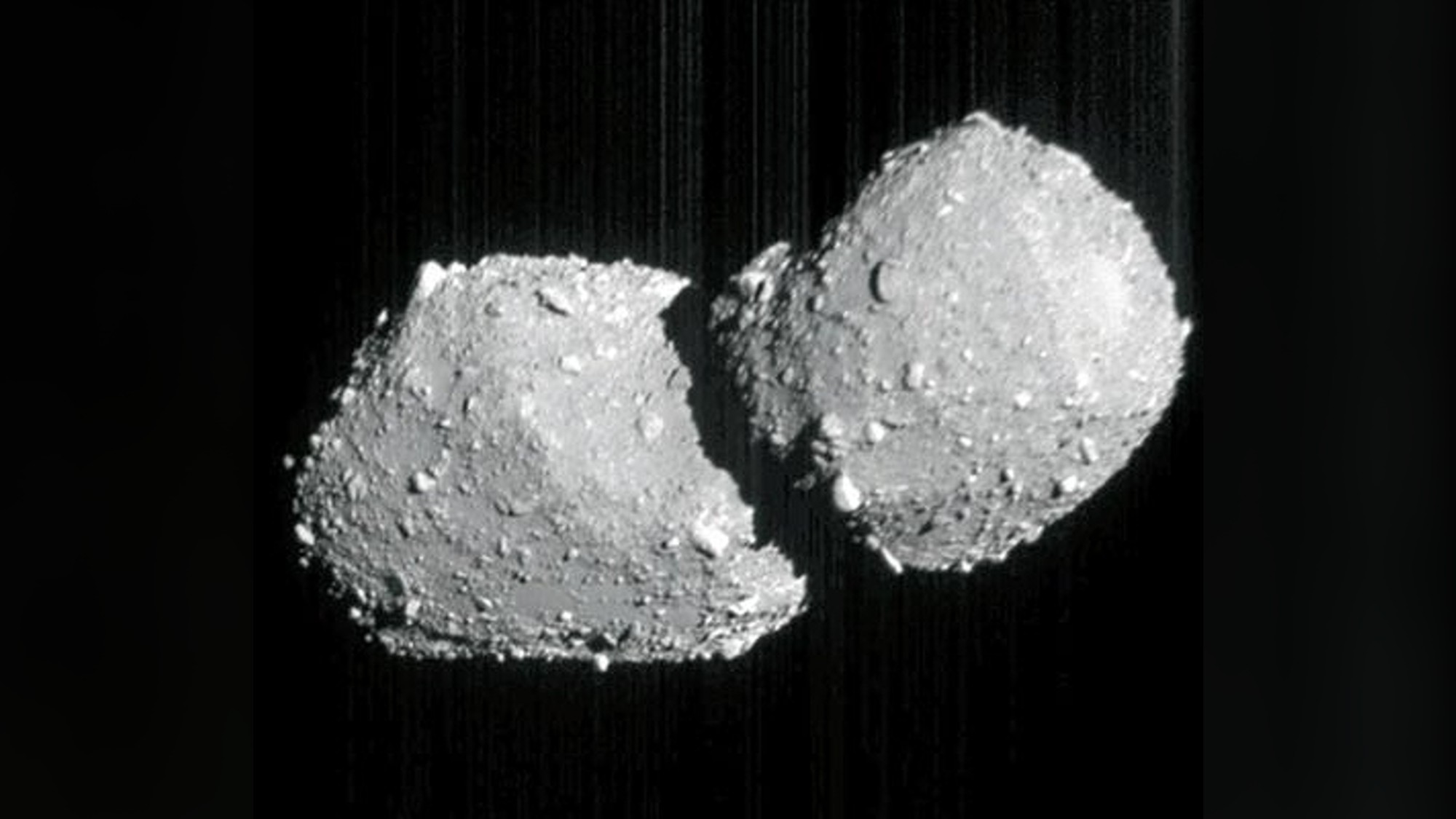
The results of this daring endeavor were immediately apparent. The Optical Navigation Camera Telescope (ONC-T) captured stunning, high-resolution images of Torifune, vividly showcasing its double-lobed structure and the rugged, boulder-strewn surfaces of each component. These images provided the first detailed visual confirmation of Torifune’s contact binary nature.
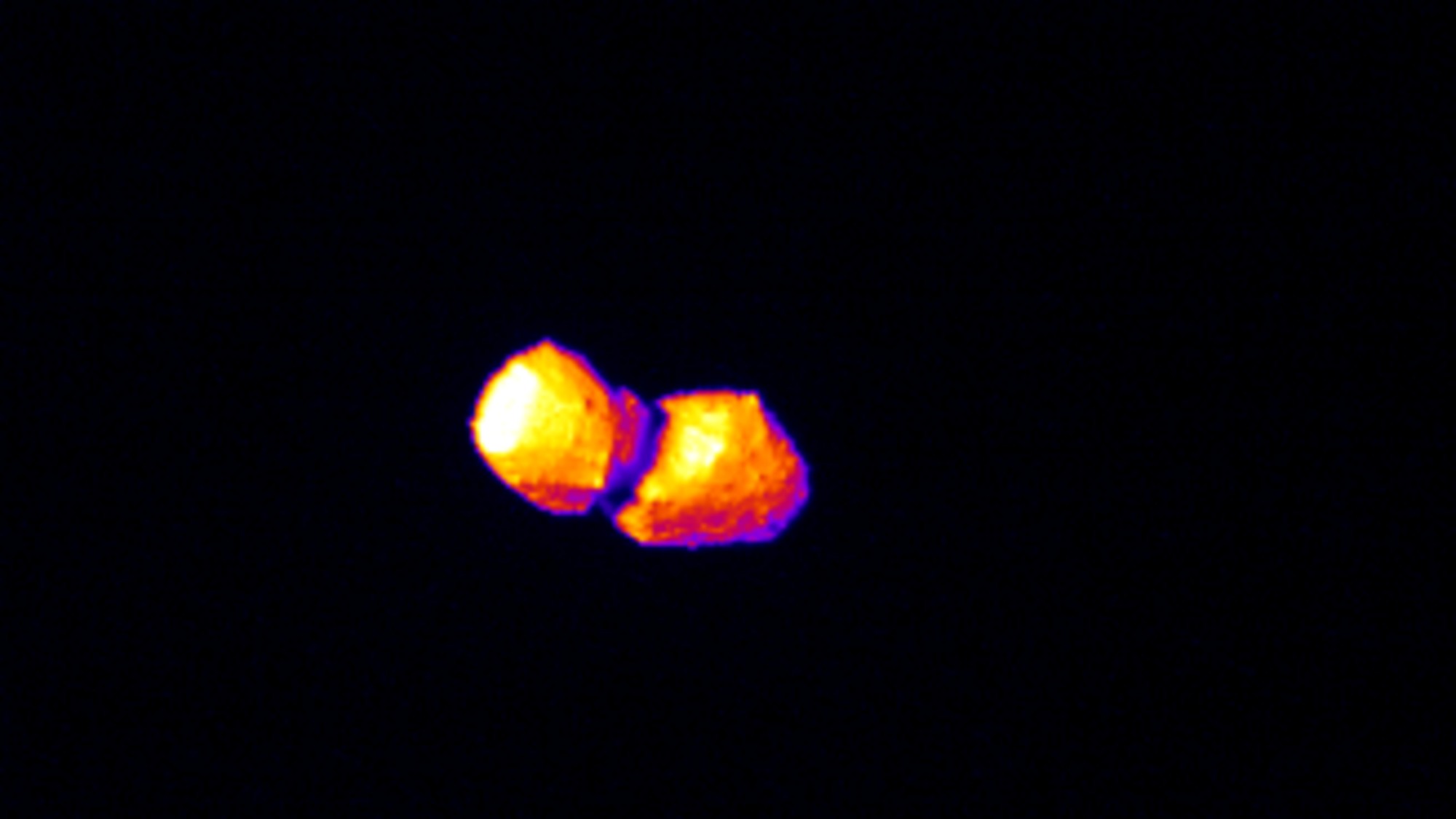
Beyond the visual spectacle, all four of Hayabusa2’s scientific instruments returned valuable data. The Thermal Infrared Imager (TIR) captured nine seconds of thermal imaging just moments before closest approach, independently corroborating the contact binary structure through the analysis of heat emission patterns. This data is crucial for understanding the thermal properties and composition of the asteroid’s surface.
The Near Infrared Spectrometer (NIRS3) and the laser altimeter (LIDAR) also yielded significant findings. Yoshikawa highlighted the LIDAR’s performance as potentially the first successful ranging measurement during an asteroid flyby, providing crucial data on the asteroid’s precise shape and topography. While an initial 25 MB of the most urgent data was downlinked, the full 300 MB of science data will require months to transmit. Hayabusa2’s ion engines have been reactivated to begin its journey back towards Earth, with planned flybys in 2027 and 2028. The remaining data will be sent back to Earth only after these maneuvers, a process that will take approximately four months.
Broader Implications for Planetary Defense and Future Exploration
The successful execution of the 800-meter flyby of Torifune carries significant implications that extend far beyond the immediate scientific discoveries. Yoshikawa emphasized that this mission has provided JAXA with invaluable "technology to collide spacecraft with a small celestial body," drawing a direct parallel to NASA’s Double Asteroid Redirection Test (DART) mission. This capability is a cornerstone of planetary defense strategies. The ability to rapidly characterize an unknown asteroid’s size, shape, and composition through fast reconnaissance is critical for assessing potential impact threats and planning effective mitigation missions. The Torifune flyby serves as a vital demonstration of this rapid characterization concept, proving that crucial information can be gathered swiftly and effectively.
This achievement underscores JAXA’s prowess in deep space exploration and its commitment to advancing scientific understanding of the solar system. The extended mission of Hayabusa2 is not yet over. The spacecraft is continuing its journey towards its ultimate target: the minuscule asteroid 1998 KY26. This rapidly rotating object, measuring approximately 36 feet (11 meters) in diameter, is scheduled for a rendezvous in 2031. Studying such small and unusual asteroids provides crucial insights into the building blocks of the solar system and the processes that have shaped planetary bodies over billions of years.
The daring close flyby of Torifune, born from intense scientific debate and technological innovation, has not only expanded our knowledge of asteroid formation and evolution but has also significantly bolstered humanity’s capacity to monitor and potentially defend against near-Earth object threats. It stands as a testament to the enduring spirit of exploration and the power of collaborative scientific endeavor.