Ford CEO Jim Farley Drives Chinese EV, Signals Major Shift in Global Automotive Competition

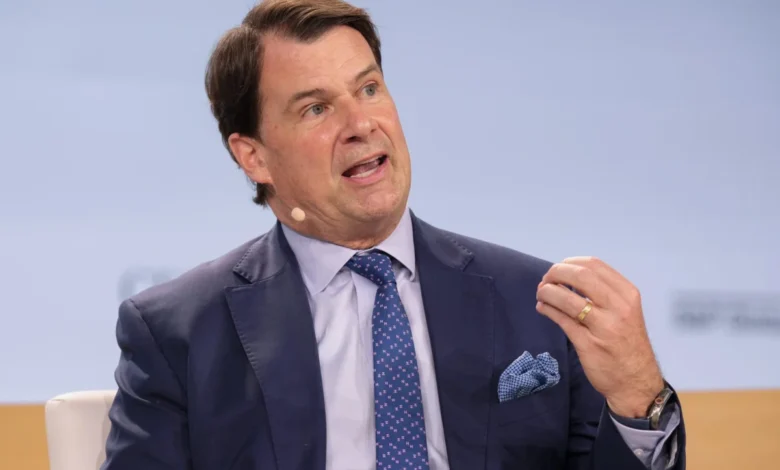
In a stark re-evaluation of the global automotive landscape, Ford CEO Jim Farley has openly declared that the true benchmark for electric vehicle (EV) innovation and cost efficiency lies not with Silicon Valley pioneer Tesla, but with China’s rapidly advancing manufacturers. This assertion comes after Farley spent a significant six months in 2024 personally testing the Xiaomi Speed Ultra 7, the inaugural electric vehicle from the Chinese tech giant primarily known for its smartphones, a driving experience he was reportedly reluctant to end. Farley’s deep dive into the Chinese market signifies a pivotal moment for legacy automakers like Ford, compelling them to look beyond traditional competitors and embrace a new, formidable challenge from the East.
Farley’s Competitive Reassessment: Why China Outpaces Tesla
During a recent interview on the Rapid Response podcast, Farley elaborated on his decision to evaluate a Xiaomi SU7 over an American-made EV, specifically addressing his stance on Tesla. While acknowledging Tesla’s achievements, Farley stated, "Nothing against Tesla. They’ve been doing great, but you know, they really don’t have an updated vehicle." This pointed critique suggests a perception within Ford’s leadership that Tesla, despite its market dominance and innovative history, has stagnated in terms of product refreshes and technological leaps compared to its burgeoning Chinese rivals.
Indeed, Tesla has introduced various updates and redesigns to its flagship models, particularly in response to mounting pressure from Chinese competition. The 2026 iteration of the Model Y reportedly features a futuristic exterior and an upgraded interior, including a redesigned dashboard. Similarly, the 2023 Model 3 received an overhaul, adding features like ventilated front seats and ambient lighting. However, industry critics and analysts, including those cited by IndexBox, have frequently characterized these improvements as incremental, arguing they fall short of the rapid, comprehensive advancements seen from Chinese car companies, which often integrate cutting-edge infotainment, advanced driver-assistance systems, and novel battery technologies at a blistering pace. While Tesla did not immediately respond to Fortune‘s request for comment regarding Farley’s remarks, the sentiment underscores a growing concern about the pace of innovation in the Western EV market relative to China.
For Farley, Ford’s ambition to be a global leader necessitates a focus on the most formidable competitors worldwide. This includes not only innovative newcomers like Xiaomi, but more significantly, the established Chinese EV powerhouse BYD. Farley lauded BYD as "the best in the business" across critical operational dimensions, including cost management, supply chain optimization, manufacturing prowess, and intellectual property development. This endorsement from a major American auto executive highlights the profound respect, and perhaps apprehension, that Chinese EV manufacturers now command on the global stage.
BYD’s Meteoric Rise: A Model of Integrated Innovation
BYD’s journey from a battery manufacturer to the world’s largest electric vehicle producer is a compelling narrative of strategic vision and relentless execution. Founded in 1995 by Wang Chuanfu, the company initially focused on rechargeable batteries, laying a foundational expertise that would prove crucial for its automotive ambitions. The pivotal moment came in 2003 when BYD acquired the struggling state-owned carmaker Xi’an Qinchuan Automobile, marking its entry into vehicle manufacturing.
The subsequent two decades saw BYD strategically scale up its EV production, primarily by capitalizing on China’s burgeoning domestic market. The Chinese government played a crucial role in this growth, implementing a comprehensive strategy that included substantial subsidies for both consumers purchasing EVs and companies manufacturing them. This supportive ecosystem also saw the rapid expansion of charging infrastructure across the country and the imposition of aggressive fuel economy standards for gasoline-powered vehicles, effectively accelerating the transition to electric mobility. This robust policy framework allowed BYD and other domestic players to grow at an unprecedented rate, fostering an environment of intense competition and innovation.
A landmark achievement for BYD occurred in 2022 when it became the first car manufacturer globally to cease production of vehicles powered exclusively by gasoline, shifting its entire focus to plug-in hybrids and pure electric vehicles. This bold move underscored its unwavering commitment to sustainable mobility. By 2025, BYD had surpassed Tesla in terms of revenue, a significant financial milestone. The company further cemented its leadership in early 2026, officially dethroning Elon Musk’s company as the world’s biggest EV maker by sales volume. While Tesla still commands a significantly higher market valuation at $1.22 trillion compared to BYD’s approximately $138 billion, BYD’s operational scale and sales volume represent a formidable challenge to the established order.
Navigating Global Markets Amidst Tariffs
Despite their growing influence, Chinese EVs face significant barriers to entry in key Western markets. In the United States, an escalated 100% tariff, initially imposed by President Joe Biden and maintained by President Donald Trump, effectively blocks the direct sale of Chinese-made electric vehicles. This protectionist measure aims to safeguard domestic manufacturers and address concerns about unfair trade practices and national security.
However, Chinese vehicles, particularly BYD’s expanding lineup of low-cost EVs, have demonstrated remarkable success in other international markets. Even in the face of tariffs imposed by the European Union, which reached up to 38.1% in 2024, BYD has managed to significantly increase its footprint. The Wall Street Journal reported that BYD’s European sales nearly tripled at the start of the year, with new registrations skyrocketing to 18,242 in January 2026, a substantial increase from 6,884 in the same month a year prior. This demonstrates the compelling value proposition and competitiveness of Chinese EVs, which are finding receptive markets despite protectionist measures. The ability of BYD to absorb or mitigate the impact of these tariffs speaks volumes about its cost efficiency and aggressive market expansion strategies.
The Chinese Advantage: Subsidies and Relentless Innovation
The phenomenon of Chinese EVs being "notably cheap but also advanced" is a complex issue with multiple contributing factors. A key element, as argued by critics and supported by data from Bloomberg, is the colossal sum of government subsidies. Over the past 15 years, the Chinese government has granted an estimated $231 billion in aid to its domestic EV industry. This massive financial backing has enabled players like BYD to develop advanced technologies, scale production rapidly, and potentially sell their cars at prices below the true cost of production, thereby gaining a significant competitive advantage over international rivals that do not benefit from similar levels of state support.
Even Tesla CEO Elon Musk, a direct competitor, acknowledged this reality in 2024, admitting that Chinese industry players are "the most competitive car companies in the world." This statement from the head of the company that pioneered mass-market EVs underscores the seriousness of the challenge. The combination of state-backed financial incentives, a massive domestic market for rapid iteration, and a culture of aggressive technological development has created an ecosystem where Chinese manufacturers can innovate faster and produce more cost-effectively than many of their global counterparts.
Ford’s Strategic Realignment: Emulating Efficiency, Targeting Affordability
In response to this shifting competitive landscape, Jim Farley is advocating for Ford to emulate BYD’s strategic approach and leverage American innovation to compete globally. His vision for Ford is clear: design and build cars to meet the demands of the "next cycle" of American car buyers, who are seeking a wide choice of different body styles at an affordable price point, ideally around $30,000, rather than the $50,000-plus typical of many current EVs.
Farley articulated this strategy: "If we’re smart, we’ll take the cost competitiveness of BYD and then we’ll compete with that platform in parts of the market where we know our customers really well." This implies a fundamental re-evaluation of Ford’s manufacturing processes, supply chain, and product development to achieve similar levels of cost efficiency.
A comparison of current entry-level EV pricing highlights the disparity: Ford’s cheapest vehicle, the hybrid Maverick XL pickup, starts at approximately $28,000. Tesla’s most affordable offering, the Model 3 sedan, begins just under $37,000. In stark contrast, BYD’s compact EV hatchback, the Seagull, sells for as little as $9,500 in China, though it commands a higher price in export markets like Latin America and Europe due to transportation costs, tariffs, and local market adjustments. The Seagull’s existence demonstrates the feasibility of ultra-affordable EVs, a segment largely untapped by Western automakers.
Ford is already in the midst of a significant reinvention to adapt to these new realities. In December, the company took a substantial $19.5 billion charge, one of the largest in its history, as it revamped its EV strategy. This recalibration was partly driven by weaker-than-expected demand for certain EV models, exacerbated by the ending of the federal EV tax credit under the Trump administration, which impacted consumer incentives.
The company’s revised strategy now emphasizes hybrids and Extended-Range Electric Vehicles (EREVs). EREVs feature a small internal combustion engine primarily acting as a generator to charge the electric battery, offering a longer driving range and alleviating range anxiety, a common concern for consumers. Notably, Ford’s F-150 Lightning, once heralded as the vanguard of its EV business, is slated to be retooled as an EREV, signaling a pragmatic shift in its electrification roadmap.
Despite this pivot, Ford is not abandoning pure EVs entirely. The company remains committed to producing a new class of low-cost electric vehicles, with plans to launch a $30,000 electric pickup truck by 2027. This future offering would represent a significant reduction from the current F-150 Lightning, which starts at $54,780, making EV ownership more accessible to a broader segment of the American population.
Broader Implications and a Call to Action
Jim Farley has consistently been among the most vocal proponents for American automakers to learn from their Chinese counterparts, frequently stating that Ford views Chinese automakers, rather than traditional rivals like GM or Toyota, as its primary competition. This perspective marks a profound shift in strategic thinking for a company with over a century of automotive heritage.
For Ford, this transformation is not merely about adapting but about fundamentally changing its operational ethos to emulate the efficiency and innovation seen in China. Farley characterizes this competitive pressure as "the gift that China gave us," explaining that it has instilled "fear and respectful enough of their progress that we could not organically just phone it in." This implies that the intense competition from China has become a powerful catalyst, forcing Ford to critically examine its processes, accelerate innovation, and strive for excellence in ways it might not have otherwise.
The broader implications for the global automotive industry are substantial. Other legacy automakers worldwide are undoubtedly watching Ford’s strategic pivot and grappling with similar challenges. The rise of Chinese EV manufacturers forces a re-evaluation of traditional supply chains, manufacturing paradigms, and product development cycles. Western manufacturers must find ways to innovate rapidly, cut costs aggressively, and offer compelling value propositions without the same level of direct government subsidies enjoyed by their Chinese rivals. This ongoing race for EV dominance is not just about market share; it’s about the very future of the automotive industry, with China unexpectedly leading the charge and shaping the strategies of global giants.