The Next Decade of Global Travel is Being Reshaped Along a New Corridor Linking the Gulf, India, and Southeast Asia

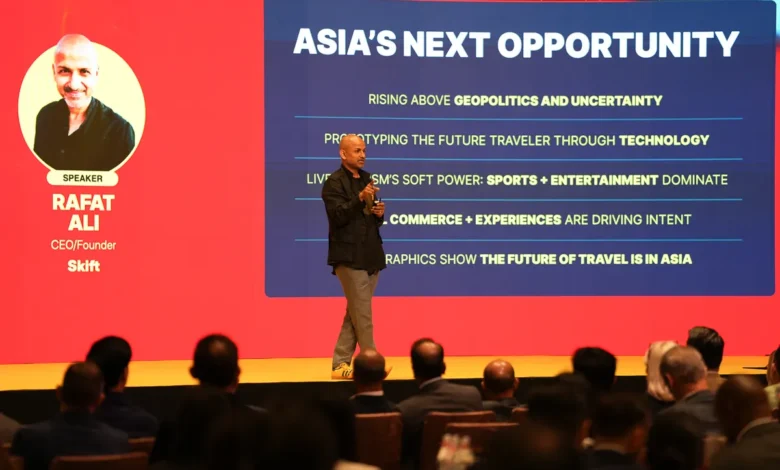
A significant, yet largely unacknowledged, power shift is rapidly redefining the global travel industry, with its future trajectory being sculpted not in traditional Western hubs, but along a burgeoning corridor that connects the Gulf states, India, and Southeast Asia. This seismic realignment is poised to dictate the landscape of travel for the coming decade, driven by concurrent flows of capital, supply, and demand, with the epicenter of influence increasingly locating itself between the Gulf and Southeast Asia, catalyzed by the immense market of India.
This transformative narrative is set to unfold in real-time at the upcoming Skift Asia Forum in Bangkok, where nearly 400 senior travel executives from over 30 countries are slated to converge. The meticulously curated registration list itself serves as an invaluable intelligence product, effectively mapping the industry’s quiet reorganization. It highlights a fundamental recalibration of the travel ecosystem, positioning the Gulf as a dominant capital provider, India as an indispensable growth engine, and Southeast Asia as a critical hub for both supply and demand.
Flow One: Gulf Capital’s Eastern Momentum
The first and most palpable force driving this shift is the decisive flow of capital from the Gulf states eastward. This is not merely passive investment; it represents a strategic redirection of sovereign wealth and institutional money into the heart of Asia’s travel infrastructure. Entities closely linked to Saudi Arabia’s Public Investment Fund (PIF), including its burgeoning hospitality groups and national tourism bodies, are actively participating. Similarly, significant Emirati capital, leadership from Qatar Airways, and key players from the UAE’s hospitality sector are demonstrating a clear intent to influence and integrate within the Asian travel market.
This infusion of Gulf capital signifies a departure from its traditional role of solely funding inbound tourism to its own destinations. Instead, these investors are now deeply embedded in the allocation of Asian travel supply. This strategic pivot is driven by a confluence of factors: the burgeoning outbound travel demand from Gulf nations, the alignment of Gulf-backed investment strategies with Asian growth opportunities, and the expansion of Gulf-managed brand portfolios into the region.
The attendant layer of insurance and risk management is naturally following this capital. The presence of Vinay Surana, Managing Director for Asia Pacific, Middle East, and Africa at Allianz Partners, on the Skift Asia Forum stage underscores this critical aspect. The inclusion of such risk management expertise highlights the maturing and increasingly institutionalized nature of these cross-border investments, signaling a commitment to long-term sustainability and operational stability.
Flow Two: India as the Accelerant for Regional Growth
The second pivotal force is the sheer scale and dynamism of the Indian travel market, acting as a potent accelerant for regional expansion. The registration data reveals a substantial contingent of approximately 45 Indian executives, making it the second-largest national representation at the forum, trailing only the collective ASEAN delegations. This robust presence spans the entire spectrum of the travel industry, from established online travel agencies (OTAs) and emerging super-apps to innovative hospitality startups and critical distribution partners.
Prominent Indian entrepreneurs such as Amit Saberwal, founder and CEO of RedDoorz, and Ritwik Khare, founder and CEO of ELIVAAS, are set to share their insights. Their participation exemplifies a new generation of Indian hospitality leaders who are aggressively building and scaling their operations across Southeast Asia, rather than solely focusing on domestic expansion.
The significant Indian presence at the forum reflects a dualistic dynamic in the trade. Indian outbound platforms are actively scouting for and securing partnerships with Southeast Asian supply providers, aiming to capture the growing appetite for international travel among Indian consumers. Concurrently, Southeast Asian hospitality businesses are intensifying their efforts to build robust distribution networks and cater to the burgeoning Indian booking market. Neither side can afford to overlook the strategic importance of the other; their mutual presence at the forum signifies a recognition of this symbiotic relationship. The Indian outbound travel market, projected to reach $136 billion by 2027 according to some industry estimates, presents an unparalleled opportunity for regional players.
Flow Three: The Quiet Consolidation of Asian Platforms
The third, and perhaps most structurally significant, dynamic is the ongoing, yet often understated, consolidation of intra-Asian travel platforms. This trend, less discussed than capital flows or market expansion, is quietly reshaping the competitive landscape. Virtually every major regional OTA, super-app, and distribution platform has dispatched senior commercial leadership to Bangkok.
Companies like Trip.com Group, Agoda, Traveloka, and Klook are not merely attending to observe; they are engaging in strategic discussions about market positioning, future collaborations, and potential mergers and acquisitions. These are not executives focused on incremental gains; they are actively strategizing for long-term survival and dominance, mapping out the future configuration of the Asian digital travel ecosystem. The competitive intensity in this space is evident, with numerous platforms vying for market share in a rapidly evolving digital consumer landscape.
The Hospitality Supply Side: Fully Represented
Underpinning these powerful flows is the near-complete representation of the hospitality supply side. Major global hotel groups with significant Asian portfolios, including Marriott International, Hilton Worldwide, and IHG Hotels & Resorts, are present. Alongside them are independent regional groups that hold considerable sway in local markets across Southeast Asia. Crucially, the ownership and investment side of the hospitality sector is also well-represented, with Real Estate Investment Trusts (REITs), private equity firms, and family offices present to facilitate capital deployment and strategic partnerships. This comprehensive representation ensures that discussions encompass not only demand generation and platform strategy but also the fundamental development and financing of the physical infrastructure of travel.
The Institutional Layer: A Quiet Signal of Strategic Importance
Beyond the immediate transactional players, a crucial institutional layer is present, providing strategic guidance, analytical rigor, and regulatory oversight. The Managing Director of the World Travel and Tourism Council (WTTC), senior partners from McKinsey & Company’s travel practice, and representatives from EY Japan are in attendance. Strategic advisory firms like CBRE are offering their expertise, and national tourism organizations from Saudi Arabia, Korea, and the UAE are actively participating.
This institutional presence serves as a vital conduit, connecting market participants with broader economic trends, geopolitical considerations, and long-term strategic planning. The inclusion of individuals who allocate, advise, and track capital alongside those who deploy it highlights a sophisticated understanding of the interconnectedness of the travel ecosystem. This signifies a move towards more informed decision-making, informed by data-driven insights and expert analysis.
A Room Primed for Deal-Making
The sheer density of decision-makers at the Skift Asia Forum is a defining characteristic. The presence of C-suite executives, regional presidents, and heads of global strategy from leading corporations, alongside key investors and institutional advisors, creates an environment uniquely conducive to sealing significant deals. This is not an audience of junior analysts or operational managers; it is a gathering of individuals empowered to make binding commitments.
However, the significance of this gathering extends beyond mere executive presence. What makes this particular assembly noteworthy is its precise focus: the individuals who will ultimately determine how the convergence of Gulf capital, Indian demand, Southeast Asian supply, and East Asian platform consolidation will resolve itself over the coming cycle. Their collective presence signifies an acknowledgment that the future of Asian travel will be forged through a series of strategic decisions and agreements made within this concentrated forum.
A Deliberate Precursor: Empowering Women in Travel
Adding another layer of strategic intent, the Skift Asia Forum is preceded by the inaugural Women Leading Travel Asia Global Leadership Exchange on April 28th. This invitation-only event, held at the same venue, is specifically designed to bring together senior women leaders at scale across the travel and hospitality sectors. The deliberate timing and location are particularly significant, given that both Gulf and Indian markets have historically been underrepresented in global convenings for women in the industry. This initiative signals a commitment to fostering greater diversity and inclusion at the highest levels of leadership, recognizing the crucial role women play in shaping the future of travel.
The Nexus of Future Decisions
To truly grasp where the Asian travel business is headed in 2026 and beyond, one must examine the composition of the attendees at this pivotal forum. This is where the quiet negotiations are taking place, where the strategic alliances are being forged, and where the next decade of travel in Asia is being meticulously planned. The momentum of these converging forces—Gulf capital, Indian market scale, Southeast Asian supply, and platform consolidation—is undeniable and will continue to shape the industry’s trajectory, irrespective of the forum’s existence. However, the Skift Asia Forum serves as a critical catalyst, accelerating these developments by fostering informed dialogue and facilitating crucial connections among the individuals poised to make these transformative decisions. The implications for global travel are profound, marking a clear departure from historical centers of influence and signaling a dynamic new era of growth and innovation emanating from Asia.
Related posts: