Titans of Thought: How Peter Drucker and Three Visionary Psychologists Redefined Modern Work and Productive Longevity

The modern workplace operates on a bedrock of intellectual frameworks established by thinkers who defied traditional timelines of retirement, continuing their research, teaching, and writing well into their ninth and tenth decades of life. Among them, Peter Drucker stands universally recognized as the father of modern management, an intellectual giant who authored nearly 40 books and coined the concept of the "knowledge worker" as early as the late 1950s. Drucker’s legacy, punctuated by his receipt of the Presidential Medal of Freedom at age 92, serves as the gold standard for high-level intellectual achievement sustained over an exceptionally long life. He passed away in 2005 at the age of 95.
Yet, Drucker was not alone in his rare capacity to blend profound academic productivity with extraordinary longevity. In recent years, three towering figures in the field of psychology—Mihaly Csikszentmihalyi, Albert Bandura, and Edgar H. Schein—passed away at advanced ages, having reshaped how the world understands human motivation, capability, and organizational behavior. Csikszentmihalyi died in 2021 at 87; Bandura passed away the same year at 95; and Schein died in 2023 at 94. Though operating within behavioral science rather than corporate management, their collective lifetime output dovetails seamlessly with Drucker’s principles, offering a comprehensive blueprint for organizational and personal effectiveness.
Chronology of Leadership and Psychological Pioneers
To understand the convergence of these four minds, one must examine the timeline of their overlapping intellectual journeys throughout the twentieth and early twenty-first centuries.
In the 1950s, Peter Drucker began formalizing the discipline of management, identifying the shift toward knowledge-based economies. Concurrently, during the mid-1960s, academic foundations were being laid for concepts that would later transform organizational culture. Notably, in 1965, MIT professors Edgar Schein and Warren Bennis articulated the critical need for psychological safety in institutional settings—a foundational idea that would take decades to permeate mainstream corporate governance.
Decades later, in 1990, Mihaly Csikszentmihalyi published his seminal work, Flow: The Psychology of Optimal Experience, shifting the paradigm of workplace satisfaction from mere compensation to intrinsic engagement. Seven years later, in 1997, Albert Bandura published Self-Efficacy: The Exercise of Control, giving leaders a quantifiable construct to measure and build human capability.
The integration of these frameworks reached a milestone in the late 1990s and early 2000s when Csikszentmihalyi joined the faculty at Claremont Graduate University, home to the Drucker School of Management. This geographic and intellectual crossover brought positive psychology and management theory into direct dialogue. By the time Drucker received the Presidential Medal of Freedom in 2002 at age 92, the collaborative ecosystem of management science and organizational psychology was firmly established. The subsequent passing of Csikszentmihalyi (2021), Bandura (2021), and Schein (2023) marked the closing chapters of an extraordinary era of foundational scholarship.
Mihaly Csikszentmihalyi and the Mechanics of Flow
Mihaly Csikszentmihalyi spent the majority of his academic career at the University of Chicago before relocating to Claremont in 1999. As a co-founder of the field of positive psychology, his research sought to answer a fundamental question: When do people feel most genuinely happy and fulfilled?
His answer was the concept of "flow"—a state of deep absorption in an activity where external distractions, anxieties, and the passage of time seem to dissolve. While flow can occur during leisure, Csikszentmihalyi’s later work, including his 2003 book Good Business: Leadership, Flow and the Making of Meaning, explored how optimal experience could be cultivated within the workplace.
For business leaders, the implications of flow are profound. Organizations that successfully foster environments where employees can achieve deep focus report higher rates of innovation, reduced turnover, and greater overall productivity. Rather than viewing work purely through transactional metrics, Csikszentmihalyi’s framework urged organizations to design roles that match individual skill levels with appropriately challenging tasks, transforming routine labor into meaningful engagement.
Albert Bandura and the Power of Self-Efficacy
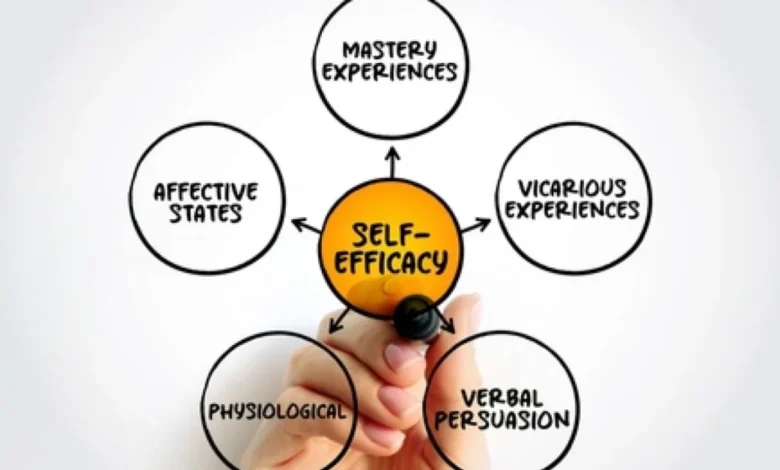
Operating concurrently on the West Coast at Stanford University, Albert Bandura revolutionized psychological theory through his social cognitive framework, most notably introducing the concept of self-efficacy. Distinguished from general self-confidence, self-efficacy represents an individual’s specific belief in their capacity to execute behaviors necessary to produce specific performance attainments.
Bandura’s research demonstrated that self-efficacy is not an innate trait but a construct built upon "personal mastery"—a cumulative series of small, incremental successes. Developing self-efficacy requires grit, perseverance, and resilience in the face of setbacks.
In contemporary professional environments, Bandura’s work has taken on renewed urgency. As modern knowledge workers face widespread anxiety regarding automation and the rapid integration of generative artificial intelligence, the principles of self-efficacy provide a psychological buffer. When employees believe in their capacity to learn, adapt, and master new technological tools, institutional resistance to change diminishes, enabling smoother transitions through major industrial disruptions.
Edgar H. Schein: Psychological Safety and Organizational Culture
Few scholars have shaped the day-to-day operations of modern institutions as profoundly as Edgar H. Schein. A longtime professor at the MIT Sloan School of Management, Schein’s extensive body of work—including seminal texts such as Organizational Culture and Leadership and Humble Inquiry—bridged the gap between clinical psychology and corporate strategy.
Schein was among the earliest to articulate the necessity of psychological safety, a term popularized further by scholars like Harvard Business School professor Amy C. Edmondson. In his foreword to Edmondson’s book Teaming, Schein noted that as early as 1965, he and Warren Bennis had identified the operational requirement for secure environments where personnel could voice concerns, admit failures, and propose unconventional ideas without fear of retribution.
Furthermore, Schein’s concept of "humble inquiry"—the fine art of asking questions instead of presuming answers—challenged the traditional, top-down authoritarian models of leadership. By emphasizing curiosity and relational humility, Schein provided organizations with the tools required to navigate complex, rapidly changing environments where hierarchical directives are no longer sufficient.
The Immigrant Experience and Intellectual Vitality
An often-overlooked dimension shared by Drucker, Csikszentmihalyi, Bandura, and Schein is their status as immigrants. Drucker was born in Vienna, Austria; Csikszentmihalyi emigrated from Hungary; Bandura moved to the United States from Canada after growing up in a small Northern hamlet of Ukrainian heritage; and Schein was born in Switzerland before emigrating.
Arriving in the United States as young adults, each built legendary careers at American institutions of higher education. Schein documented this profound cultural transition in his memoir, Becoming American: My First Learning Journey. Their status as outsiders looking in may have granted them the critical distance necessary to analyze American business culture, societal structures, and psychological patterns with exceptional clarity.
Implications for Modern Organizations and Productive Longevity
The collective trajectory of Drucker, Csikszentmihalyi, Bandura, and Schein challenges contemporary paradigms surrounding aging, career arcs, and professional retirement. By remaining intellectually engaged, publishing significant research, and teaching past traditional retirement ages, they demonstrated the concept of "productive longevity."
Their lives illustrate that expertise and intellectual contribution do not expire at a predetermined chronological age. Instead, through continuous learning, cross-disciplinary curiosity, and rigorous experimentation, seasoned professionals can continue to deliver immense value to society.
As contemporary organizations face unprecedented technological shifts, economic volatility, and workforce transformations, the synthesis of Drucker’s management philosophy, Csikszentmihalyi’s engagement metrics, Bandura’s resilience frameworks, and Schein’s cultural safety models offers a robust toolkit. While few individuals will match the singular heights achieved by these four titans, their collective legacy remains an accessible roadmap for purposeful career-building in the twenty-first century.
Related posts: