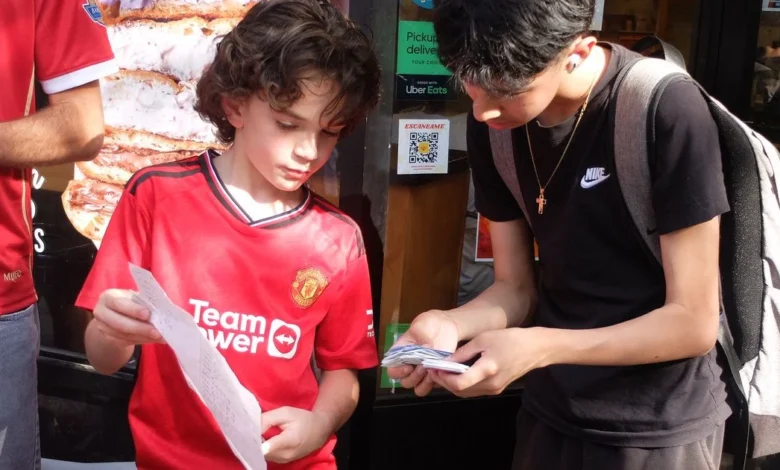
The sidewalk outside the Uruguayan restaurant El Chivito D’Oro, located at the intersection of 84th Street and 37th Avenue in Jackson Heights, Queens, typically serves as a bustling thoroughfare for residents and diners in the heart of the neighborhood known as Little Colombia. However, during the summer of the 2026 FIFA World Cup, this specific corner has transformed into an essential node of cultural and social exchange. Every day, dozens of collectors—ranging from young children to seasoned enthusiasts—converge on the pavement, creating a makeshift marketplace dedicated to the trading of Panini World Cup stickers. The air is filled with a bilingual chorus of "Qué te falta?" and "Whatchu got?" as participants work toward a singular, arduous goal: completing the official tournament sticker album.
This localized phenomenon is a microcosm of a global tradition that has spanned more than five decades, yet it holds a unique significance in 2026. With the World Cup being hosted across North America, the fervor for soccer—and the collectibles associated with it—has reached an unprecedented fever pitch in the United States. In Jackson Heights, a neighborhood defined by its immigrant roots and deep-seated passion for fútbol, the sticker trade is more than a hobby; it is a manifestation of community identity and intergenerational bonding.
The Logistics of the 2026 Panini Collection
The Italian collectibles company Panini has produced official FIFA World Cup sticker albums since the 1970 tournament in Mexico. Over the decades, the hobby has evolved from a niche European and Latin American pastime into a global industry. The 2026 edition of the album is the most ambitious to date, reflecting the expansion of the tournament itself. With the World Cup now featuring 48 teams, the 2026 album requires a staggering 980 stickers to complete. These include individual player portraits for every squad, team logos, and images of the various host stadiums across the United States, Mexico, and Canada.
The stickers are distributed in "blind packs," meaning consumers do not know which stickers they are purchasing until the foil is ripped open. While packs are available at major national retailers such as Target, Walmart, Walgreens, and CVS for approximately $2 each, the local economy in Jackson Heights has adapted to meet the demand. Ad-hoc stands have appeared along the avenues, where vendors sell individual packs and "singles"—specific stickers that collectors need to fill gaps in their albums.
Because the distribution of stickers is randomized, collectors inevitably accumulate "doubles" or "swaps." Statistically, as an album nears completion, the probability of finding a missing sticker in a new pack decreases significantly. This mathematical reality necessitates a secondary market based on trading, turning the sidewalk at 84th Street into an unofficial stock exchange for soccer fans.
A Chronology of the Jackson Heights Meetup
The gathering at El Chivito D’Oro did not emerge overnight. According to local participants, the tradition of meeting at this specific corner began in earnest during the 2010 World Cup in South Africa. At that time, the group was small, consisting of a few dozen fans who lived in the immediate vicinity. By the 2014 World Cup in Brazil and the 2018 tournament in Russia, the meetup had grown in reputation, drawing people from across the five boroughs.
Julian Cruhigger, a 20-year-old veteran trader who has participated in the last four World Cup cycles, has witnessed the evolution of the scene. "I remember it being maybe two stands in 2014," Cruhigger noted. "Now, every block has at least three stands selling stickers. It’s packed over here." Cruhigger, who now travels from Long Island to Jackson Heights to participate, credits the meetup with keeping him connected to his Colombian heritage.
The 2022 World Cup in Qatar presented a challenge for the community, as the tournament was held in the winter for the first time, making outdoor gatherings more difficult. However, the 2026 summer tournament has seen a resurgence of the tradition, bolstered by the fact that matches are being played on American soil. The proximity of the event has converted many who were previously casual observers into dedicated collectors.
Personal Narratives and Intergenerational Ties
For many in the crowd, the sticker album is a bridge between their past in South or Central America and their present in New York City. The hobby is frequently passed down from parents to children, serving as an educational tool for geography, sportsmanship, and the art of negotiation.
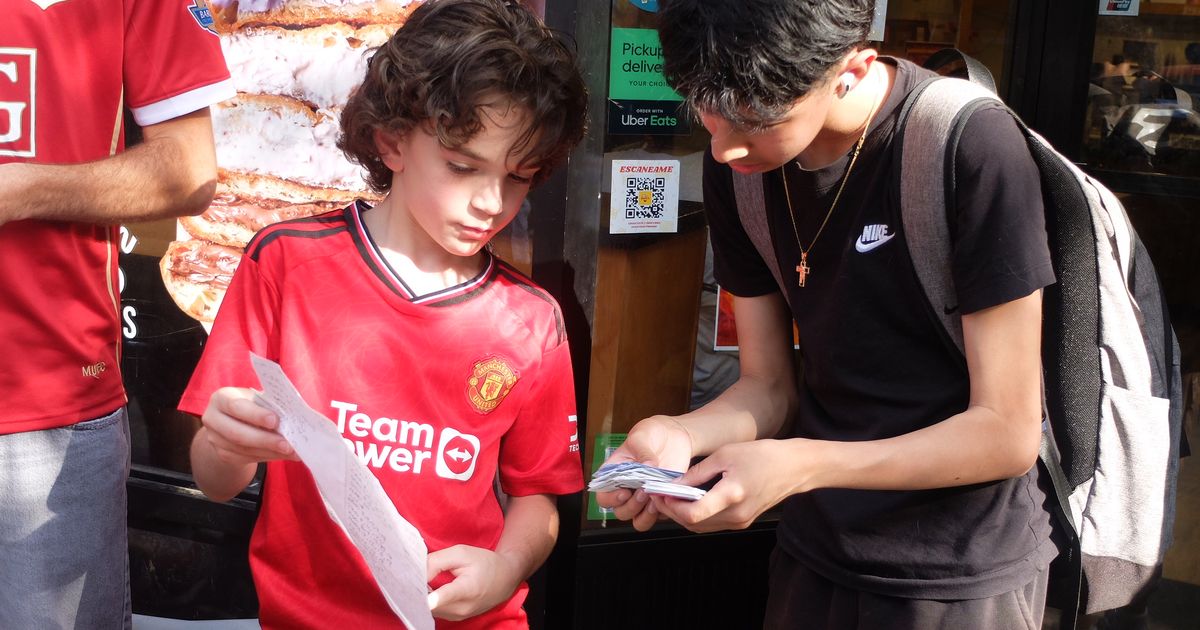
Sophia Ballinas, a 23-year-old Spanish teacher from Forest Hills, represents the adult collector who has returned to the hobby with newfound resources. Growing up in a Mexican immigrant household, she traded stickers at her predominantly Latino school but rarely had the disposable income to finish an entire album. "Even now, I joke with my dad and ask him to buy me some packs," Ballinas said. Her primary objective for the 2026 season was securing the elusive Lionel Messi sticker, a feat she managed to achieve through the Jackson Heights network.
Nearby, the Peralta-Orellana family demonstrated the collaborative nature of the pursuit. Diana Peralta, 42, and her son David Orellana, 24, immigrated from Quito, Ecuador, six years ago. In Ecuador, the sticker trade is a national obsession, and the family felt a void during the 2022 cycle when they didn’t know where to find a trading hub. This year, they have returned to form. While David and his cousin Richard Zhanay handle the high-pressure environment of the trading circles, Diana meticulously places the stickers into the album, ensuring they are perfectly aligned.
The appeal of the collection has also extended to those who did not grow up with the tradition. Kevin Julia, 32, admitted that he was historically "more of a baseball guy." He began collecting stickers in high school simply to fit in with his Latino friends. In 2026, he has fully embraced the hobby, bringing his father and sisters to the meetup. "I think these are certainly memories that I’m gonna have, opening these packs with my father," Julia said, noting that the excitement of the World Cup being hosted in the U.S. was the catalyst for his family’s involvement.
The Role of "Professional" Traders
While the majority of the crowd consists of amateurs and families, the ecosystem is anchored by "professional" traders. These individuals source stickers in bulk, often directly from Panini or through wholesale distributors, and maintain exhaustive inventories of duplicates organized by number.
These professionals set up folding tables and provide a vital service for those looking to finish their albums quickly. While they do sell stickers for a small profit, many insist that the financial gain is secondary to the social role they play. They act as facilitators, helping children find the specific players they need and providing a sense of stability to the daily gatherings. Their presence ensures that even if a collector has no one to trade with, they can still make progress on their album through a direct purchase.
The presence of these vendors has become so consistent that the corner of 84th and 37th is now recognized by Google Maps and social media community groups as a landmark for the hobby. The peak hours for trading usually occur between 10 a.m. and 5 p.m. on weekends, with crowds sometimes reaching 60 to 70 people at a single time.
Broader Impact and Cultural Implications
The "World Cup of Stickers" in Jackson Heights highlights a significant shift in the American sports landscape. Historically, the U.S. collectibles market has been dominated by baseball, basketball, and American football cards. These cards are often viewed as financial investments, with collectors hoping for a "rookie card" that will appreciate in value over decades.
In contrast, the Panini sticker tradition is inherently ephemeral and social. Once a sticker is placed in an album, its individual market value effectively disappears. The value lies in the completed book—a historical record of a specific tournament—and the social interactions required to get there. The 2026 World Cup has seen a convergence of these two worlds, as American sports fans apply their penchant for collecting to the global game of soccer.
Furthermore, the meetup serves as a defense against the digitization of hobbies. In an era where sports fans often interact through screens and digital "NFT" collectibles, the Jackson Heights sticker trade remains stubbornly analog. It requires physical presence, face-to-face communication, and the tactile experience of handling paper and adhesive. For the immigrant communities of Queens, this physical gathering space is a vital component of the neighborhood’s social fabric, resisting the isolation often associated with modern urban life.
As the 2026 World Cup progresses toward its final matches, the crowds at El Chivito D’Oro will eventually thin out. Albums will be completed and placed on bookshelves, serving as mementos of a summer when the world’s biggest sporting event came to their doorstep. However, the precedent set by this year’s fervor suggests that the tradition is now firmly rooted in the New York City cityscape, ready to resurface when the next four-year cycle begins. For the kids like nine-year-old Mason Gonzalez, who spent the summer learning to navigate the crowds with a list of numbers in his hand, the 2026 tournament won’t just be remembered for the goals scored on the pitch, but for the community found on a street corner in Queens.