The Fight to Save the Kips Bay AMC Reflects a Growing Crisis in Urban Cultural Preservation

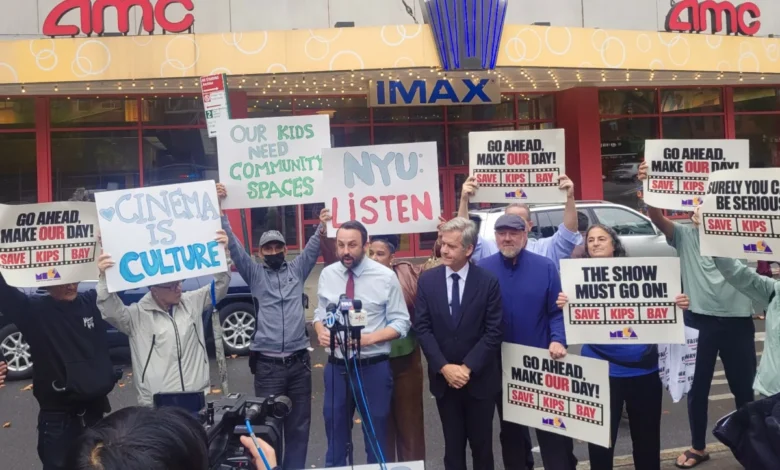
On a rain-swept Sunday afternoon in Manhattan, the intersection of Second Avenue and 31st Street became a focal point for a burgeoning movement to protect community cultural infrastructure. More than 100 residents, local activists, and city officials gathered outside the AMC Kips Bay 15—the second-largest multiplex in the borough—to protest its impending closure, which is currently scheduled for the end of the year. The rally, organized by the Eleanor Roosevelt Independent Democrats, highlighted a deepening tension between institutional expansion and the preservation of public gathering spaces in New York City.
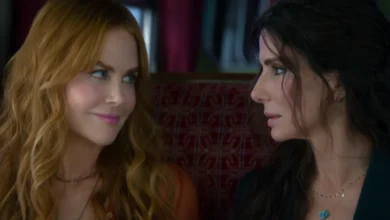
The demonstration took a theatrical turn when Manhattan Borough President Brad Hoylman-Sigal addressed the crowd. Channeling the cinematic gravitas of the industry’s most recognizable marketing campaign, he recited Nicole Kidman’s iconic AMC brand monologue, using the "we come to this place for magic" refrain to underscore the emotional stakes of the theater’s potential demolition. Yet, beneath the performative solidarity lay a stark reality: the theater, a fixture of the Kips Bay neighborhood for generations, is caught in the crosshairs of a massive real estate transition driven by the city’s health-care sector.
A Chronology of the Acquisition and Impending Closure
The fate of the Kips Bay AMC has been in motion for more than a year, though public awareness of the site’s status remained limited until recently. The theater sits on land that was acquired by NYU Langone Health in a private transaction finalized over 12 months ago. While the acquisition was a matter of public record, community leaders contend that the lack of transparency surrounding the future of the multiplex—which is slated to cease operations by December 31, 2026—deprived the neighborhood of the opportunity to engage in a meaningful dialogue regarding the site’s future.
The timeline of the theater’s decline mirrors broader trends in the exhibition industry. Despite 2026 marking a record-breaking summer for the domestic box office, fueled by a resurgence in theatrical attendance, individual multiplexes across the country have faced consistent pressure from rising commercial rents and the consolidation of real estate portfolios. The Kips Bay location has functioned as a cultural anchor since its inception, surviving multiple industry shifts, but it is now succumbing to the encroaching footprint of the nearby medical campus.
Institutional Expansion vs. Community Identity
The tension at the heart of the Kips Bay controversy stems from the differing priorities of the involved stakeholders. For NYU Langone, the acquisition represents a strategic investment in the growth of its medical facilities, a common pattern for large-scale institutional players in Manhattan. However, elected officials have criticized the institution’s approach to community relations.
"NYU is a neighbor, and we’ve worked with them in many different capacities," said New York State Sen. Kristen Gonzalez following the rally. "It was surprising that we had to reach out to them to find out that they were the ones looking to acquire the land behind us. It’s not unreasonable to ask NYU to be proactive in engaging with the community."
Judith Gross, president of the Eleanor Roosevelt Independent Democrats, framed the issue as a zero-sum game between essential community services and corporate-style expansion. "This neighborhood is not a campus for NYU and its medical offices," Gross stated. "We are guiding the whole community to protest these takeovers of what little community space we have left."
Economic and Social Implications for Local Businesses
The impact of losing a high-traffic destination like the Kips Bay AMC extends well beyond the cinema itself. Local businesses, which rely on the foot traffic generated by moviegoers, have expressed significant alarm. Paddy Reilly’s Music Bar, a 40-year-old local institution located just around the corner, has become a central hub for the "Save the Kips Bay AMC" movement.
Desi Murray, who has owned the pub for three years, emphasized that the multiplex acts as an anchor for the local economy, particularly for the neighborhood’s younger demographic. "It’s very important because we have a lot of young people in this neighborhood who love to go to the movie theater," Murray noted. To support the movement, the bar has offered incentives to those participating in advocacy efforts, reflecting a deep-seated fear that the loss of the theater will result in a "dead zone" for nighttime commercial activity in the area.
Patrons at Paddy Reilly’s, some of whom have frequented the establishment since it opened in 1973, echoed these concerns. The sentiment shared by many long-term residents is that the site has been dedicated to entertainment for decades, and its conversion into medical office space represents a fundamental shift in the character of the neighborhood.
The Broader Context: A National Trend in Consolidation
The Kips Bay situation is not an isolated event; it is emblematic of a broader, systemic struggle currently facing the entertainment industry. The potential closure coincides with seismic shifts in the film business, most notably the high-profile merger between Paramount and Warner Bros. Critics of that merger, including prominent voices within Hollywood, have argued that such consolidation threatens to diminish the diversity of content and limit resources for independent creatives.
Sen. Gonzalez drew a direct parallel between the macro-level consolidation in Hollywood and the micro-level loss of physical cinema space in Manhattan. "We’re getting a big new partner coming in, potentially kicking this out, limiting options to see the movies in our neighborhood," she explained. "And all we’re asking for, whether it’s in Hollywood or right here in New York, is for everyday people to be included and have our voices heard."
Data and Urban Development Analysis
From an urban planning perspective, the Kips Bay case study serves as a bellwether for the "medicalization" of Manhattan’s residential neighborhoods. Data from the New York City Department of City Planning indicates a sharp increase in commercial rezoning for health-care purposes over the last decade. While these facilities provide essential medical services and employment, they often do so at the expense of "third places"—social environments separate from the two usual social environments of home and the workplace.
The loss of a 15-screen multiplex in a high-density area like Kips Bay is not merely a loss of a retail venue; it is a loss of a social hub that facilitates community cohesion. Without such spaces, urban experts argue, the neighborhood risks becoming a transit-oriented zone for medical appointments rather than a residential community with integrated cultural assets.
Looking Ahead: The Path Forward
As the end-of-year deadline approaches, the pressure on AMC and NYU Langone is likely to intensify. The activists behind the "Save the Kips Bay AMC" movement are currently lobbying for a formal meeting with university leadership to discuss potential compromises, such as incorporating a cultural or exhibition space into the new development plans.
For now, the theater continues to operate, attracting audiences who are acutely aware that their next visit might be their last. The protest on Sunday was more than an act of nostalgia; it was a preemptive strike against the perceived erosion of public life in the city. Whether the voices of Kips Bay residents can influence the trajectory of institutional development remains to be seen, but the rally has undeniably elevated the discourse on how New York City manages the transition between its storied past and its medicalized future.
The battle for the Kips Bay AMC has become a symbol for a larger, national question: In a world of increasing consolidation and digital-first consumption, what is the value of a physical, shared space in the heart of a city? For the residents gathered in the rain on Sunday, the answer was clear: the magic of the movies is not just on the screen, but in the community that gathers to watch them together.