The Evolution of Digital Visibility: A Comprehensive Guide to Modern SEO Auditing in the Era of Artificial Intelligence

The digital marketing landscape is currently undergoing a fundamental transformation as traditional search engine optimization (SEO) paradigms shift toward a more complex, multi-dimensional model. At its core, an SEO audit remains a structured, step-by-step evaluation of a website’s technical health, content depth, and search visibility. However, the emergence of generative artificial intelligence and answer engine optimization (AEO) has expanded the scope of these audits. Today, a comprehensive audit is no longer merely a checklist of technical fixes; it is a strategic imperative designed to identify, prioritize, and resolve issues that impede traffic, rankings, and high-value conversions.
![SEO audits: How to conduct one that drives traffic growth [+ checklist]](https://53.fs1.hubspotusercontent-na1.net/hubfs/53/seo-audit-1-20251217-6006144.webp)
The Strategic Pivot: Why Modern Auditing Matters
In the current fiscal environment, businesses and SEO teams are utilizing audits not just for maintenance, but as a primary vehicle for advancing broader business growth goals. A modern audit identifies technical, on-page, and link-related obstacles that block the path to visibility. More importantly, it now evaluates entity signals and brand presence within AI-generated answers. As AI search reshapes how users discover brands, marketers are being forced to look beyond the "traditional blue-check" rankings on Google Search and toward how their content performs within generative engines.
Industry experts suggest that a structured review conducted at regular intervals—typically quarterly or annually—is essential for maintaining a competitive edge. While internal teams often manage these reviews, there is an increasing trend toward hiring third-party consultants to provide an objective, "fresh eyes" perspective on site architecture and content strategy. The ultimate goal remains constant: turning raw audit findings into a prioritized roadmap that supports lead generation and the corporate sales pipeline.
![SEO audits: How to conduct one that drives traffic growth [+ checklist]](https://no-cache.hubspot.com/cta/default/53/1d7211ac-7b1b-4405-b940-54b8acedb26e.png)
A Chronology of the Modern SEO Audit Process
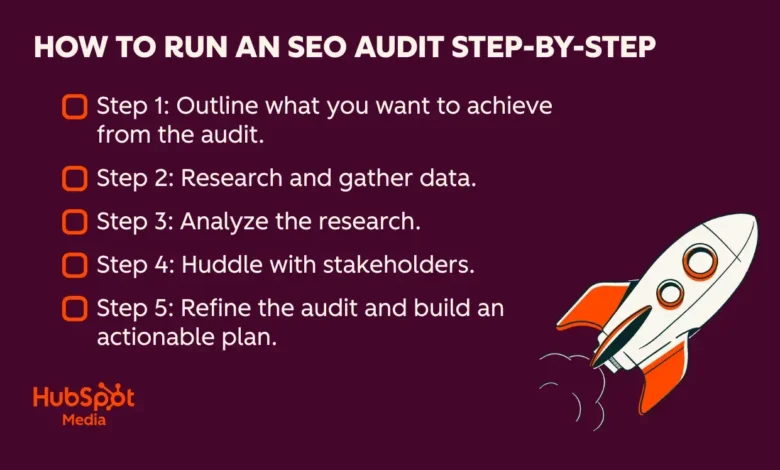
The execution of a high-impact SEO audit follows a rigorous five-step framework designed to translate data into actionable strategy. This methodology ensures that the audit does not exist in a vacuum but is instead aligned with the specific commercial objectives of the organization.
Phase I: Defining Business Intent and Objectives
Every audit must begin with a clear definition of the problem it seeks to solve. Whether a company is facing a sudden drop in organic traffic, a decrease in conversion rates, or the underperformance of a new product line, the audit’s scope must be shaped by these specific business goals. Specialists argue that starting with a list of technical checks without business context is a common pitfall; instead, efforts should be focused on the specific templates and metrics that drive revenue.
![SEO audits: How to conduct one that drives traffic growth [+ checklist]](https://53.fs1.hubspotusercontent-na1.net/hubfs/53/infographic%20shows%20the%20seo%20audit%20checklist%20step-by-step..webp)
Phase II: Comprehensive Data Aggregation
The research phase involves the collection of quantitative signals across multiple platforms. This foundational layer typically includes data from Google Search Console (GSC), Google Analytics, and various crawling tools. In this "cookie-cutter" phase, automated tools perform the heavy lifting, identifying crawl errors, indexation gaps, and backlink profiles. This data serves as a critical benchmark for measuring the success of future optimizations.
Phase III: Strategic Human Analysis
While tools provide the data, human analysis provides the insight. This stage involves reading between the lines of the spreadsheet to understand the "why" behind the numbers. A sophisticated strategist looks for patterns—such as how certain content clusters are performing or why specific pages are failing to convert. This is where the audit shifts from a technical exercise to a strategic roadmap, aligning SEO insights with seasonal demand, product priorities, and sales goals.
![SEO audits: How to conduct one that drives traffic growth [+ checklist]](https://53.fs1.hubspotusercontent-na1.net/hub/53/hubfs/technical%20seo%20is%20a%20must%20as%20part%20of%20the%20seo%20audit%20checklist.%20the%20infographic%20shows%20how%20to%20prioritize%20technical%20issues..webp?width=450&height=283&name=technical%20seo%20is%20a%20must%20as%20part%20of%20the%20seo%20audit%20checklist.%20the%20infographic%20shows%20how%20to%20prioritize%20technical%20issues..webp)
Phase IV: Stakeholder Alignment and Buy-In
One of the most critical, yet often overlooked, stages of the audit is the stakeholder huddle. This phase ensures that SEO recommendations are feasible within the broader context of the company’s capacity, budget, and upcoming marketing campaigns. Reviewing the site through an SEO lens often uncovers untapped audience segments or high-potential content areas that require executive approval before implementation.
Phase V: The Actionable Roadmap
The final phase involves refining findings into a structured plan with assigned owners, timelines, and expected outcomes. A successful audit is measured by its usability; it must be a document that the business can act upon week-by-week. High-impact recommendations are ranked by effort and potential return on investment (ROI), ensuring that the most critical issues are addressed first.
![SEO audits: How to conduct one that drives traffic growth [+ checklist]](https://53.fs1.hubspotusercontent-na1.net/hub/53/hubfs/infographic%20shows%20a%20smart%20goal%20example.%20seo%20specialists%20need%20smart%20goals%20to%20help%20them%20prioritize%20where%20to%20focus%20efforts%20within%20the%20seo%20audit%20checklist..webp?width=650&height=374&name=infographic%20shows%20a%20smart%20goal%20example.%20seo%20specialists%20need%20smart%20goals%20to%20help%20them%20prioritize%20where%20to%20focus%20efforts%20within%20the%20seo%20audit%20checklist..webp)
Supporting Data: The Technical Hierarchy of Needs
To prioritize fixes effectively, SEO specialists often refer to a hierarchy of needs similar to Maslow’s, but reimagined for search engines. This data-driven approach categorizes issues into five distinct levels of priority:
- Crawlability: Ensuring search engine bots can access the site.
- Indexability: Confirming that pages are eligible to be stored in search databases.
- Accessibility: Optimizing for page speed, Core Web Vitals, and mobile-friendliness.
- Rankability: Enhancing content quality, E-E-A-T signals (Experience, Expertise, Authoritativeness, and Trustworthiness), and internal linking.
- Clickability: Optimizing metadata and schema markup to improve click-through rates (CTR).
Recent industry data indicates that fixing issues at the "Crawlability" and "Indexability" levels—such as accidental noindex tags or broken robots.txt rules—delivers the fastest traffic lift. Furthermore, as Google’s Core Web Vitals become more influential, technical health is now inextricably linked to user experience (UX) metrics.
![SEO audits: How to conduct one that drives traffic growth [+ checklist]](https://53.fs1.hubspotusercontent-na1.net/hub/53/hubfs/geo-vs-aeo-4-20251216-6278594.webp?width=450&height=518&name=geo-vs-aeo-4-20251216-6278594.webp)
The Rise of AEO and GEO: Beyond the Search Bar
The most significant enrichment to the modern SEO audit is the inclusion of Answer Engine Optimization (AEO) and Generative Engine Optimization (GEO). Traditional SEO focused on ranking for specific keywords; AEO and GEO focus on how clearly a brand is understood as an "entity" by AI models.
Modern audits now include assessments of:
![SEO audits: How to conduct one that drives traffic growth [+ checklist]](https://53.fs1.hubspotusercontent-na1.net/hub/53/hubfs/seo%20audit%20tool%2c%20hubspot%E2%80%99s%20website%20grader.webp?width=650&height=538&name=seo%20audit%20tool%2c%20hubspot%E2%80%99s%20website%20grader.webp)
- Entity Clarity: How well search engines understand what a business does and who it serves.
- AI Search Visibility: How often a brand appears in AI-generated answers and conversational interfaces.
- Structured Data: The use of advanced schema to help AI systems interpret content accurately.
This shift is driven by the rise of tools that analyze "brand and entity visibility" rather than just keyword positions. As search engines evolve into "answer engines," the audit must evaluate whether a site’s content is structured to feed these sophisticated algorithms.
Industry Reactions and Professional Analysis
Digital marketing veterans emphasize that the "siloed" approach to SEO—where the technical team and content team work independently—is no longer viable. Leading SEO consultants suggest that the most successful audits are those that involve cross-departmental collaboration. Developers are needed for template-level speed improvements and JavaScript cleanup, while content writers are essential for addressing topical authority and content gaps.
![SEO audits: How to conduct one that drives traffic growth [+ checklist]](https://53.fs1.hubspotusercontent-na1.net/hub/53/hubfs/seo%20audit%20tool%2c%20semrush.webp?width=650&height=374&name=seo%20audit%20tool%2c%20semrush.webp)
A consensus is forming among industry leaders: the value of an audit lies in its ability to unblock "revenue-generating pages." These are the product or service pages with the highest commercial impact. If these pages are blocked from ranking by technical friction or poor messaging, the business suffers a direct financial loss. Consequently, "Conversion Rate Optimization" (CRO) recommendations are now frequently integrated into SEO audits to ensure that traffic actually translates into pipeline growth.
The Tooling Ecosystem: Powering the Modern Audit
The accuracy of an SEO audit is heavily dependent on the quality of the tools employed. The market has seen a proliferation of specialized software designed to handle different facets of the auditing process:
![SEO audits: How to conduct one that drives traffic growth [+ checklist]](https://53.fs1.hubspotusercontent-na1.net/hub/53/hubfs/seo%20audit%20tool%2c%20screaming%20frog.webp?width=650&height=388&name=seo%20audit%20tool%2c%20screaming%20frog.webp)
- Technical Crawlers: Tools like Screaming Frog allow for precise, crawl-based insights, identifying orphan pages and redirect chains.
- Comprehensive Platforms: Semrush and HubSpot provide all-in-one solutions that cover keyword research, competitive tracking, and backlink auditing.
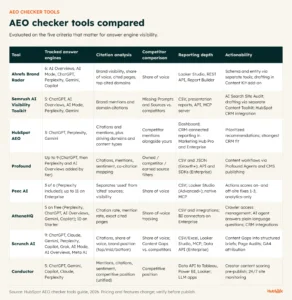
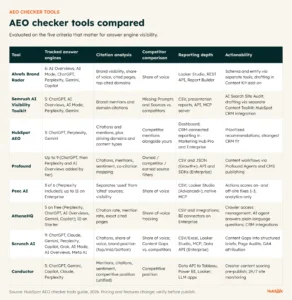
- AI-Specific Graders: New tools, such as the HubSpot AEO Grader, are specifically designed to measure a site’s readiness for the generative AI search era.
- Performance Monitoring: Google Search Console and PageSpeed Insights remain the gold standard for monitoring how Google perceives site health and speed.
Broader Impact and Future Implications
The long-term impact of regular SEO auditing extends beyond search rankings. It fosters a culture of continuous improvement and technical excellence within an organization. By identifying "quick wins"—such as updating title tags or compressing images—teams can build momentum and demonstrate early success to executive leadership.
Looking forward, the frequency of audits is expected to increase. While annual reviews were once the standard, the fast-moving nature of AI search updates is pushing many businesses toward a quarterly or "sprint-based" auditing model. This allows companies to remain agile, responding quickly to algorithmic shifts and emerging competitor threats.
![SEO audits: How to conduct one that drives traffic growth [+ checklist]](https://53.fs1.hubspotusercontent-na1.net/hub/53/hubfs/seo%20audit%20tool%2c%20hubspot%20marketing%20hub.webp?width=650&height=322&name=seo%20audit%20tool%2c%20hubspot%20marketing%20hub.webp)
Ultimately, a modern SEO audit is a diagnostic tool that doubles as a growth engine. It ensures that a website is not just a digital brochure, but a high-performing asset capable of competing in an increasingly automated and AI-driven search landscape. By focusing on the intersection of technical health, content depth, and brand authority, businesses can ensure their digital presence remains robust, visible, and profitable in the years to come.
Related posts: