Apple Previews iOS 27.2: Group FaceTime Dual Capture, Redesigned Health App, and Contextual AI Features Leading the Fall Software Roadmap

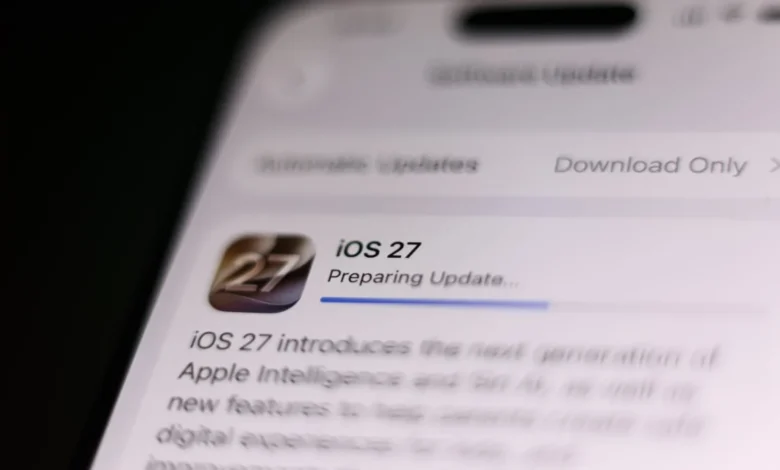
Following the recent market rollout of the iPhone 18 Pro and Pro Max series, alongside anticipation building for the impending launch of the iPhone Duo, Apple Inc. has accelerated its software development cycle by previewing the upcoming iOS 27.2 update. Designed to build upon the foundational framework of iOS 27, this forthcoming point release combines targeted bug fixes, stability improvements, and a suite of prominent software upgrades aimed at enhancing hardware utilization, context-aware productivity, and ecosystem integration. Industry analysts note that mid-cycle software updates like iOS 27.2 play a crucial role in maintaining user engagement and maximizing the functional lifespan of modern mobile devices, particularly as hardware capabilities increasingly rely on sophisticated software architectures.
The software update, currently making its way through the developer and public beta testing channels, brings meaningful enhancements to native applications including FaceTime, Health, Messages, Apple Podcasts, and the Apple TV app. While minor in version designation, iOS 27.2 introduces several long-awaited ecosystem parity features and leverages on-device artificial intelligence via Apple Intelligence to streamline daily interactions.
Expanding Creative Capabilities: Dual Capture Comes to Group FaceTime
One of the most notable multimedia enhancements arriving with iOS 27.2 is the expansion of the Dual Capture camera feature. Introduced initially to allow compatible iPhone models to record simultaneous video streams using both the primary rear camera array and the front-facing TrueDepth selfie camera, the functionality was previously restricted during live communications. Users could deploy Dual Capture while engaged in one-on-one FaceTime calls, but the tool remained inaccessible during larger multi-party video conferences.
According to reports from technology publication 9to5Mac, iOS 27.2 removes this software limitation, enabling users to activate Dual Capture during Group FaceTime calls. This upgrade allows participants to simultaneously broadcast their immediate facial reactions via the front camera while showcasing their physical surroundings or an event unfolding in front of them using the rear cameras. Content creators, educators, and families seeking more dynamic virtual communication tools are expected to benefit from this expanded capability, which takes advantage of the advanced image signal processors (ISPs) and neural engines found in recent iPhone hardware generations.
Overhauling Personal Wellness: The Redesigned Health App
Originally showcased by Apple executives during the September hardware keynote event—where the company debuted the iPhone 18 Pro, Pro Max, and the new iPhone Duo—the redesigned Health application is officially slated for deployment alongside iOS 27.2. The architectural redesign addresses long-standing user feedback regarding navigation complexity within the native health tracking ecosystem, transitioning from a fragmented layout to a streamlined, three-tab structure.
As detailed by MacRumors, the revamped Health app categorizes user metrics into three primary sections: Insights, Longevity, and Browse. The Insights tab serves as the immediate dashboard for critical real-time physiological indicators, including current heart rate variability, blood oxygen saturation levels, sleep metrics, and acute environmental sound exposure. Conversely, the newly introduced Longevity tab focuses on longitudinal health data, aggregating trends over weeks, months, and years to provide users and healthcare professionals with a clearer macroscopic view of physical wellness trajectories. The Browse tab retains the comprehensive directory of all tracked health parameters, organized categorically from mobility to laboratory results. Public health advocates and digital wellness analysts have frequently noted that intuitive data visualization is a critical barrier to entry for personal health monitoring, suggesting that Apple’s layout revision could foster higher rates of proactive health management among consumers.
Contextual Intelligence: Smart Suggestions Arriving in Messages
Apple Intelligence receives a notable functional expansion in iOS 27.2 with the integration of context-driven suggestions within the native Messages application. While the foundational elements of Apple Intelligence were deployed earlier in the software lifecycle, specific features have experienced staggered development timelines.
Under the updated system, the Messages app analyzes conversational context in real-time to surface actionable shortcuts. For instance, if an incoming text message mentions scheduling a dinner date, meeting, or social event, the AI framework automatically generates a one-tap option allowing the user to seamlessly add the event to the Calendar app or create a reminder. Furthermore, the feature assists users in retrieving relevant media, hyperlinks, contact cards, and location pins previously shared within the chat thread without requiring manual scrolling through media histories.
Industry observers have pointed out that this functionality represents a competitive alignment rather than a novel industry breakthrough. Competing mobile ecosystems have offered similar contextual assistance tools for several product cycles—specifically Google’s "Magic Cue" on Pixel hardware and Samsung’s "Now Nudge" integrated into Galaxy AI suites. The inclusion of Suggestions in iOS 27.2, which was temporarily pulled during the initial iOS 27 beta testing phase, underscores Apple’s ongoing efforts to close feature gaps in automated conversational utility while maintaining its strict adherence to on-device privacy processing models.
Optimizing Audio Consumption: Revamped ‘Up Next’ Queue in Apple Podcasts
Audio enthusiasts utilizing the native Apple Podcasts application will encounter a reorganization of the queue management system in iOS 27.2. Apple is formally dividing the traditional "Up Next" queue into two distinct, dedicated sections to separate immediate listening habits from continuous serial consumption.
In the updated interface, the primary "New Episodes" section occupies the space previously held exclusively by the monolithic queue. This area displays the latest releases from podcasts to which the user maintains an active subscription. Positioned directly beneath New Episodes is the newly minted "Continue Playing" section. This dedicated tray aggregates unfinished episodes currently residing in the listener’s queue, preventing active serialized listening from being buried beneath a sudden influx of newly downloaded daily or weekly content. Podcast network operators and independent creators alike have welcomed UI modifications that reduce friction in listener retention pathways.
Ecosystem Parity: Multi-User Profiles Finally Reach the iOS TV App
In what many platform analysts regard as a surprisingly delayed software inclusion, the Apple TV application on iOS will finally introduce support for independent user profiles with the release of iOS 27.2.
While multi-user profile architecture has been a standard feature of tvOS on dedicated set-top streaming boxes for years—allowing households to maintain distinct viewing histories, personalized recommendation algorithms, and tailored content queues—iPhone and iPad users have historically shared a single unified profile within the mobile application. With iOS 27.2, individual household members can switch profiles natively on their mobile devices, ensuring that algorithmic suggestions reflect personal preferences rather than an aggregated household viewing history. This software update arrives concurrently with industry speculation regarding an upcoming dedicated Apple Smart Home display and updated Apple TV hardware anticipated for release in early October.
Minor Additions: Contextual Anniversaries and Broad Deployment Timeline
Rounding out the feature set of iOS 27.2 is a subtle yet practical utility addition within the Phone and Contacts framework. Dubbed Call Context, the system cross-references incoming calls with stored contact metadata, specifically highlighting saved anniversaries or significant milestones directly on the incoming call interface when a call is received on that specific date.
As the software package progresses through final developer validation and public beta evaluations, a stable, public release date for iOS 27.2 is expected in the coming weeks. Owners of supported iPhone models—spanning the newly released iPhone 18 lineup down to legacy devices compatible with iOS 27—will receive the update via the standard Over-The-Air (OTA) update mechanism within the Settings application. System administrators and enterprise device managers are advised to review compatibility documentation prior to authorizing widespread organizational deployments, particularly given the extensive nature of the user interface adjustments and framework modifications included in the build.
Related posts: