Singer D4vd Charged with First-Degree Murder in Death of 14-Year-Old Celeste Rivas Hernandez

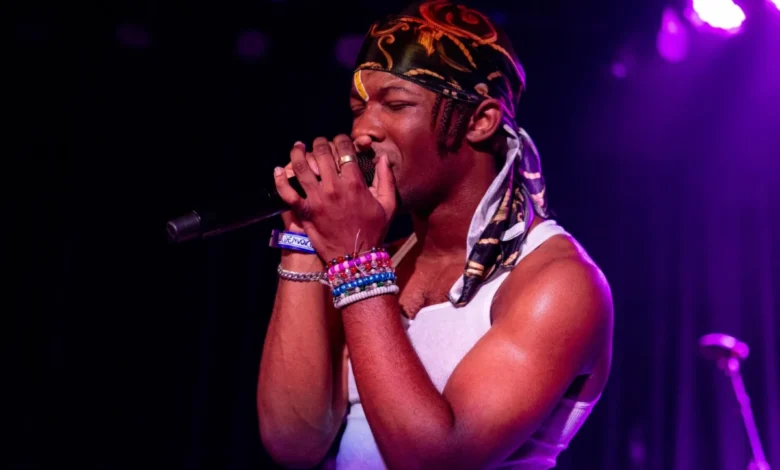
Los Angeles, CA – Prosecutors have officially charged 21-year-old singer David Anthony Burke, known professionally as D4vd, with first-degree murder in the death of 14-year-old Celeste Rivas Hernandez. The accusation alleges that Burke committed the "brutal and horrific murder" on April 23, 2025, a mere two days before the highly anticipated release of his debut album, Withered. The album, which has since debuted at number 13 on the Billboard 200 chart, now casts a dark shadow over the artist’s burgeoning career.
The charges, unveiled on Monday, April 20, by Los Angeles County District Attorney Nathan Hochman, follow Burke’s arrest four days prior. District Attorney Hochman detailed the grim circumstances, stating that Celeste Rivas Hernandez, who was 14 at the time of her death and a reported runaway from Lake Elsinore, California, had gone to Burke’s residence in the Hollywood Hills. "She was never heard from again," Hochman stated during a press conference, underscoring the gravity of the situation.
The discovery of Rivas’s remains was made in September, several months after her disappearance. Authorities responded to reports of a "foul odor" emanating from a Tesla impounded at a Hollywood tow lot. Upon investigation, officers discovered two black bags within the vehicle’s front trunk, containing severed and decomposed body parts. These remains were later positively identified as those of Celeste Rivas Hernandez, including her head, torso, and limbs. The vehicle itself was registered to D4vd.
Beyond the charge of first-degree murder, D4vd faces additional accusations of having sexual relations with a minor and mutilating a dead body. The murder charge carries a "special circumstances" enhancement, a legal designation that significantly increases the potential penalties. This enhancement means Burke could face the death penalty or life imprisonment without the possibility of parole. District Attorney Hochman indicated that his office has not yet made a final determination on whether to pursue capital punishment.
The "special circumstances" enhancement is directly linked to the alleged motive behind Rivas’s murder. Prosecutors contend that Celeste Rivas Hernandez was a potential witness to a prior crime: alleged lewd and lascivious sexual acts committed by Burke with her before she turned 14. At the time of these alleged acts, Burke was 20 years old. The prosecution posits that Burke murdered Rivas to protect his "very lucrative music career," which he believed she was threatening on the night of her death.
Background and Chronology of Events
The tragic trajectory of this case began to unfold significantly in late 2022, when D4vd’s single "Romantic Homicide" gained massive traction on TikTok, propelling him into mainstream recognition and charting at number 33 on the Billboard Hot 100. This viral success paved the way for further musical endeavors, including two extended play (EP) releases and a coveted opening slot on SZA’s highly successful SOS tour in 2023.
His career culminated, at least artistically, with the release of his debut album, Withered. The album’s release on April 25, 2025, was anticipated by a growing fanbase. However, this milestone was overshadowed by the alleged murder of Celeste Rivas Hernandez just two days prior.
The timeline of events leading to the discovery of Rivas’s remains and Burke’s subsequent arrest is as follows:

- Prior to April 23, 2025: Prosecutors allege that David Anthony Burke engaged in lewd and lascivious sexual acts with Celeste Rivas Hernandez, who was under the age of 14 at the time. Rivas is also reported to have been a runaway from Lake Elsinore, California.
- April 23, 2025: Celeste Rivas Hernandez allegedly visits Burke’s home in the Hollywood Hills and is never seen or heard from again.
- April 23-25, 2025: D4vd’s debut album, Withered, is finalized for release.
- April 25, 2025: Withered is released to commercial success, debuting at No. 13 on the Billboard 200.
- Unknown Date (post-April 25, 2025): D4vd is reportedly in the midst of a headlining tour.
- September 2025 (exact date unspecified): A foul odor is reported coming from a Tesla registered to D4vd in a Hollywood tow lot. Police investigate and discover two black bags containing decomposed human remains, later identified as Celeste Rivas Hernandez.
- Prior to April 16, 2026: D4vd is arrested in connection with Rivas’s death.
- April 16, 2026: D4vd is initially arrested.
- April 20, 2026: Los Angeles County District Attorney Nathan Hochman officially announces first-degree murder charges against D4vd, along with charges of sex with a minor and mutilating a body.
The discovery of Rivas’s body led to immediate and significant repercussions for D4vd’s career. His headlining tour was abruptly cut short, and plans for a deluxe version of Withered were shelved. Furthermore, he has since been dropped by Darkroom/Interscope Records, Sony Music Publishing, and his management at The Team (formerly Wasserman).
Legal Proceedings and Defense Arguments
D4vd is currently being held in custody without bail. His legal team, comprising defense attorneys Blair Berk, Marilyn Bednarski, and Regina Peter, issued a statement following his initial arrest, asserting their commitment to vigorously defending Burke’s innocence.
"Let us be clear – the actual evidence in this case will show that David Burke did not murder Celeste Rivas Hernandez and he was not the cause of her death," the attorneys stated in their initial public comment. This defense strategy appears to focus on disproving Burke’s direct involvement in Rivas’s death, despite the presence of his vehicle and the prosecution’s allegations regarding motive and opportunity. The prosecution’s case hinges on the alleged motive that Burke sought to silence Rivas to protect his career from exposure of their underage sexual relationship. The "special circumstances" enhancement, if proven, could lead to the most severe penalties under California law.
The legal battle ahead is expected to be complex, involving forensic evidence, witness testimonies, and detailed examination of the timeline and circumstances surrounding Rivas’s disappearance and death. The prosecution will aim to establish a direct link between Burke and the murder, supported by the alleged motive. The defense, conversely, will seek to create reasonable doubt regarding Burke’s culpability.
Broader Implications and Industry Reactions
The arrest and subsequent murder charges against D4vd have sent shockwaves through the music industry, particularly in the genres of pop and hip-hop where he had begun to make a significant mark. The allegations of sexual misconduct with a minor, coupled with a murder charge, raise profound questions about artist conduct, the safeguarding of young talent, and the responsibilities of record labels and management companies.
The music industry has faced increased scrutiny in recent years regarding allegations of abuse and exploitation, particularly involving minors. The D4vd case underscores the ongoing need for robust ethical guidelines and enforcement mechanisms within the entertainment sector. The fact that Rivas was a minor at the time of the alleged sexual acts, and that her death allegedly occurred in direct relation to protecting Burke’s career, highlights a disturbing intersection of artistic ambition and alleged criminal behavior.
The financial implications for D4vd are already substantial, with major industry partners severing ties. This suggests a zero-tolerance approach from record labels and publishers when faced with such serious allegations, prioritizing brand protection and public perception over continued association with an artist facing such grave charges.
The case also brings to the forefront the vulnerabilities of young individuals, particularly those who may be considered runaways or are seeking validation and opportunity within the demanding entertainment landscape. Celeste Rivas Hernandez, a 14-year-old from Lake Elsinore, became a tragic figure caught in a narrative of escalating allegations and ultimately, her untimely death.
As the legal proceedings commence, the focus will remain on uncovering the truth behind Celeste Rivas Hernandez’s death and determining the extent of David Anthony Burke’s alleged involvement. The outcome of this case will undoubtedly have lasting implications for D4vd’s future, the music industry’s ethical standards, and the ongoing dialogue surrounding the protection of minors in the public eye. The Billboard 200 success of Withered now stands as a stark reminder of the complex and often dark realities that can lie beneath the surface of artistic fame.