Maximizing the Minimal: Expert Strategies for Enhancing Spatial Perception in Small Urban Apartments

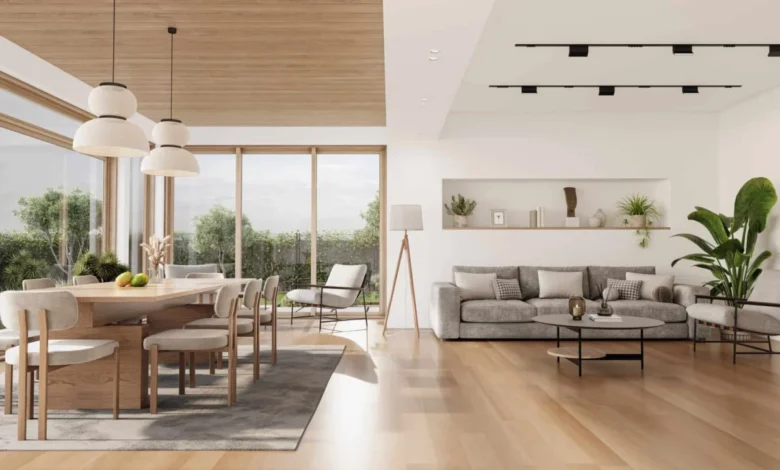
The landscape of urban living is undergoing a significant transformation as housing markets in major metropolitan areas face the dual pressures of rising costs and limited inventory. As developers and renters alike navigate these constraints, the focus has shifted from the raw quantity of square footage to the qualitative experience of a living space. While many renters understand the inherent challenges of living in small apartments, industry data suggests that an apartment’s physical size does not always dictate how spacious or functional it feels to the inhabitant. When executed with precision, specific design choices and architectural strategies can make even the most modest studio feel open and highly livable.
The trend toward smaller, more efficient living spaces is particularly evident in high-demand markets. Whether furnishing a studio apartment in San Diego, California, or optimizing a one-bedroom home in Richmond, Virginia, understanding the features that create a sense of expansion is becoming a critical skill for the modern urbanite. By synthesizing advice from property management experts, professional stagers, and housing innovators, a comprehensive framework emerges for transforming restricted environments into sophisticated, functional homes.
The Evolution of the Urban Living Space
The move toward "micro-living" and smaller urban footprints is not merely a lifestyle choice but a response to broader economic shifts. According to real estate analytics, the average size of newly constructed apartments in the United States has decreased by approximately 10% over the last decade. In cities like New York and Seattle, this trend is even more pronounced, with the rise of "micro-units" that often measure less than 400 square feet.
This shift has necessitated a new philosophy in interior design—one that prioritizes psychological comfort and spatial efficiency over traditional room divisions. Historically, residential architecture relied on distinct walls to define functionality (kitchen, dining, living). Today, the modern apartment relies on "zoning" through furniture placement, lighting, and visual continuity.
Strategic Pillar 1: The Architecture of the Open Floor Plan
The most effective way to maximize perceived space is through the prioritization of open floor plans. This architectural style removes the physical barriers that interrupt sightlines, allowing the eye to travel across the entire width or length of the unit.
Goldmark Property Management, based in Fargo, North Dakota, emphasizes that an open layout connecting the kitchen and living area is the primary factor in making a smaller apartment feel larger. Without walls to block the view, the transition between cooking and relaxation becomes seamless. This sentiment is echoed by the management at The Q Topanga in Woodland Hills, California. They note that the most successful small-space developments combine open layouts with high ceilings and abundant natural light. When these elements are paired with well-planned storage, the result is a space that feels polished and significantly larger than its actual square footage.
The logic behind this is rooted in environmental psychology: the more of the floor and ceiling a person can see simultaneously, the larger the brain perceives the room to be.
Strategic Pillar 2: The Rise of Multi-Functional Utility
In a constrained environment, every object must justify its presence. This has led to the rise of the "less is more" movement, championed by figures like Ezra Gershanok, co-founder of Ohana Housing Co. Having observed hundreds of apartments in the competitive New York City subletting market, Gershanok argues that the most spacious-feeling homes are those that avoid clutter by utilizing furniture that serves multiple purposes.
Multi-use furniture is no longer just a niche market; it is a fundamental component of urban survival. Examples include:
- Televisions on swivels: Allowing a single device to serve both the living area and the bedroom.
- Storage ottomans: Providing seating while hiding away linens or seasonal clothing.
- Convertible desks: Pieces that fold into the wall or transform into dining tables.
By reducing the total number of items in a room, renters can maintain clear walking paths, which is essential for preserving the "flow" of a small home.
Strategic Pillar 3: Intentional Layout and the Science of Staging
The arrangement of furniture is often more impactful than the furniture itself. In small apartments, "dead space" or poorly placed items can create bottlenecks that make a room feel cramped. Professional staging firms, such as Stage & Fold in New York, use intentional layouts to define specific functional areas without the need for walls.
Effective staging involves scaling furniture to the room. A common mistake among renters is bringing oversized furniture from a previous, larger home into a small apartment. By using "well-scaled" pieces—items that leave a visible border of floor space around them—the room feels intentional rather than overstuffed. This approach allows potential renters and current residents to appreciate the functionality of each corner, from a dedicated "work-from-home" nook to a distinct dining area.
Strategic Pillar 4: Visual Weight and Aesthetic Editing
Design experts often discuss the concept of "visual weight"—the idea that certain objects appear "heavier" or more intrusive than others. To make a room feel airy, designers recommend "editing" the space to remove bulky items that consume visual volume.
The team at Month2Month suggests replacing solid, heavy furniture with lighter alternatives. A bulky media console can be replaced with a slim, wooden tripod TV stand, which keeps the floor underneath visible. Similarly, a glass or acrylic coffee table provides the necessary surface area without acting as a solid block in the center of the room.
Another key tactic involves the strategic use of mirrors. A full-length mirror leaned against a wall opposite a window acts as a "second window," bouncing daylight into darker corners and reflecting the outdoor view. This trick effectively doubles the visual depth of the room.
Strategic Pillar 5: Verticality and the Floor-to-Ceiling Principle
When horizontal space is limited, the only direction to go is up. Drawing the eye toward the ceiling creates an illusion of height, which counteracts the feeling of being "boxed in." Kimberly Sektnan of Performance Properties in Portland, Oregon, advises renters to hang curtains as close to the ceiling as possible and extend them beyond the window frame. This makes the windows appear larger and the ceilings higher.
Other vertical elements include:
- Tall bookshelves: Which utilize the "dead space" above eye level.
- Vertical art installations: Drawing the gaze upward.
- Hanging plants: Adding life and color without occupying precious floor real estate.
Strategic Pillar 6: Continuity Through Uniformity
Visual breaks are the enemy of a small space. When a floor changes material from the kitchen to the living room, it creates a "border" that tells the brain the space has ended. By using uniform flooring throughout the entire apartment, the transitions are erased, making the different zones feel like one continuous, expansive area. Goldmark Property Management notes that straightforward finishes and consistent color palettes further enhance this clean, spacious appearance.
This principle extends to color schemes as well. Using a rug that is in the same color family as the flooring, perhaps just a shade or two lighter, softens the edges of the room and draws the eye outward rather than focusing it on a specific, isolated spot.
Strategic Pillar 7: Layered Lighting and Spatial Depth
Lighting is perhaps the most underrated tool in a designer’s arsenal. A single overhead light source often creates harsh shadows in corners, which makes the perimeter of a room disappear and makes the space feel smaller.
To combat this, experts recommend "layering" light. By using a combination of floor lamps, table lamps, and wall sconces at varying heights, you create overlapping pools of light. This technique draws the eye across the entire room and adds depth. When every corner of a room is illuminated, the boundaries of the space are clearly defined, which, counterintuitively, makes the room feel more open.
Broader Implications for the Housing Market
The move toward optimized small-space living has significant implications for urban planning and sustainability. Smaller units require less energy to heat and cool, contributing to a lower carbon footprint for urban dwellers. Furthermore, as developers become more adept at designing functional small spaces, it opens up the possibility for more affordable housing options in "high-barrier" cities.
The democratization of high-end design through staging services and versatile furniture also means that a "luxurious" living experience is no longer strictly tied to a high square-footage count. Instead, luxury is being redefined as the presence of light, the absence of clutter, and the intelligent use of technology to enhance daily life.
Conclusion: Redefining the Home
Transforming a small apartment into a spacious-feeling sanctuary does not require structural renovations or a massive budget. It requires a shift in perspective—viewing the home as a flexible environment where functionality and light are prioritized. By implementing open floor plans, choosing multi-functional furniture, and utilizing vertical design elements, renters can maximize every square foot of their space.
As urbanization continues to shape the way we live, these small apartment ideas provide a blueprint for a new era of residential design. Ultimately, the goal is to create a home that is not just a place to store belongings, but an open, airy, and functional environment that reflects the lifestyle and aspirations of the modern inhabitant. Regardless of the type of apartment, the balance of light and utility remains the key to unlocking the full potential of any living space.