Little Red Dots may be the smoking gun for primordial black holes as revealed by James Webb Space Telescope data

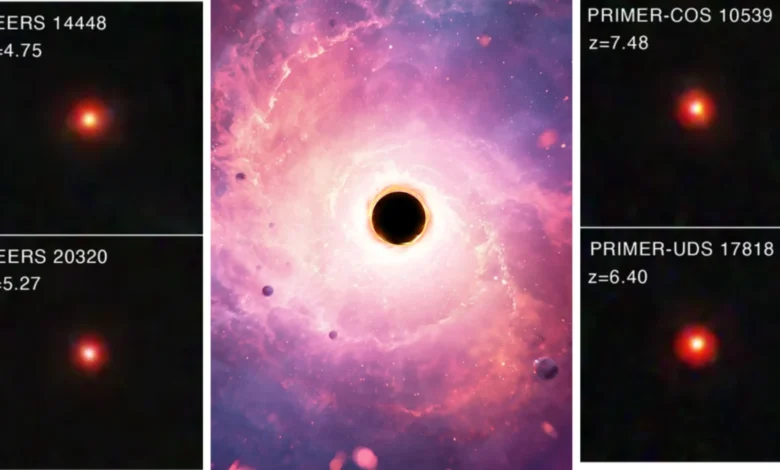
Since the deployment of the James Webb Space Telescope (JWST), astronomers have been inundated with a deluge of data that challenges the foundational pillars of standard cosmological models. Among the most perplexing discoveries are the so-called "Little Red Dots"—compact, intensely luminous, and deeply reddened objects identified in the high-redshift universe. These entities appear to vanish from the observable record before the universe reaches the two-billion-year mark, creating a chronological paradox. New research conducted by a team at Johns Hopkins University (JHU) suggests these enigmatic objects may not be standard galaxies at all, but rather the manifestations of primordial black holes (PBHs)—hypothetical objects formed in the chaotic, high-density environment of the immediate post-Big Bang era.
The Origins of the Cosmic Mystery
To understand the significance of the Little Red Dots, one must first distinguish between the two primary categories of black holes recognized in contemporary astrophysics. Traditional, or "astrophysical," black holes are the evolutionary end-products of massive stars. When such stars exhaust their nuclear fuel, they undergo gravitational collapse, culminating in a supernova and leaving behind a stellar-mass black hole.
Primordial black holes, however, belong to an entirely different lineage. Proposed in the 1970s by theoretical physicist Stephen Hawking, these objects are theorized to have formed in the fraction of a second following the Big Bang. During this epoch, the universe was undergoing a period of exponential expansion known as inflation. Density fluctuations in the early, hot plasma could have been sufficiently intense to cause regions of space to collapse directly into black holes. Because they predate the first stars, the first galaxies, and even the nucleosynthesis of elements heavier than hydrogen and helium, PBHs represent a missing link in our understanding of the early universe.
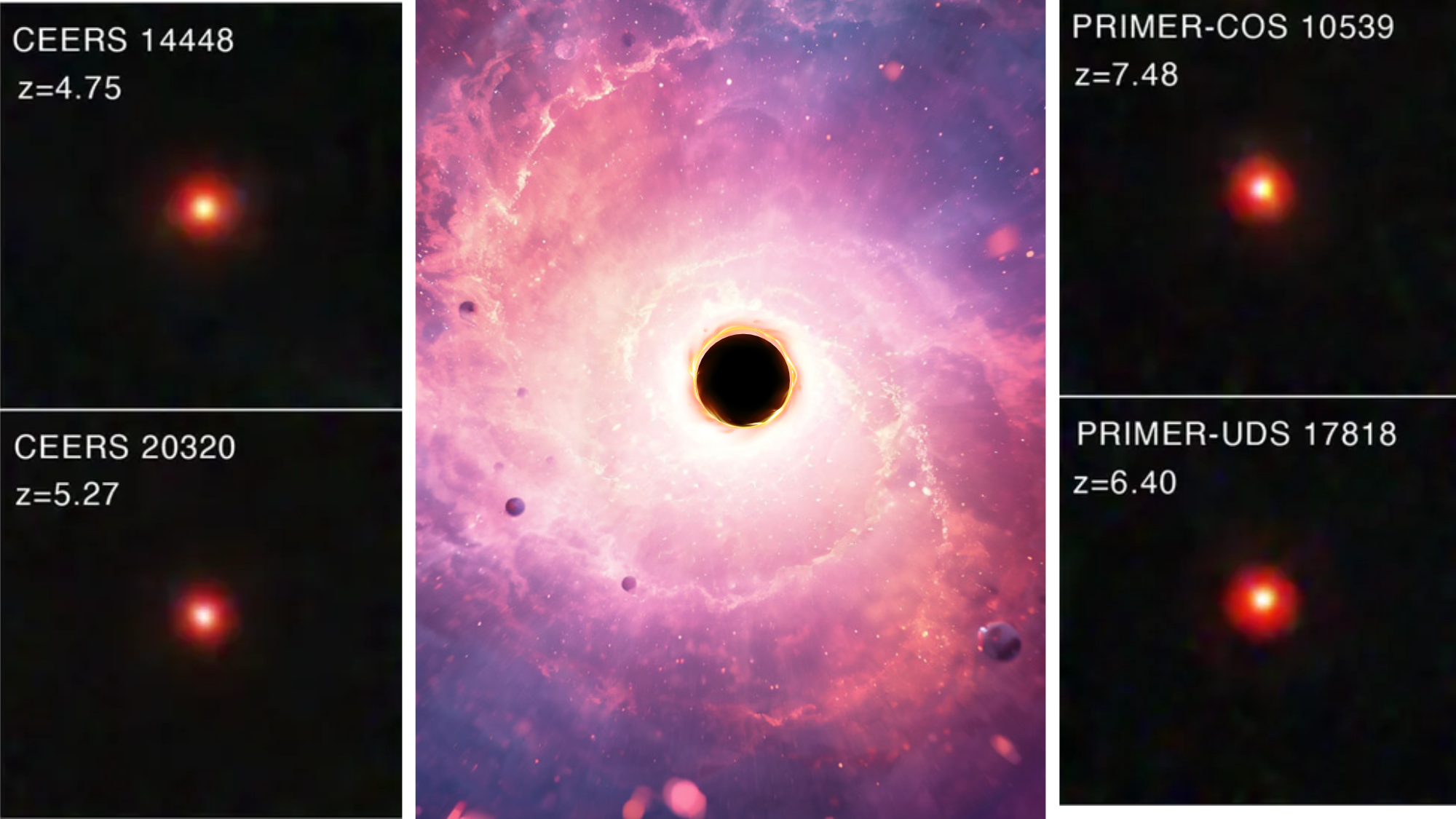
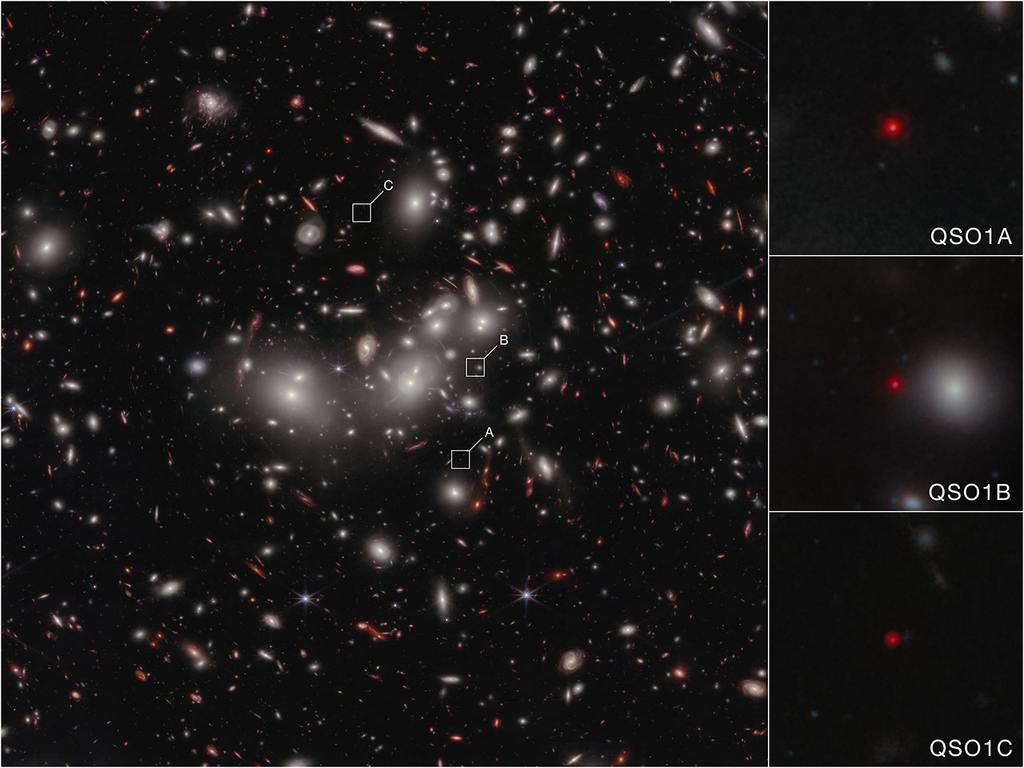
The discovery of the object designated Abell 2744-QSO1 (QSO1) has provided a unique laboratory for testing this hypothesis. Located approximately 13.1 billion light-years from Earth, QSO1 is observed as it existed roughly 700 million years after the Big Bang. Its composition, which consists almost entirely of primordial hydrogen and helium, makes it an ideal candidate for study, as it lacks the "pollution" of later-generation heavy elements found in more evolved galaxies.
Chronology of the Discovery
The investigation into the nature of Little Red Dots follows a trajectory of rapid astronomical advancement fueled by the JWST’s unprecedented infrared capabilities.
- Early 2022: The JWST releases its first deep-field images, revealing a universe more populated with massive, bright objects than theoretical models of the "Dark Ages" had predicted.
- Mid-2023: Astronomers identify the "Little Red Dot" classification, noting their characteristic compact, reddish spectra. The term reflects their appearance in long-wavelength imaging, suggesting either heavy dust obscuration or extreme redshift.
- Late 2024: Researchers begin utilizing spectral data from the NIRCam (Near-Infrared Camera) to analyze the internal kinematics of these objects, finding that the gas motion is too rapid to be accounted for by typical galactic rotation.
- June 2025: A team led by physicists at Johns Hopkins University publishes findings in Physical Review Letters, proposing that the growth rates of these objects are consistent with the consumption of surrounding gas by a central, supermassive, yet primordial, gravitational source.
Analyzing the Primordial Hypothesis
The primary challenge in verifying the existence of PBHs is the "look-alike" problem. Astrophysical black holes, when shrouded in dense, dust-filled star-forming regions, can appear remarkably similar to the suspected primordial counterparts. To distinguish between the two, researchers like Valerio De Luca and Loris Del Grosso of JHU have developed sophisticated models to simulate the environmental constraints of the early universe.
"A black hole is an object born from the gravitational death of a star," says De Luca. "Primordial black holes are a very different story. They come from the physics of the early universe that predates the first stars, when the universe was expanding exponentially in time and space. So the mechanisms for creating primordial black holes are different."
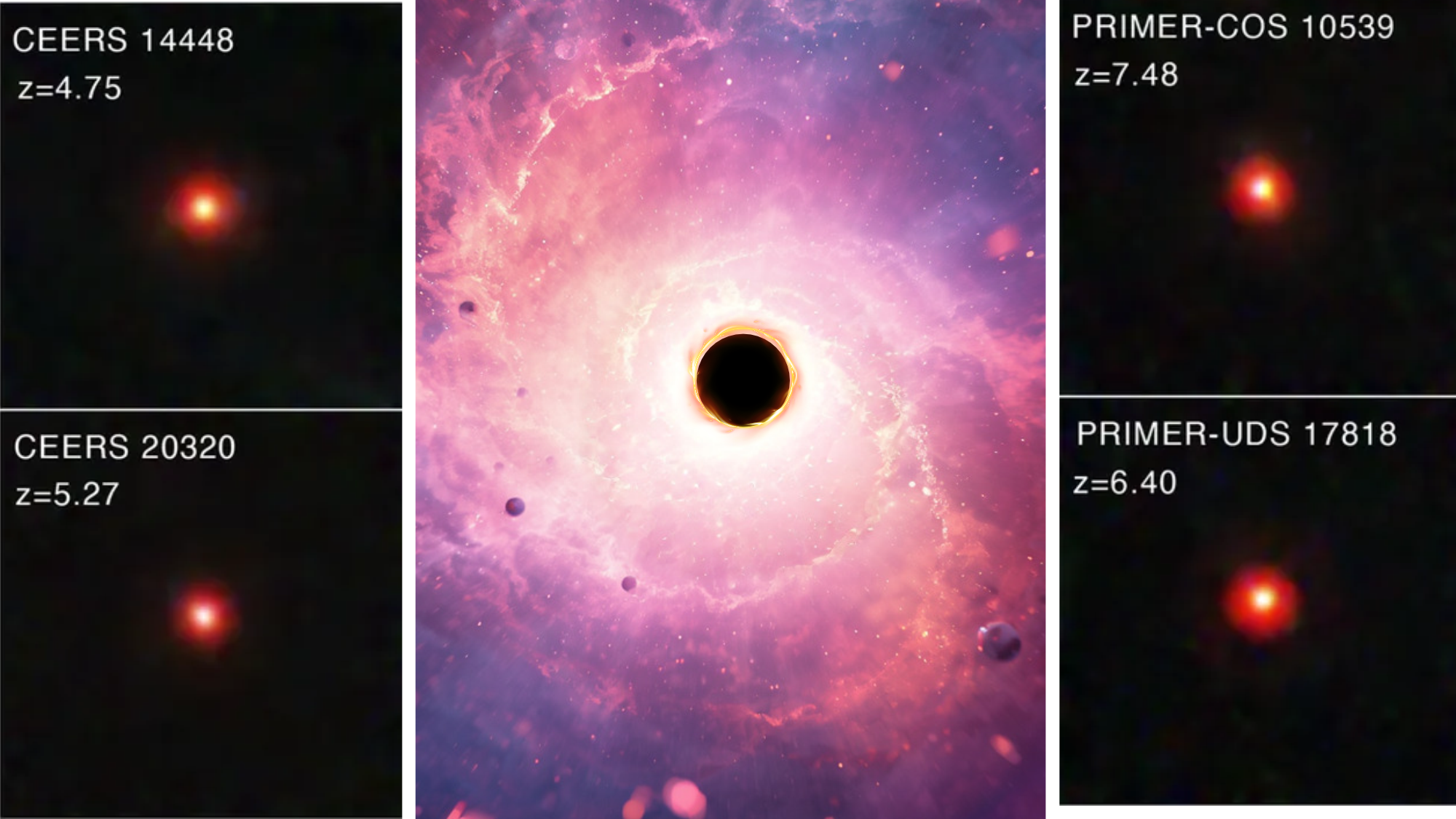
The research team evaluated three potential evolutionary scenarios for QSO1. They found that the most statistically viable explanation for its current observed mass and luminosity is that it began as a smaller primordial seed that rapidly accreted surrounding gas. This growth mechanism is significantly more efficient than the standard models of stellar-mass black hole growth, which struggle to explain how black holes reached such immense sizes so early in the universe’s history.
Constraints and Scientific Implications
The existence of PBHs is constrained by rigorous cosmological observations. There are strict limits on how many black holes could have been formed in the early universe without violating the observed Cosmic Microwave Background (CMB) radiation patterns. If there were too many primordial black holes, their gravitational influence would have fundamentally altered the structure of the universe that we observe today.
Loris Del Grosso notes that while the door has been opened to the PBH theory, the team is cautious. "There can only be so many primordial black holes in the universe, for example, and there cannot be too many of them in a given cluster. We’ve now cracked it open a little farther by showing some scenarios are more likely than others."
The implications of confirming the existence of even a single primordial black hole would be profound. It would necessitate a complete rewrite of the Standard Model of Cosmology. It would also provide the first direct evidence of the physical conditions during the inflationary epoch, allowing physicists to probe the state of matter at energy levels far exceeding what can be replicated in Earth-based particle accelerators like the Large Hadron Collider.
The Path Forward: Expanding the Sample Size
The JHU research team, buoyed by the results concerning QSO1, is now expanding its scope. With roughly 100 other "Little Red Dots" currently identified by the JWST, the researchers aim to conduct a systematic survey. By analyzing the mass-to-light ratios and the surrounding gas environments of these additional candidates, the team hopes to determine if QSO1 is an anomaly or the first confirmed member of a new class of cosmic objects.
The success of this endeavor depends heavily on continued spectroscopic observations. The JWST’s ability to peer through the thick, dust-heavy environments of the early universe allows researchers to isolate the central engine of these galaxies from the surrounding stellar light. If a significant percentage of these dots exhibit the signatures of non-stellar origins, the case for primordial black holes will transition from a fascinating, albeit fringe, theoretical model to a cornerstone of modern astrophysics.
"We don’t have a clear understanding of what happens in the early universe right after the Big Bang," De Luca concluded. "If primordial black holes do exist, then something had to happen to make them in the first place, which would be a groundbreaking discovery in physics."
As the scientific community awaits further data, the "Little Red Dots" serve as a humbling reminder of how much remains unknown about the genesis of our universe. Whether these objects are the products of an unknown mode of galaxy formation or the long-sought, ancient remnants of the Big Bang itself, the JWST continues to force a re-evaluation of the timeline and mechanics of our cosmic history. The next phase of research will undoubtedly be decisive, potentially linking the deepest, most inaccessible moments of the Big Bang to the visible structures that populate our current night sky.