Expert Strategies for Maximizing Small Living Spaces: How Design and Layout Influence Urban Residential Quality of Life

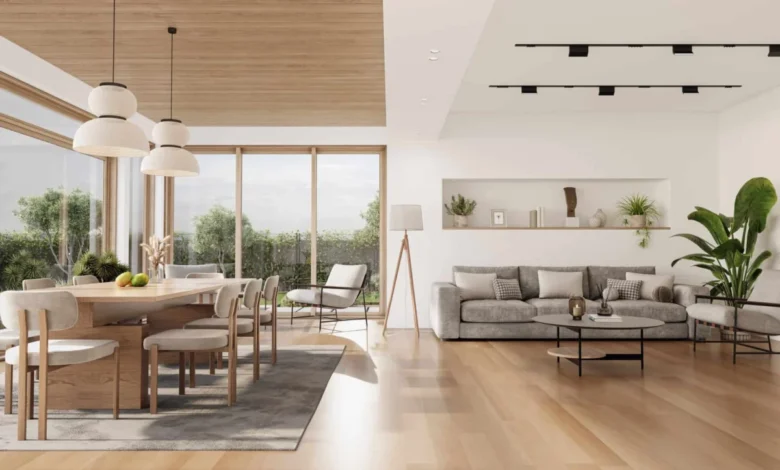
As urban density increases across the United States, the architectural and interior design industries are pivoting to address the growing demand for efficient, high-quality living in limited square footage. While the physical footprint of an apartment is a fixed metric, real estate experts and interior designers argue that the "perceived space" of a home is highly malleable. In major metropolitan hubs—ranging from the high-rent districts of San Diego, California, to the historic neighborhoods of Richmond, Virginia—the implementation of specific design principles is becoming essential for maintaining livability in smaller residential units. Industry professionals suggest that through a combination of open floor plans, multifunctional furniture, and strategic lighting, residents can significantly alter the functionality and atmosphere of their homes.
The Context of Shrinking Urban Footprints
The necessity for maximizing small spaces is rooted in broader economic and demographic shifts. Over the last two decades, the average size of new apartments in the United States has seen a measurable decline. According to real estate data analytics, the average apartment size has decreased by approximately 10% over the last ten years, with studio apartments in cities like New York and Seattle often falling below 500 square feet. This trend is driven by rising land costs, a surge in single-person households, and a "flight to the core" where residents prioritize proximity to employment hubs over expansive square footage.
In this environment, the role of interior design has shifted from purely aesthetic to highly functional. The challenge for modern renters and developers is no longer just about decoration, but about spatial engineering. Experts from across the country are now emphasizing that the psychological impact of a home is determined less by its actual dimensions and more by its visual flow and utility.
Structural Foundations: The Primacy of Open Floor Plans
One of the most effective methods for enhancing the perceived size of a residence is the adoption of an open floor plan. By removing non-structural partitions between the kitchen, dining, and living areas, designers can eliminate visual "dead zones" and allow for a continuous line of sight.
Goldmark Property Management, based in Fargo, North Dakota, notes that an open layout creates a sense of flow that masks limited square footage. When walls do not interrupt the eye, the brain perceives the entire area as a single, large volume rather than a series of cramped boxes. This sentiment is echoed by developers at The Q Topanga in Woodland Hills, California. They argue that when open layouts are paired with high ceilings and abundant natural light, the transition from the entryway into the living space feels expansive rather than restrictive. The integration of high-level architectural features—such as floor-to-ceiling windows—complements the open plan by drawing the exterior environment into the interior, effectively blurring the boundaries of the home.
Chronology of Interior Design: From Compartmentalization to Fluidity
To understand the current emphasis on open-plan living, it is necessary to examine the evolution of residential architecture.
- Pre-1940s: Residential design favored compartmentalization. Homes were divided into specific rooms for specific tasks (e.g., formal dining rooms, separate kitchens, parlors) to contain heat and smells.
- Post-War Era (1950s-1970s): The "Great Room" concept began to emerge as suburban lifestyles prioritized family gathering and informal entertaining.
- The 1990s-2000s: Lofts and industrial conversions in urban centers popularized the "open concept," which maximized natural light in deep, narrow buildings.
- 2020-Present: The "Micro-Living" movement has refined these concepts further, using high-tech materials and modular systems to make 300-square-foot units feel like full-scale homes.
This timeline illustrates a steady progression toward transparency and multi-functionality, which remains the gold standard for small-space optimization today.
The Economic Efficiency of Multifunctional Furniture
In the current real estate market, the furniture chosen for a small apartment must perform with the same efficiency as the architecture itself. Ezra Gershanok, Co-founder of Ohana Housing Co., suggests that the most successful small apartments are those where "less is more." In high-density markets like New York City, clutter is the primary enemy of spatial perception.
The rise of the "subletting marketplace" has revealed a clear trend: apartments that utilize versatile items—such as Murphy beds, nesting tables, or desks that fold into wall units—remain more desirable and feel significantly larger. Gershanok highlights the importance of "visual simplicity," such as choosing a television placement that serves both the bedroom and living area, thereby reducing the need for redundant electronics and furniture. This approach not only saves physical space but also reduces "visual noise," allowing the resident to focus on the openness of the room.
Strategic Staging and Intentional Placement
The arrangement of furniture is as critical as the furniture itself. Professional staging firms, such as Stage & Fold in New York, emphasize that intentional layouts define specific "zones" within a studio or one-bedroom apartment. Without these definitions, a small space can feel chaotic.
Staging experts use well-scaled furniture—pieces that are proportionate to the room—to demonstrate functionality without overcrowding. For instance, using a slim console table behind a sofa can create a designated workspace or dining area without the need for a separate room. This "zonal" approach allows the eye to categorize different areas of the home, which psychologically creates the impression of a multi-room residence.
The Psychology of Decor: Editing and Visual Weight
The concept of "visual weight" is a cornerstone of interior design theory. Items that are dark, bulky, or opaque appear heavier and consume more "mental space" than light, transparent, or streamlined items.
Month2Month, a corporate housing provider, recommends a rigorous editing process for small-space residents. They suggest replacing heavy media consoles with slim, tripod-style TV stands and opting for glass or acrylic coffee tables. Because these items are transparent or have a minimal footprint, the floor remains visible beneath and around them, which trickles into the brain’s perception of total floor area.
Furthermore, the use of mirrors is a scientifically backed method for expanding a room. A full-length mirror placed opposite a window reflects both light and the exterior view, acting as a "virtual window." This technique doubles the amount of natural light in the room and creates a false sense of depth, making a wall feel like a gateway to more space.
Verticality and the Illusion of Height
When horizontal square footage is limited, designers look to the vertical plane. Kimberly Sektnan of Performance Properties in Portland, Oregon, advocates for "floor-to-ceiling" design elements. By hanging curtains significantly higher than the window frame—ideally just below the ceiling—the eye is drawn upward. This trick of perspective makes the ceilings appear higher than they are, countering the "caved-in" feeling that can occur in small, low-ceilinged units.
This focus on verticality extends to storage. Utilizing tall, narrow shelving units rather than wide, short dressers keeps the floor clear while maximizing storage capacity. The goal is to keep the "sightline" at eye level as clear as possible, pushing the functional elements of the home to the periphery or the vertical extremes.
Uniformity and Continuity in Finishes
A common mistake in small apartment design is the use of varied flooring or wall colors to differentiate rooms. Professional designers argue that this creates visual "breaks" that shrink the space.
According to Goldmark Property Management, uniform flooring—using the same hardwood, laminate, or tile throughout the entire unit—creates a seamless transition between the kitchen, living area, and bedroom. This continuity prevents the eye from stopping at doorways or transitions, leading the brain to perceive the entire apartment as one continuous, expansive area. Similarly, using a color palette that stays within the same family (tonal decorating) prevents the space from feeling fragmented.
Layered Lighting and Atmospheric Depth
Lighting is often the most overlooked element in small-space design, yet it has a profound impact on how a room is perceived. A single overhead light source often leaves corners in shadow, which "pulls the walls in" and makes a room feel smaller.
To combat this, designers recommend "layering" light. This involves using three types of lighting:
- Ambient Lighting: The general overhead light.
- Task Lighting: Focused light for reading or cooking.
- Accent Lighting: Lamps or sconces that highlight architectural features or artwork.
By placing lamps at varying heights and in far corners, shadows are eliminated, and the eye is encouraged to travel to the very edges of the room. This creates a sense of depth and "airiness" that is impossible to achieve with a single light source.
Data-Driven Analysis of Implications
The shift toward optimized small-scale living has significant implications for the future of urban development and the real estate market.
- Sustainability: Smaller living spaces require less energy for heating and cooling, aligning with global carbon reduction goals.
- Affordability: As housing costs continue to outpace wage growth, the ability to live comfortably in smaller units makes prime urban locations accessible to a broader demographic.
- Technology Integration: The "smart home" industry is increasingly focusing on space-saving tech, from ultra-thin OLED displays to compact, high-efficiency appliances designed specifically for micro-apartments.
Conclusion: The Future of Urban Living
The transformation of a small apartment into a functional, spacious-feeling home is a testament to the power of intentional design. As urban populations continue to grow, the strategies outlined by industry experts—open layouts, multifunctional furniture, and strategic lighting—will become the standard rather than the exception. By balancing the physical constraints of a property with the psychological principles of space perception, residents can enjoy a high quality of life regardless of their square footage. Ultimately, the modern apartment is no longer defined by its boundaries, but by how effectively those boundaries are managed through design.