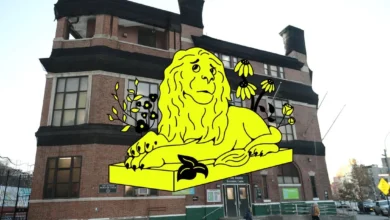
On a recent Saturday afternoon in the Bedford-Stuyvesant neighborhood of Brooklyn, a line of approximately 20 prospective tenants stretched down the sidewalk of Tompkins Avenue. They were there to view what appeared to be a rare "unicorn" in the New York City real estate market: a rent-stabilized one-bedroom, two-bathroom duplex priced at just over $2,300 per month. The online listing for the apartment featured a suite of professional-grade photographs showcasing a pristine, recently renovated kitchen and a primary bedroom that looked as though it had been lifted directly from a high-end interior design catalog. However, the reality awaiting the applicants inside the brownstone was starkly different.
Teo Bugbee, one of the many hopeful renters in attendance, discovered that the "primary bedroom" depicted in the photos was, in fact, a windowless basement. The walls, which appeared flawlessly painted in the digital rendering, were stained and grimy. The lighting was harsh and industrial, and a pungent odor permeated the space. The source of the smell was a trio of teacup piglets being cradled by a woman sitting on the floor of the unit. As the broker asked another attendee for their thoughts on the space, the response was blunt: "Well, it’s pretty fucking miserable."
This incident is part of a growing trend in the New York City rental market known as "AI staging" or "apartment catfishing." While real estate agents have long used wide-angle lenses and adjusted brightness to make small, dark apartments appear more appealing, the advent of sophisticated generative artificial intelligence has introduced a new level of digital deception. Today’s tools allow brokers to not only add virtual furniture but to fundamentally alter the structural appearance of a listing, erasing cracks in the walls, replacing old flooring, and even adding windows where none exist.
The Economic Drivers of Digital Deception
The rise of AI staging coincides with a period of unprecedented volatility and record-high costs in the New York City housing market. According to recent market reports, June 2024 saw median rents hit all-time highs of $5,295 in Manhattan and $4,350 in Brooklyn. With a vacancy rate hovering below 1.5%—the lowest in over 50 years—the competition for any habitable space is fierce. This scarcity creates a power imbalance that rewards aggressive marketing tactics, even those that verge on the fraudulent.
For brokers, the incentive to use AI is largely financial. Traditional physical staging—renting furniture and hiring designers—can cost a landlord or agent anywhere from $2,000 to $10,000 depending on the size of the unit. In contrast, AI virtual staging software can "furnish" an entire apartment for less than $100, with some apps offering per-photo edits for as little as $5. In a high-volume market where listings move in days, the efficiency of AI is an attractive proposition for "down-market" brokers looking to maximize foot traffic with minimal investment.

However, the consequences for renters are significant. The time and emotional energy spent navigating a market defined by "bait-and-switch" tactics add a layer of exhaustion to an already grueling process. Charlotte Rodgers, a 31-year-old jeweler who recently searched for a new home after being priced out of Greenpoint, described the phenomenon as a "plague." She noted that many listings on platforms like StreetEasy feature a carousel of images that begin with AI-enhanced "visions" of the space, only to reveal the dark, dingy reality in the final slides. "It makes me feel like they think I’m stupid," Rodgers said.
A Chronology of Virtual Staging Evolution
To understand the current state of AI staging, one must look at the technological progression of real estate marketing over the last two decades.
- The Early 2000s: The Wide-Angle Era: Professional photography became the standard. Agents used fish-eye lenses to make 200-square-foot studios appear like expansive lofts.
- 2010–2018: Post-Processing and Basic Virtual Staging: Tools like Adobe Photoshop were used for color correction and "blue sky" replacement. Virtual staging emerged, where graphic designers manually inserted 3D models of furniture into photos of empty rooms.
- 2019–2022: The PropTech Boom: Specialized platforms like BoxBrownie and Rooomy streamlined the virtual staging process, making it more accessible to mid-level brokerages.
- 2023–Present: Generative AI and "Yassification": The integration of Large Language Models (LLMs) and image generators like Midjourney and DALL-E allows for "generative fill." This technology can "hallucinate" entirely new features, such as hardwood floors over linoleum or modern cabinetry over rusted fixtures, often without human oversight.
This latest phase has led to surreal glitches that reveal the artificial nature of the images. In Fort Greene, a listing for a two-bedroom apartment recently went viral on social media for featuring a staged bed with a smaller, identical bed at its foot, and a third, even smaller bed tucked underneath. In Greenwood, a documentary filmmaker named Julian Lim encountered a listing where an industrial kitchen table appeared to be physically merging with chairs, and leather cushions were inexplicably growing out of the countertops.
Regulatory Responses and Industry Standards
The prevalence of deceptive AI listings has caught the attention of New York City’s leadership. Mayor Eric Adams recently introduced a series of 23 proposals aimed at improving the housing market, one of which specifically targets the use of artificial intelligence in real estate. The proposal would require brokers to provide a clear disclosure whenever a listing photo has been modified using AI. "You shouldn’t have to worry whether or not the apartment you are viewing online is real," Adams stated during the announcement.
Listing platforms are also grappling with the ethical implications of these tools. StreetEasy, the dominant listing site in New York City, has a "Listing Quality Policy" that prohibits the use of images that do not accurately represent the current condition of a property. However, enforcement is difficult given the sheer volume of daily uploads. While the platform allows virtual staging to show a room’s potential, it generally requires that the original, unedited photo also be included to provide a realistic baseline for the consumer.
Real estate professionals like Anna Klenkar, an independent tenant-side agent, argue that the problem is most concentrated among brokers who represent lower-end or poorly maintained properties. These "down-market" listings use AI not to showcase potential, but to mask neglect. "People are taking it completely overboard," Klenkar noted, suggesting that if a listing looks too good to be true for its price point, it almost certainly is a digital fabrication.

The High Stakes for Remote Renters
While for local New Yorkers an AI-staged listing results in a wasted afternoon, for those moving from out of state, the stakes are much higher. The "sight unseen" rental has become more common in the post-pandemic era, with many renters relying entirely on digital media to make housing decisions.
Joohee Na, an educational tech professional moving from Los Angeles to New York, nearly fell victim to an AI-enhanced listing in Nomad. The apartment, a one-bedroom priced at $2,650, appeared bright and modern in photos. The brokerage pressured Na to provide a $500 "good faith" deposit to secure the unit before she arrived. At her parents’ urging, she flew to New York to inspect the property in person. She found a dark, ground-floor unit in a mixed-use building with dated fixtures and a backyard that was "ratty and overgrown."
"This one was just like a straight-up lie," Na said. Her experience highlights a critical vulnerability in the modern rental market: the "good faith" deposit. These deposits are often non-refundable and are requested before a lease is even drafted, leaving remote renters with little recourse if the physical apartment fails to match the digital promise.
Analysis of Broader Implications
The normalization of AI staging in real estate reflects a broader societal shift toward the "death of the authentic" in digital spaces. As generative AI becomes more integrated into commercial photography, the line between "aspirational marketing" and "fraudulent representation" continues to blur.
In the context of the New York City housing crisis, this technology acts as a force multiplier for market dysfunction. It increases the "search friction" for tenants, who must now spend additional time verifying the basic reality of every listing. Furthermore, it allows landlords to bypass the necessary maintenance or renovations that would traditionally be required to command higher rents, as they can simply "renovate" the property digitally to attract interest.
Despite the growing awareness of these tactics, the desperation of the New York City renter remains the ultimate driver of the market. Even after Teo Bugbee warned people waiting in line at the Bed-Stuy brownstone that the apartment looked nothing like the photos, the crowd remained. The need for housing is so acute that many are willing to overlook deception in the hopes of securing any roof over their heads. According to StreetEasy records, the "piglet duplex" on Tompkins Avenue was marked as rented in late June, proving that in a market defined by scarcity, even a "miserable" reality can be sold with a digital lie.