Apple’s annual September product showcase, hosted at Apple Park under the banner of the "Surprise and Shine" event, brought forth the highly anticipated flagship lineup for 2026. Among the announcements, the iPhone 18 Pro Max stands as the pinnacle of Cupertino’s smartphone engineering. Standing side by side with its predecessor, the iPhone 17 Pro Max released in late 2025, the new device presents a fascinating study in technological iteration. At first glance, a casual observer might struggle to tell the two devices apart. Both smartphones maintain the same overarching physical footprint, housing a massive 6.9-inch Super Retina XDR display within an aluminum chassis. Yet, as industry analysts and consumers quickly realize, the most profound transformations reside beneath the surface.
Navigating the landscape of annual smartphone upgrades requires a careful examination of hardware adjustments, software integration, pricing pressures, and real-world utility. For prospective buyers weighing whether to upgrade or hold onto their current hardware, a comprehensive head-to-head comparison reveals how Apple has pivoted its strategy from radical physical redesigns to internal power-scaling, thermal management, and advanced computational photography.
Pricing and Market Realities: Navigating the Global Memory Crisis

One of the most immediate points of divergence between the two generations involves pricing. The iPhone 18 Pro and iPhone 18 Pro Max arrive with starting price points of $1,199 and $1,299, respectively. This structure introduces a $100 price increase across the board compared to the introductory tiers of the previous year’s iPhone 17 Pro lineup.
Market analysts point to persistent global supply chain constraints and a severe industry-wide memory crisis as the primary drivers behind this pricing adjustment. While consumers have grown accustomed to stagnant flagship pricing over prior years, the rising cost of high-density RAM and advanced silicon manufacturing has finally forced Apple’s hand. Consequently, the iPhone 17 Pro Max retains a distinct advantage for cost-conscious consumers looking for premium features at the previous baseline price, though early pre-order metrics suggest that the $100 premium has done little to dampen enthusiast demand for the newer model.
Aesthetic Evolution: Color Palettes and Physical Dimensions
Visually, the distinction between the two devices comes down to finishes and minor ergonomic adjustments. The iPhone 17 Pro Max captured the public imagination—and generated considerable online discourse—with its striking, Halloween-esque "cosmic orange" color option, alongside more traditional silver and deep blue finishes.

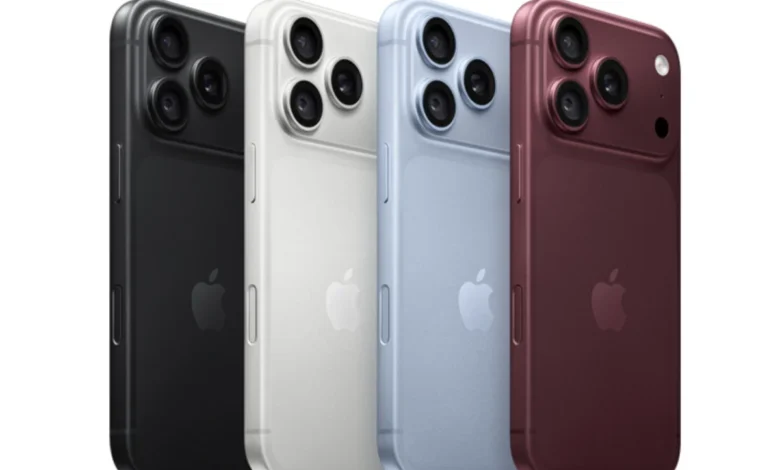
For the iPhone 18 Pro Max, Apple has retired the cosmic orange in favor of a sophisticated new burgundy and a crisp glacier blue. Furthermore, the classic black colorway makes a triumphant return after being conspicuously absent from the iPhone 17 Pro Max palette, joining a refined silver option that features a slightly altered metallic hue.
Dimensionally, the two smartphones are nearly indistinguishable, maintaining identical heights, widths, and depths designed around the 6.9-inch screen size. However, picking up the two devices reveals a subtle weight discrepancy. The iPhone 18 Pro Max tips the scales at 8.78 ounces, noticeably heavier than the 8.22-ounce iPhone 17 Pro Max. This minor heft is a direct engineering trade-off, necessitated by the inclusion of a substantially larger physical battery and the complex mechanical components required for the new camera architecture.
The Camera Revolution: Physical Variable Aperture and Pro Controls
The most significant hardware upgrade on the iPhone 18 Pro Max centers on its imaging capabilities. While both the iPhone 17 Pro Max and the iPhone 18 Pro Max utilize a formidable 48MP Pro Fusion camera system—incorporating a 48MP Fusion Main lens, a 48MP Fusion Ultra Wide lens, and a 48MP Fusion Telephoto lens—the newer model introduces a transformative mechanical feature: a physical variable aperture on the main camera lens.

This addition moves mobile photography closer to traditional DSLR functionality, granting users granular physical control over lighting conditions and depth of field. Creators and mobile videographers can now manually adjust the lens aperture alongside shutter speed, white balance, and ISO settings via Apple’s newly expanded Pro Controls suite.
Beyond hardware adjustments, the iPhone 18 Pro Max introduces smart focus tracking, enhanced cinematic mode video algorithms, and superior low-light video processing. To combat the rising tide of synthetic media, Apple has also integrated an image authentication protocol known as Apple Reference Image. This tool cryptographically verifies that a photo was captured directly through the physical sensor of an authorized iPhone, offering a verifiable seal of authenticity against AI-generated imagery.
Battery Longevity and Thermal Engineering
Battery life has historically been a primary battleground for smartphone manufacturers, and Apple claims the iPhone 18 Pro Max represents the single largest generational leap in battery longevity in the history of the product line.

While the iPhone 17 Pro Max offered respectable endurance, the iPhone 18 Pro Max is rated for an impressive 45 hours of continuous video playback on a single charge—representing a substantial six-hour gain over its predecessor. Achieving this milestone without drastically expanding the phone’s physical thickness required a complete re-architecting of internal space allocation.
To sustain this performance under heavy workloads without thermal throttling, Apple redesigned the device’s internal vapor chamber cooling system. This enhanced thermal dissipation ensures that the phone can maintain peak processing speeds during prolonged gaming sessions, high-resolution video rendering, and intensive computational photography tasks.
The Evolving Dynamic Island
At the top of the display, the iconic Dynamic Island undergoes a subtle yet impactful evolution. While the exterior software interface remains familiar, the physical sensor cutout housing the TrueDepth camera system has been significantly reduced. The sensor region shrinks from 20.76mm on the iPhone 17 Pro Max to approximately 16.57mm on the iPhone 18 Pro Max.

Rather than wasting this reclaimed screen real estate, Apple utilized the tighter footprint to introduce a native 3-in-1 activity display within the Dynamic Island. This allows users to monitor three concurrent background activities simultaneously—a feature exclusive to the iPhone 18 Pro and Pro Max hardware tiers, made possible entirely by the miniaturization of the sensor hardware.
Under the Hood: The A20 Pro Chip and Apple Intelligence
The foundation of the iPhone 18 Pro Max is its custom-built A20 Pro silicon chipset. Apple completely re-engineered its proprietary chip architecture for this generation, focusing heavily on power efficiency and neural processing capabilities.
While the A19 Pro chip inside the iPhone 17 Pro Max remains an extraordinarily capable processor capable of handling demanding applications, the A20 Pro was designed from the ground up to support Apple’s expanding suite of artificial intelligence features, collectively known as Apple Intelligence. This includes deeply integrated system functions, such as the completely overhauled and context-aware Siri AI assistant. By pairing the A20 Pro chip with the newly optimized thermal vapor chamber, Apple ensures that advanced machine learning tasks are executed locally on the device with maximum speed and minimal battery drain.

Industry Implications and Future Outlook
The release of the iPhone 18 Pro Max underscores a broader maturation phase in the global smartphone market. As hardware design reaches a point of physical plateau—where annual aesthetic overhauls are neither practical nor demanded by consumers—manufacturers are increasingly relying on deep silicon integration, specialized mechanical components like variable apertures, and proprietary AI ecosystems to drive sales.
For current owners of the iPhone 17 Pro Max, the decision to upgrade depends heavily on individual priorities. Those who rely on professional-grade mobile videography, require multi-day battery endurance, or wish to leverage the absolute cutting edge of on-device artificial intelligence will find compelling justifications in the iPhone 18 Pro Max. Conversely, users content with their current battery performance and fixed-aperture photography may find that the iPhone 17 Pro Max remains more than adequate for their daily needs, especially in light of the $100 price hike.
As pre-orders roll out globally, Apple’s strategy of focusing on internal refinement rather than external transformation will face its ultimate test in the consumer marketplace, setting the benchmark for high-end mobile computing for the remainder of 2026 and beyond.
Related posts: