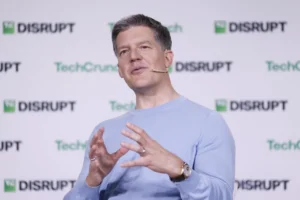
Insight Partners Co-Head Devin Parekh Discusses AI Realities, Liquidity Pressures, and Strategic Portfolio Management at StrictlyVC New York


Insight Partners has quietly anchored itself as one of the most formidable private equity and venture capital powerhouses in the technology sector, managing approximately $90 billion in assets. While many venture capitalists maintain a loud, omnipresent digital footprint across social media and a revolving door of podcast appearances, Devin Parekh, who has co-run Insight for 26 years, has long favored a low-profile approach centered on portfolio execution. During a candid sit-down interview with TechCrunch at the StrictlyVC event in New York City, Parekh offered a rare, comprehensive look inside the mechanics of the heavyweight investment firm. The discussion spanned a wide array of critical industry topics, including the firm’s calculated bets on artificial intelligence giants like OpenAI and Anthropic, missed opportunities such as legal-tech startup Legora, the structural realities of global tech talent, and the imperative return of liquidity to limited partners (LPs).
The conversation provided a window into how a multi-decade-old institutional investor navigates hyper-competitive markets, macroeconomic headwinds, and the transformative yet volatile emergence of frontier AI technologies.
Main Facts and Market Positioning
Insight Partners operates across a broad spectrum of the technology ecosystem, deploying capital into early-stage startups, growth-stage enterprises, buyouts, and secondary transactions. However, Parekh emphasized that the firm’s asset allocation is highly temporal rather than rigidly fixed. Unlike newer or more specialized firms that commit to a single stage, Insight dynamically adjusts its geographic and strategic exposure based on prevailing macroeconomic conditions.
For instance, the firm’s buyout strategy has slowed significantly in recent years. Driven by elevated interest rates, a restrictive debt market for software assets, and compressed exit multiples, Insight has abstained from executing major buyout transactions since 2024. Conversely, the venture side of the business has witnessed surging valuations reminiscent of the unsustainable market peak in 2021.
According to Parekh, the velocity of modern funding rounds often eliminates the traditional buffer of incremental data, forcing investors to pay higher prices without a corresponding reduction in risk. Insight’s strategic response to this phenomenon has been to migrate earlier in the venture lifecycle. By utilizing its scale fund to write smaller, lower-risk initial checks—ranging between $20 million and $25 million instead of massive $500 million allocations—the firm retains the dry powder necessary to double down on clear winners. This disciplined model was famously deployed during the cybersecurity firm Wiz’s Series A round, where continuous follow-on investments generated disproportionate financial gains while insulating the broader fund against potential downside risks.
Chronology and Evolution of Insight Partners
Founded decades ago, Insight Partners has weathered numerous technology cycles, ranging from the dot-com bubble burst to the 2008 financial crisis and the post-pandemic market correction. Parekh’s 26-year tenure at the helm bridges the gap between traditional enterprise software investing and the modern generative AI gold rush.
Over the years, the firm has evolved from a traditional software-focused growth investor into a global titan capable of writing massive checks while maintaining the agility to secure early-stage allocations. This adaptability is reflected in the firm’s historical performance and its current status as a veteran institution on its thirteenth major fund.
A prime historical example of Insight’s long-term relationship-building and patient capital deployment is its involvement with Armis. Initially losing the initial deal to rival firm Sequoia Capital, Insight kept channels open with a modest $5 million check out of an $11 billion fund. Eighteen months later, Insight executed a strategic buyout of the entire capitalization table—including Sequoia—with a nine-figure check, culminating in the security company’s acquisition by ServiceNow for $7 billion. This chronological trajectory demonstrates how institutional patience and disciplined portfolio management can eventually override initial deal losses.
Supporting Data and Industry Analysis
The current venture capital landscape is heavily dominated by foundational artificial intelligence research laboratories. Industry data from the first half of the year indicates that staggering percentages of total venture capital dollars have been funneled into just a handful of massive AI players, primarily OpenAI and Anthropic. This heavy concentration has ignited intense debates among institutional investors regarding systemic risk and portfolio diversification.
Parekh noted that while some competing funds have built their entire fundraising pitches around allocating 35% to 40% of their capital into one or two marquee AI companies, Insight rejects extreme concentration. Drawing on decades of historical data across multiple market cycles, Parekh argued that venture capital fundamentally rewards diversification over a sustained ten-fund horizon. While a heavily concentrated bet on a company like Anthropic might artificially inflate short-term returns, the long-term risk profile rarely supports such exposure for mainstream institutional limited partners.
At the same time, Insight holds stakes in both OpenAI and Anthropic, a dual-investment strategy that was once considered taboo due to potential conflicts of interest and competitive overlap. Parekh explained that the permissibility of investing in direct rivals is strictly stage-dependent. Early-stage investors sitting on corporate boards must navigate information-sharing restrictions and severe founder sensitivities. However, at later stages—when a fund is off the board, not driving direct governance, and simply purchasing public or late-stage private stock—the calculus shifts. Insight categorized OpenAI as the dominant consumer-facing play and Anthropic as a structured enterprise strategy, though acknowledging that these boundaries are constantly shifting in real time.
Global Talent Distribution and Geographic Realities
The geographic distribution of technology talent has undergone a profound structural shift over the past decade. While Silicon Valley and the San Francisco Bay Area remain the undisputed epicenter for foundational AI infrastructure talent, other specialized verticals have established deep roots in distinct geographic hubs.
Parekh pointed to financial technology companies like Ramp, where the density of specialized engineering and operational talent is heavily concentrated in New York City. This verticalized dispersion allows global investors to pursue opportunities far beyond Northern California. However, competition for top-tier global founders remains fierce. Parekh candidly acknowledged that Insight recently competed for Legora, a buzzy European AI legal-tech company headquartered in Stockholm. Despite a direct pitch trip to Sweden by Insight partner Jeff Horing, the firm ultimately lost the deal to General Catalyst. Parekh attributed the loss to competitor execution rather than systemic disadvantage, reinforcing the philosophy that in a global market, no single firm expects to win every transaction.
Physical AI and Emerging Frontiers
While digital generative AI applications have captured the lion’s share of market attention, physical AI and robotics represent the next major frontier for venture capital. Opinions on the timeline for commercial viability vary wildly across generations of investors.
Parekh described physical intelligence companies as largely experimental science projects, noting that successful investments require accurately predicting both if and when widespread robotics adoption will occur. Contrastingly, younger industry participants—including Parekh’s 23-year-old son, who operates as a venture capitalist in San Francisco—view physical AI as the most exciting asset class of the current cycle. While Insight continues to monitor the robotics sector closely, the firm has maintained a measured approach, prioritizing proven software architectures and scalable enterprise platforms over speculative hardware plays.
Liquidity, DPI, and the Secondary Market Imperative
One of the most pressing systemic challenges facing the private markets is the massive accumulation of locked-up capital and the corresponding lack of liquidity returned to limited partners. Many venture funds raised during the 2021–2023 frenzy have failed to return meaningful capital, creating a severe bottleneck for first- and second-time fund managers attempting to raise subsequent vehicles.
Parekh stressed that generating liquidity—measured by Distributed to Paid-In Capital (DPI)—is the ultimate mandate of the investment profession. Over the preceding two years, Insight successfully returned more than $20 billion to its LPs via strategic sales, secondary transactions, and initial public offerings, with additional billions expected in the pipeline.
Addressing the surging demand for secondary markets, Parekh noted that secondaries serve as a critical liquidity valve, primarily for early-stage investors and founders seeking to de-risk portfolios before inevitable market corrections. Citing ongoing market dynamics, Parekh frequently advises founders to consider de-risking 10% to 20% of their holdings when frothy valuations emerge, emphasizing the mathematical impossibility of compounding massive valuations at historic growth rates indefinitely.
Broader Impact and Market Implications
The broader technology ecosystem stands at a critical juncture as the impending initial public offerings of generational giants like Anthropic, OpenAI, and SpaceX loom on the horizon. Each of these companies approaches multi-trillion-dollar scale within a remarkably compressed operational lifespan of less than a decade.
According to Parekh, the successful public-market absorption of these behemoths will redefine expectations for the entire technology sector. As these extraordinary organizations transition into normalized public companies with predictable growth curves, public-market investors will be forced to recalibrate baseline valuations.
Ultimately, Insight Partners’ enduring strategy reflects a disciplined synthesis of aggressive scale investing and conservative risk management. By balancing multi-stage flexibility with a steadfast commitment to LP liquidity and portfolio diversification, Insight continues to navigate the tumultuous waters of the artificial intelligence boom while positioning itself for the inevitable structural shifts of the broader macroeconomic landscape.
Related posts: