In a landmark transaction that underscores the accelerating integration of artificial intelligence into the entertainment industry, streaming titan Netflix has officially disclosed a substantial cash payment of $587 million for InterPositive, a pioneering AI startup co-founded by acclaimed actor and director Ben Affleck. This revelation, detailed in a recent regulatory filing with the U.S. Securities and Exchange Commission (SEC), provides the definitive financial terms of an acquisition initially announced in March, which had previously been subject to industry speculation regarding its precise valuation. The acquisition positions Netflix at the forefront of leveraging advanced generative AI tools to streamline and enhance its vast content production pipeline, signaling a strategic pivot towards technology-driven filmmaking.
The Genesis of InterPositive and its Vision
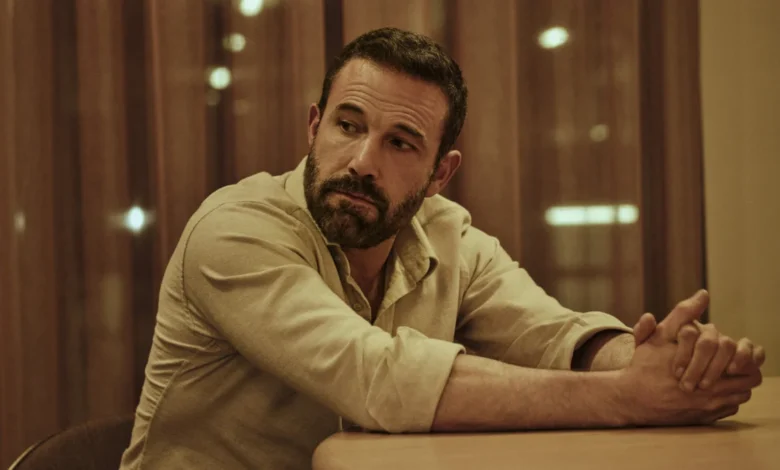
InterPositive emerged onto the tech-entertainment scene with a distinctive mission: to harness the power of artificial intelligence to empower filmmakers and protect the essence of human creativity. Co-founded by Ben Affleck, whose extensive experience both in front of and behind the camera lends significant credibility to the venture, the startup developed sophisticated AI tools designed to address common and often costly challenges encountered during post-production. Affleck, in an earlier statement following the acquisition announcement, articulated his vision, emphasizing that InterPositive’s technology was crafted to "protect the power of human creativity." He highlighted the AI’s capability to significantly improve footage in post-production, particularly in overcoming "real-world production challenges such as missing shots, background replacements or incorrect lighting." This includes the ability to generate or reconstruct elements that might have been impossible or prohibitively expensive to capture on set, thereby offering a new layer of creative control and efficiency.
The core functionality of InterPositive’s AI lies in its advanced algorithms that can analyze raw footage, identify imperfections or missing elements, and then intelligently generate or manipulate visual data to correct them. For instance, in scenarios where specific shots were missed due to logistical constraints or time limitations during principal photography, the AI could potentially reconstruct or generate those shots based on existing material and narrative context. Similarly, complex background replacements, which traditionally require extensive visual effects work, could be expedited or refined. The capability to adjust or correct lighting in post-production offers another layer of flexibility, reducing the need for costly reshoots and allowing filmmakers greater latitude in achieving their desired aesthetic outcomes, even when initial production conditions were suboptimal. This blend of creative enhancement and operational efficiency represents a significant leap forward in filmmaking technology, promising to reduce both time and financial pressures on productions.
A Chronology of the Acquisition
The journey of Netflix’s acquisition of InterPositive unfolded over several weeks, drawing considerable attention from both the technology and entertainment sectors.
- Early March 2026: Initial reports began to surface, hinting at Netflix’s interest in a significant AI technology acquisition. While the target company was not immediately identified, the rumors underscored the growing appetite among major studios for advanced AI capabilities.
- March 5, 2026: Netflix officially announced its intent to acquire InterPositive. The press release at the time confirmed that the entire InterPositive team would transition to Netflix, with Ben Affleck joining the streaming giant as a senior advisor. This immediate integration of the startup’s talent and its co-founder signaled Netflix’s commitment not just to the technology but also to the expertise behind it. However, the financial terms of the deal remained undisclosed, prompting immediate speculation within the industry. Affleck’s public statement regarding the preservation of human creativity also accompanied this announcement, setting a philosophical tone for the integration of AI.
- March 11, 2026: Bloomberg published a report citing sources familiar with the negotiations, suggesting that the deal could be valued at up to $600 million. This figure provided the first concrete indication of the scale of Netflix’s investment, further fueling discussions about the strategic implications of such a substantial outlay for an AI startup in the creative sector.
- Late May/Early June 2026 (Recent Regulatory Filing): The official SEC filing by Netflix provided the definitive cash payment figure of $587 million. This disclosure not only confirmed the near-term Bloomberg estimates but also brought transparency to one of the most significant tech acquisitions in Hollywood in recent memory. The timing of this disclosure often aligns with quarterly earnings reports or specific financial reporting deadlines, offering a comprehensive look at the company’s expenditures and strategic investments.
Netflix’s Broader AI Strategy and Investment in Generative AI
The acquisition of InterPositive is not an isolated event but rather a critical component of Netflix’s overarching strategy to embed artificial intelligence deeply into its content ecosystem. The streaming giant has been a pioneer in leveraging data analytics and machine learning for content recommendation and user experience optimization for years. However, its recent focus has shifted dramatically towards generative AI applications directly impacting content creation and production.
In its most recent earnings report, Netflix revealed a telling statistic: approximately 300 of its titles have already utilized generative AI in some capacity this year. This encompasses a wide spectrum of applications, from script analysis and pre-visualization to more sophisticated post-production enhancements and even elements of virtual production. The company’s internal development of AI tools, combined with strategic acquisitions like InterPositive, indicates a robust and multi-faceted approach to integrating these technologies.
The move comes amidst a broader industry trend where major studios and production houses are increasingly experimenting with AI. From early-stage script development aids that can analyze market trends and audience preferences to AI-driven virtual production environments that allow real-time adjustments on set, the scope of AI’s potential applications is vast. Companies like Disney, Warner Bros. Discovery, and Universal have also announced various initiatives and partnerships exploring AI for everything from animation to marketing, recognizing that AI could be a significant differentiator in an increasingly competitive landscape. This race to adopt AI is driven by the promise of increased efficiency, cost reduction, accelerated production timelines, and potentially, entirely new forms of creative expression.
Industry Reactions and Implications
The acquisition has elicited a range of reactions across the entertainment industry, from cautious optimism to deep-seated concerns.
- Creative Professionals: Ben Affleck’s emphasis on "protecting human creativity" resonates with many filmmakers and artists who fear that AI could diminish the demand for human talent or lead to a homogenization of creative output. Organizations like the Writers Guild of America (WGA) and SAG-AFTRA (Screen Actors Guild – American Federation of Television and Radio Artists) have been vocal about the need for robust protections and clear guidelines regarding AI usage, particularly concerning intellectual property rights, fair compensation, and the potential for AI to replicate human likenesses without consent. The InterPositive acquisition, with its focus on "improving footage" and "making up for production challenges," might be seen by some as a tool to enhance human work, while others might view it as a step towards automating traditionally human-centric tasks.
- Industry Analysts: Analysts largely view the acquisition as a shrewd strategic move for Netflix. The reported $587 million valuation, while substantial, is seen as a worthwhile investment given the potential for significant returns through improved production efficiency and quality. For context, similar acquisitions of high-growth tech startups in adjacent industries have often commanded even higher multiples. The deal also strengthens Netflix’s intellectual property portfolio in the critical AI domain, providing a competitive edge as other streamers play catch-up. Analysts predict that this kind of investment will enable Netflix to produce more content faster, potentially at lower costs per title, and with a higher degree of technical polish, thereby reinforcing its market leadership.
- Technological Advancement: The capabilities of InterPositive’s AI signify a growing trend towards "synthetic media" and advanced computational photography in film. The ability to correct lighting, replace backgrounds, or even generate missing shots autonomously pushes the boundaries of what is possible in post-production. This could democratize high-end visual effects, making them accessible to a wider range of productions, and enable filmmakers to take greater creative risks on set, knowing that AI can serve as a robust safety net.
- Ethical Considerations: The use of AI in generating or altering visual content inevitably raises ethical questions. Issues of authenticity, deepfakes, and the potential for AI to create entirely synthetic performances or scenarios without human input remain central to the ongoing debate. Netflix, by acquiring a company with such capabilities, will be under increased scrutiny to establish clear ethical guidelines and best practices for the responsible deployment of these powerful tools. Affleck’s role as a senior advisor might be critical in navigating these complex waters, bridging the gap between technological innovation and artistic integrity.
The Future Landscape of Filmmaking
Netflix’s $587 million investment in InterPositive is more than just a financial transaction; it is a clear declaration of intent regarding the future of filmmaking. It signals a paradigm shift where generative AI is no longer a peripheral tool but a core component of the creative and production process. This move suggests that the future of content creation will be characterized by a symbiotic relationship between human artistic vision and advanced algorithmic capabilities.
The implications for the industry are profound. Production pipelines could become more agile, reducing the lead time from concept to screen. The creative process itself might evolve, with filmmakers leveraging AI not just for corrections but as a brainstorming partner or an extension of their visual toolkit. For Netflix, this translates into a potential for increased content volume, enhanced visual quality, and greater cost efficiency, all of which are crucial for maintaining its dominant position in the global streaming wars.
However, the path forward is not without challenges. The successful integration of InterPositive’s technology will require careful management of talent, technology, and artistic sensibilities. Addressing the legitimate concerns of human creatives, establishing ethical frameworks, and continuously innovating to stay ahead in a rapidly evolving technological landscape will be paramount. Netflix, with this significant acquisition, has firmly placed its bet on a future where AI and human ingenuity converge to redefine the art and craft of storytelling. The entertainment world watches closely to see how this investment will shape the cinematic experiences of tomorrow.