Illuminating the Digital Age: How LED Strip Lights and Ring Lighting Transformed Content Creation and Video Production


The modern landscape of digital media, remote communication, and content creation has fundamentally altered the standards of visual presentation. Today, approximately one in every two individuals engaged in digital media production utilizes specialized lighting setups—most notably LED strip lights and ring lights—to achieve professional-grade visual fidelity. Whether applied to high-production-value photography, cinematic videography, real estate virtual walkthroughs, corporate video conferencing, or live-streaming events, the strategic use of illumination has become a cornerstone of modern digital engagement. As the demand for polished visual content surges across industries, understanding the mechanics, applications, and strategic advantages of light-emitting diode (LED) technology is essential for creators, businesses, and professionals alike.
The Evolution and Mechanics of LED Technology
To comprehend the ubiquity of modern photographic lighting, one must examine the fundamental science of light-emitting diodes. Unlike traditional incandescent bulbs, which generate illumination by heating a metallic filament until it glows—a process that wastes a significant amount of energy as heat—LEDs operate on the principle of electroluminescence. When an electrical current passes through a semiconductor material, electrons recombine with electron holes, releasing energy in the form of photons.
This solid-state lighting mechanism was first observed in practical form in the early 1960s, initially producing low-intensity infrared and red light. Over the subsequent decades, material science advancements yielded higher-efficiency diodes capable of producing green, blue, and eventually white light. The development of high-brightness blue LEDs in the early 1990s—pioneered by Isamu Akasaki, Hiroshi Amano, and Shuji Nakamura, a breakthrough that earned them the 2014 Nobel Prize in Physics—finally enabled the creation of energy-efficient white light sources suitable for general illumination and commercial photography.
In contemporary applications, these microscopic diodes are rarely deployed in isolation. Instead, manufacturers arrange them in linear arrays known as light strips, or mount them in circular configurations to form specialized photographic fixtures. This modularity allows LED systems to be integrated seamlessly into diverse environments, ranging from architectural alcoves and studio backdrops to portable, battery-powered field kits.
Categorization and Modern Applications of LED Lighting Systems
The versatility of LED technology has given rise to a vast ecosystem of lighting fixtures designed to meet specific aesthetic and technical requirements. Modern LED strip light kits and modular systems are generally categorized by their form factor, density, and color-rendering capabilities:
- Flexible Strip Lights: Composed of surface-mounted device (SMD) LEDs affixed to a flexible printed circuit board, these strips can be bent around corners and customized to fit architectural contours. They are frequently used in real estate staging, accent lighting for video backgrounds, and studio perimeter illumination.
- Rigid Light Bars: Housed in aluminum channels with frosted diffusion covers, rigid bars provide stable, high-output linear illumination favored in permanent studio installations and under-cabinet workspace lighting.
- RGB and Addressable Smart Strips: Integrating red, green, and blue diodes into a single package, these systems allow users to mix millions of color combinations dynamically. Addressable variants enable individual control over segments of the strip, creating sophisticated gradient and chasing effects popular in music videos and gaming streams.
- Bi-Color and Dimmable Panels: Essential for professional video production, these panels allow operators to adjust color temperature seamlessly from warm tungsten (around 3200K) to cool daylight (5600K), matching ambient environmental light without the need for physical gels.
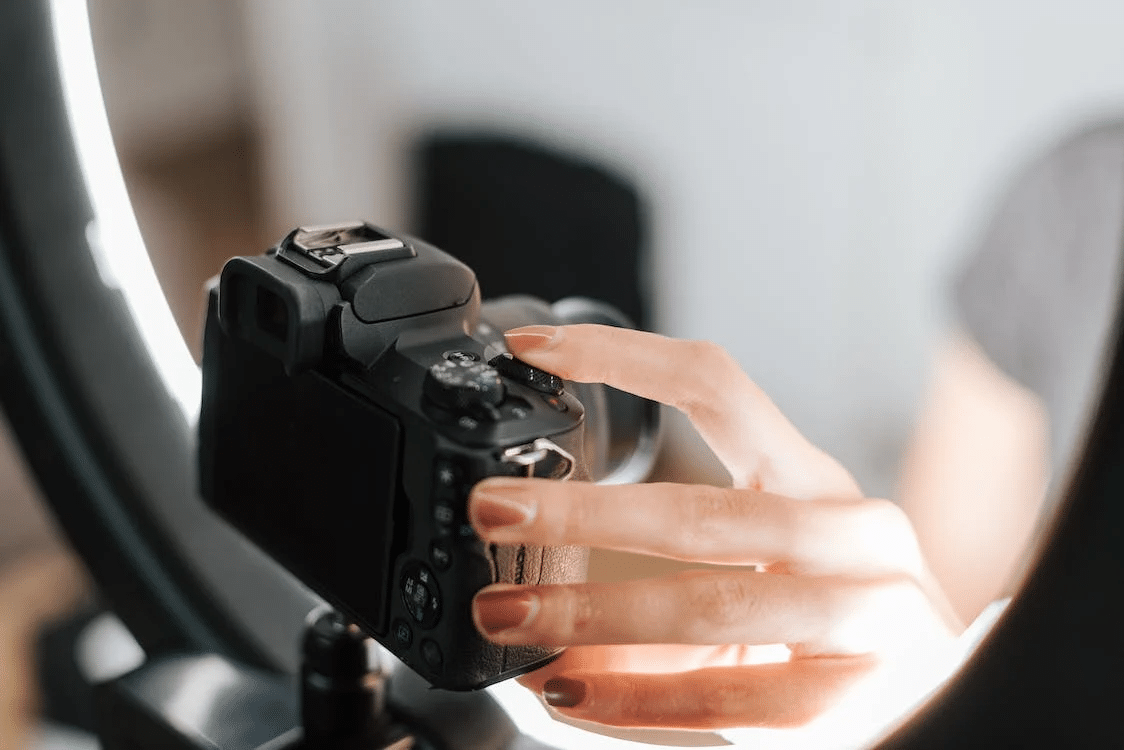
- Ring Lights: Specifically engineered circular fixtures that cast an even, shadowless light directly onto the subject while imparting a distinctive, attractive catchlight in the eyes.
The Strategic Advantages of Ring Lighting in Visual Media
Among the myriad configurations available to content creators, the photographic ring light has emerged as an indispensable tool. Originally developed in the mid-20th century for medical and dental photography—where shadow-free illumination of cavities was paramount—the ring light was eventually adopted by the fashion, beauty, and portrait photography industries before becoming a ubiquitous fixture in home offices and streaming studios.
The primary advantage of ring lighting lies in its unique optical geometry. By positioning the camera lens directly through the center of the circular light source, the light axis aligns precisely with the optical axis of the camera. This configuration eliminates harsh facial shadows, softens skin imperfections, and creates an evenly illuminated subject. Furthermore, the circular reflection, or catchlight, produced in the subject’s eyes imparts a vibrant, alert, and lifelike quality that standard side- or overhead-lighting setups often fail to achieve.
Industry professionals emphasize that ring lights offer a high degree of efficiency and control. Modern LED ring lights consume a fraction of the electricity required by legacy fluorescent or tungsten fixtures, produce minimal heat—thereby enhancing talent comfort during extended recording sessions—and offer variable dimming capabilities that allow creators to adapt instantly to changing ambient light conditions.
Maximizing the Potential of LED Photographic Lighting
Deploying LED strip lights and ring lighting effectively requires more than simply plugging in the equipment. Industry experts and technical specialists recommend a systematic approach to lighting design, emphasizing several foundational considerations:
- Color Rendering Index (CRI): For accurate skin tones and true-to-life color reproduction in video and photography, users should invest in LED fixtures with a CRI rating of 90 or higher. Low-CRI lights can cause skin to appear washed out, greenish, or unnatural.
- Diffusion and Softness: While direct LED light is powerful, it can sometimes be harsh. Utilizing diffusers, softboxes, or frosted lenses helps soften the light output, reducing specular highlights and creating a more cinematic, flattering look.
- Placement and Height: When using a ring light, positioning the fixture at eye level directly in front of the subject yields optimal results. For background LED strips, careful placement behind furniture or within architectural recesses prevents direct glare while adding depth and dimensionality to the frame.
- Power Management and Heat Dissipation: Ensuring that LED strips are mounted on thermally conductive surfaces—such as aluminum extrusion channels—prolongs the lifespan of the diodes by preventing overheating, a critical factor for continuous-use studio setups.
Industry Analysis and Economic Implications
The global market for LED lighting and associated accessories has experienced exponential growth over the past decade, driven largely by the democratization of content creation, the rise of remote work, and stringent energy efficiency regulations. According to market research data, the commercial demand for specialized LED photographic equipment has expanded significantly as educational institutions, corporate offices, and individual creators upgrade their communication infrastructure.
From an economic perspective, the shift toward LED technology represents a substantial reduction in operational expenditures. Legacy halogen and incandescent studio lights generated immense heat, necessitating additional investments in air conditioning and posing fire or burn hazards. In contrast, high-efficiency LEDs reduce energy consumption by up to 80 percent while offering operational lifespans exceeding 50,000 hours. For real estate professionals, marketers, and independent media producers, this translates to lower utility bills, reduced equipment maintenance costs, and greater portability for on-location shoots.
Expert Consultation and Tailored Solutions
As the technological landscape continues to evolve, selecting the appropriate lighting infrastructure can present challenges for both novice creators and established enterprises. Navigating the nuances of lumen output, beam angles, power supplies, and specialized accessories requires careful planning. Industry suppliers and specialized distributors—such as regional experts at LED Montreal—advise consumers to consult with technical specialists before purchasing comprehensive lighting kits.
Tailored consultations ensure that buyers invest in equipment specifically calibrated to their operational scale, whether outfitting a compact home office for video conferencing, designing a dynamic real estate virtual tour studio, or constructing a multi-camera commercial production stage. By optimizing tool selection from the outset, producers can streamline workflow efficiency, minimize trial-and-error expenditures, and achieve superior visual results.
Conclusion
The transition toward ubiquitous LED illumination marks a permanent shift in how visual content is produced, consumed, and valued. By combining high energy efficiency, precise color control, and versatile form factors like strip lights and ring fixtures, LED technology has empowered a new generation of visual storytellers to achieve professional-grade results with unprecedented ease. As digital media continues to dominate communication channels across real estate, marketing, and entertainment, mastering the strategic application of light remains an indispensable asset for modern professionals.