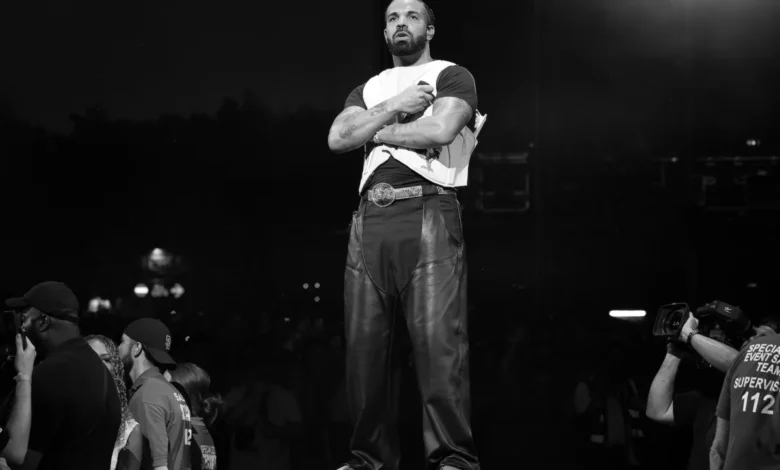
Canadian multi-platinum recording artist Drake has officially lifted the veil on his latest creative endeavor, titled Fear of Missing Out. Following weeks of cryptic social media teasers that left fans and industry analysts guessing whether the project would be a traditional studio album, a global concert tour, or a collection of music videos, the rapper confirmed that the release is a narrative-driven cinematic venture. Scheduled to drop on September 15, Fear of Missing Out has been described by the artist as a “not so short film directed and scored by the family.” This ambitious rollout continues a long-standing tradition of elaborate, immersive marketing campaigns that have become a hallmark of Drake’s career strategy in the modern streaming era.
The Genesis and Chronology of the FOMO Campaign
The promotional rollout for Fear of Missing Out began quietly in late August, when Drake took to his official social media channels to post a series of intimate photographs featuring his family. These images were captioned simply with the acronym and year: “FOMO 2026.” The ambiguous post immediately triggered widespread speculation across online forums, fan pages, and hip-hop culture blogs.
Approximately two weeks after the initial teaser, the artist escalated the campaign by publishing an image of a compact disc (CD) cover bearing the full title, Fear of Missing Out. This physical medium teaser further confused and intrigued followers, many of whom debated whether physical media would play a central role in the distribution or if the CD cover was merely conceptual art.
The speculation was definitively put to rest on a Saturday in September, when Drake released a clarifying statement alongside an official teaser video. The footage featured the rapper piloting a high-speed neon-yellow speedboat across open water, juxtaposed with an evocative and existential voiceover delivered by a female narrator. The voice posed a philosophical dilemma to the audience: “What if I told you there were two versions of your life. In one, you avoid risk and withhold love. You feel like you’ve gone missing from yourself. You look for something you can’t find. In the other version of your life… you find it.” With this narrative framing, Drake cemented the project’s identity as a cinematic short film rather than a conventional musical release.
A History of Elusive and Immersive Rollouts
Drake’s approach to unveiling Fear of Missing Out aligns with a broader pattern of unconventional and high-effort promotional stunts designed to bypass traditional press releases and directly engage his vast global fan base. The artist and his creative team have consistently favored experiential marketing that transforms album and project announcements into interactive events.
Most notably, earlier in the year in April, Drake orchestrated a massive public installation to announce his Iceman trilogy. The campaign centered on a gigantic, multi-ton block of glacial ice physically deposited in a downtown Toronto parking lot. Inside the frozen block, hidden from plain sight, were the official release details and dates for the trilogy. The stunt quickly turned into a viral spectacle as dedicated fans flocked to the site, attempting to hack away at the ice using sledgehammers, pickaxes, and in one extreme instance, a blowtorch and hairspray. The chaotic, grassroots effort to uncover the release date generated immense media coverage and set a high benchmark for interactive promotional engagement.
By comparison, the Fear of Missing Out campaign has relied on psychological intrigue, visual motifs, and familial collaboration rather than physical destruction, yet it maintains the same signature air of mystery that keeps consumers guessing until the final moments before release day.
Industry Implications and Cinematic Ambitions in Modern Hip-Hop
The decision to release Fear of Missing Out as a short film rather than a standard musical package underscores a growing trend among contemporary music superstars. In an era where streaming algorithms dictate listening habits and album rollouts are frequently subjected to digital saturation, major artists are increasingly turning to visual mediums, long-form music videos, and cinematic companion pieces to elevate their art and provide deeper thematic context.
For Drake, whose discography frequently explores themes of fame, isolation, relationship paranoia, and personal identity, a cinematic format offers a broader canvas to address complex psychological motifs. The mention of the project being “scored by the family” also points to an inward-looking, deeply personal creative process, leaning into the confessional lyricism and storytelling that defined the early stages of his career while pushing into new visual territory.
Furthermore, the September 15 release date positions the project strategically within the autumn release calendar, a period traditionally reserved for prestige projects, awards-season media, and high-impact commercial releases. Music industry analysts note that visual companion pieces and short films significantly boost long-term consumer engagement, driving both video platform viewership and sustained streaming metrics for the accompanying musical scores or soundtracks.
Fan Reaction and Community Expectations
Within hours of the official clarification, social media platforms were flooded with breakdowns of the teaser trailer, frame-by-frame analyses of the speedboat sequence, and thematic predictions regarding the title phrase, “Fear of Missing Out.” Community discussions have focused heavily on the philosophical implications of the voiceover, with fans attempting to connect the narrative of living two distinct lives to Drake’s public persona, career trajectory, and recurring motifs of isolation at the top of the music industry.
As the September 15 release date approaches, anticipation remains high across both the hip-hop community and the broader entertainment landscape. Whether Fear of Missing Out will establish a new benchmark for artist-driven visual storytelling or simply add another compelling chapter to Drake’s storied career remains to be seen. However, the success of the rollout thus far demonstrates that the rapper’s mastery of suspense, spectacle, and direct-to-consumer marketing remains as potent as ever.