U.S. Intelligence Memo Alleges Chinese State Security Recruited Executive to Target Nvidia CEO Jensen Huang

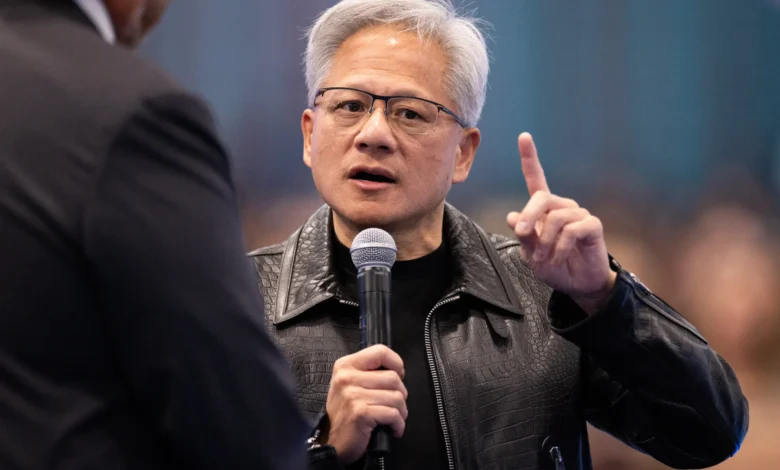
The intersection of geopolitical espionage, global semiconductor manufacturing, and corporate leadership security has become the focal point of an international investigation following the circulation of a U.S. intelligence memo earlier this year. According to multiple major media reports, the classified or sensitive document alleges that a technology executive named Alice Huang was targeted and recruited by China’s Ministry of State Security (MSS) with the specific objective of gathering intelligence on Nvidia Chief Executive Officer Jensen Huang.
The disclosure of this intelligence memo highlights the intensifying vulnerability of top-tier technology executives amid escalating technological and economic competition between the United States and China. As Nvidia continues to dominate the global market for artificial intelligence hardware and advanced computing chips, its leadership has increasingly found itself at the nexus of geopolitical tensions, trade restrictions, and national security concerns.
Origins of the Intelligence Leak and Core Allegations
The existence of the intelligence memo first came to public attention through reporting by The New York Times, which detailed how U.S. intelligence agencies had uncovered operations by Chinese intelligence targeting Nvidia’s chief executive. Subsequent reporting by The Financial Times expanded upon the contents of the memo, revealing that the document alleged not only an espionage attempt by the MSS, but also claimed that Alice Huang—an executive at Singapore-based technology firm Megaspeed—had maintained a personal and romantic relationship with Jensen Huang.
The allegations place a spotlight on the methods modern intelligence agencies reportedly use to compromise high-profile corporate leaders. By exploiting personal networks and professional relationships, state-backed intelligence operatives attempt to gain insights into corporate strategies, supply chain dynamics, and proprietary technology roadmaps. While the memo outlines these alleged recruitment efforts, it remains to be seen whether any sensitive corporate or national security information was actually compromised.
Corporate and Official Responses
In the wake of the media reports, representatives for Nvidia have moved quickly to contextualize the relationship and address broader concerns regarding the security of the company’s proprietary technology. A spokesperson for Nvidia told The
New York Times that Jensen Huang’s interactions with Alice Huang were "not unusual" given the interconnected nature of the global technology and semiconductor ecosystem. Furthermore, the spokesperson emphasized that Nvidia maintains strict protocols and does not share classified or restricted information with its commercial customers.
Addressing broader regulatory and export compliance concerns, the Nvidia spokesperson reiterated the company’s commitment to adhering to U.S. laws, stating that the corporation sells "the first, best and most of our technology in America" while strictly complying with federal export controls designed to prevent advanced hardware from falling into unauthorized hands abroad.
The Broader Context: Export Controls and Front Companies
The revelation of the intelligence memo arrives alongside mounting scrutiny over how advanced American semiconductor technology finds its way into restricted jurisdictions, particularly China. In a separate investigative report published by The New York Times, journalists scrutinized New Matrix, a Chinese enterprise that had been officially authorized by the U.S. Commerce Department to purchase advanced Nvidia chips.

However, when reporters visited the physical corporate headquarters listed by New Matrix, they discovered little more than "a hollow gray shell." This finding has ignited fierce debate among policymakers and trade analysts, raising urgent concerns that authorized entities may be operating as shell companies or financial fronts for blacklisted private equity firms and military-linked organizations seeking to circumvent U.S. export restrictions.
For years, the U.S. government has sought to restrict Beijing’s access to cutting-edge AI chips, viewing semiconductors as the ultimate strategic commodity of the twenty-first century. The emergence of questionable purchasing entities like New Matrix suggests that despite rigorous licensing frameworks implemented by the Bureau of Industry and Security (BIS), sophisticated evasion networks continue to test the boundaries of international trade law.
Chronology of Events
To understand the trajectory of these unfolding developments, it is helpful to examine the sequence of events that brought these intelligence findings to public light:
- Early to Mid-2026: U.S. intelligence agencies circulate an internal memo detailing operations by China’s Ministry of State Security, including the alleged recruitment of technology executive Alice Huang to target Nvidia CEO Jensen Huang.
- Late 2026: Investigative journalists from leading publications gain access to details regarding the intelligence assessment, prompting inquiries across international newsrooms.
- November 6, 2026: The New York Times breaks the story regarding the U.S. intelligence memo targeting Nvidia’s chief executive.
- Shortly Thereafter: The Financial Times publishes additional details from the memo, highlighting the alleged personal relationship between Jensen Huang and Megaspeed executive Alice Huang. Nvidia issues a statement downplaying the interactions as routine and denying the transfer of classified information.
- November 7, 2026: The New York Times releases a complementary investigative report regarding New Matrix, exposing discrepancies at its registered address and highlighting potential vulnerabilities in the U.S. Commerce Department’s chip-export authorization process.
Analysis of Implications for the Technology Sector
The convergence of corporate espionage allegations and export control loopholes marks a critical turning point for Silicon Valley and the broader technology sector. For decades, executives of multinational corporations operated with a high degree of global mobility, fostering international partnerships, research collaborations, and commercial ventures without heavy security oversight. However, the escalating rivalry between Washington and Beijing has fundamentally altered this paradigm.
Several key implications arise from these recent disclosures:
1. Heightened Executive Security Protocols
Corporate boards and executive leadership teams across the tech industry are being forced to reevaluate their personal and digital security postures. CEOs of foundational technology companies—particularly those specializing in artificial intelligence, cloud computing, and semiconductor design—are increasingly viewed as high-value targets by foreign intelligence services. Companies are likely to implement stricter travel advisories, counter-intelligence briefings, and vetting processes for executives engaging with international counterparts.
2. Stricter Scrutiny of Export Compliance
The discovery of questionable entities authorized to purchase advanced hardware will undoubtedly trigger intensified oversight from the U.S. Department of Commerce. Lawmakers in Washington are expected to demand tighter auditing requirements for foreign buyers, deeper background checks on shell corporations, and more aggressive enforcement mechanisms to close loopholes that allow restricted technologies to slip past national borders.
3. Geopolitical Strain on Global Supply Chains
Singapore and other neutral technological hubs in Asia play a vital role in the global semiconductor supply chain. The fact that the executive linked to the intelligence memo operates out of a Singapore-based firm underscores the complex geopolitical tightrope that regional governments must walk. Increased scrutiny from Western intelligence agencies could prompt tighter regulatory alignment across Southeast Asian nations, compelling local firms to demonstrate absolute transparency regarding their ownership structures and end-user compliance.
Conclusion
As investigations continue and policymakers digest the implications of the U.S. intelligence memo, the episode serves as a sobering reminder of the high stakes defining the modern technology landscape. The intersection of artificial intelligence dominance, national security, and international espionage means that leaders like Jensen Huang operate in an environment where commercial success is inextricably bound to geopolitical conflict. Moving forward, both corporate boardrooms and government regulators will need to adapt to a reality where technological supremacy is defended not only in the marketplace, but on the front lines of intelligence and security.