OpenAI deepens ties with the defense establishment through the strategic appointment of former Army Secretary Dan Driscoll

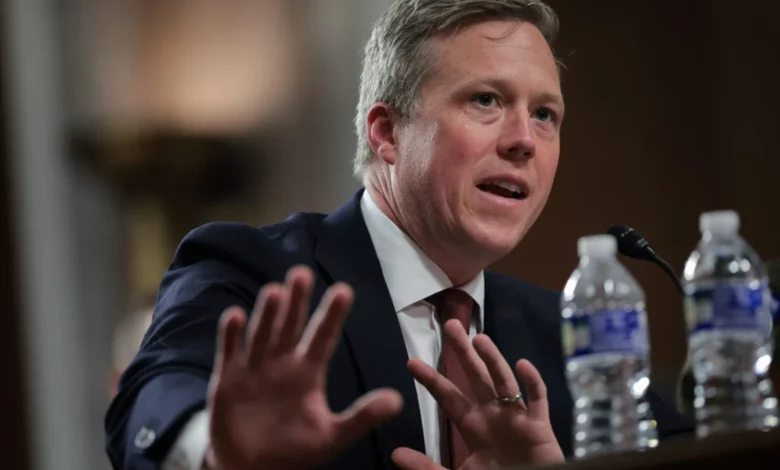
OpenAI has formally announced the appointment of Dan Driscoll, the former U.S. Army Secretary, as its new senior counselor for national security modernization. This high-profile hire marks a significant milestone in the San Francisco-based AI lab’s transition from a research-oriented nonprofit to a central player in the global defense-industrial complex. The move, occurring just two months after Driscoll’s abrupt departure from the Trump administration following reported friction with Defense Secretary Pete Hegseth, underscores OpenAI’s aggressive strategy to embed its large language models and analytical systems into the core of national security infrastructure.
The role, described by OpenAI as a bespoke position, centers on guiding the company’s interactions with public and private sector partners. Driscoll is tasked with refining policy and strategy to ensure that AI applications—ranging from logistics optimization to threat detection—are integrated into U.S. and allied defense systems responsibly. This appointment serves as a strategic reinforcement of the company’s ongoing mission to align its technological roadmap with the priorities of the Pentagon and intelligence community.
A Chronology of Institutional Integration
The recruitment of Driscoll is the latest in a series of deliberate moves by OpenAI to bridge the divide between Silicon Valley innovation and federal bureaucracy. The following timeline illustrates the company’s accelerated pivot toward defense:
- February 2026: OpenAI enters a critical agreement with the Pentagon to deploy its AI models within secure Department of Defense networks, following the effective blacklisting of rival firm Anthropic due to its refusal to disable safety guardrails regarding autonomous weaponry.
- June 2026: OpenAI is awarded a landmark $200 million defense contract to design AI-driven tools aimed at addressing complex national security challenges.
- June 2026: In a move signaling the normalization of AI at the highest levels of military command, the company appoints retired U.S. Army General Paul Nakasone, the former director of the National Security Agency (NSA), to its board of directors.
- Late 2026: OpenAI establishes a strategic partnership with defense technology firm Anduril. The collaboration aims to integrate OpenAI’s cognitive systems with Anduril’s extensive database of unmanned drone threats, enhancing the Pentagon’s ability to conduct real-time threat analysis.
- September 2026: Dan Driscoll resigns as Secretary of the Army following 18 months of service, a tenure marked by intense internal disagreements over military promotion structures and the pace of the Pentagon’s digital modernization efforts.
- November 2026: OpenAI officially announces the hiring of Driscoll, positioning him as the primary liaison for its national security modernization efforts.
The Strategic Rationale: Why Driscoll?
Dan Driscoll brings a unique combination of venture capital acumen and high-level bureaucratic experience. Before his tenure at the Pentagon, his career spanned roles as a partner at the private equity firm 100watt and chief operating officer at Flex Capital. His military background, including service in Baghdad, provided him with a ground-level understanding of the risks associated with information bottlenecks in active combat zones.
During his time as Army Secretary, Driscoll was a vocal proponent of "commercial off-the-shelf" (COTS) software, arguing that the military’s traditional reliance on custom-built, proprietary software was too slow and expensive to keep pace with modern adversaries. His push to streamline drone development and cut through the "red tape" of military procurement made him a central figure in the push for a more agile, tech-forward Pentagon.
In a press statement following his hire, OpenAI CEO Sam Altman noted, "The U.S. has an extraordinary opportunity to work with other countries to spread the adoption of democratic AI." Driscoll echoed this sentiment, emphasizing that his objective is to provide the "right answer to the right person faster" through the removal of administrative friction.
The "Revolving Door" Controversy
The appointment of a former cabinet-level official to a leading AI firm has reignited long-standing debates regarding the "revolving door" between the federal government and the technology sector. Critics argue that when high-ranking officials move directly from policy-making roles to private corporations, the integrity of the procurement process is placed at risk.
Gwanhoo Lee, chair of the Department of Information Technology and Analytics at American University’s Kogod School of Business, suggests that such hires are not merely about recruiting talent, but about securing institutional access. "This hire is a continuation of their trend to see the opportunity in hiring significant government officials to strengthen their relationship with the government," Lee explained. "If AI companies can take high-level officers from the Pentagon right after they leave, I don’t know how fair the government procurement process will be."
The primary concern among ethics watchdogs is that federal contracts may be awarded based on established personal networks and the promise of future career paths, rather than on the objective merits of the technology itself. While OpenAI has stated that all parties are fully aware of post-employment restrictions and are in compliance with federal guidelines, the optics of the appointment remain a point of contention for transparency advocates.
Broader Implications for AI Governance
The integration of OpenAI’s models into defense networks carries significant legal and moral implications. The "all lawful use" clause in the company’s Pentagon contract, while intended to provide a framework for ethical deployment, has been described by some policy experts as inherently ambiguous.
The central tension lies in the distinction between large-scale data analysis and mass surveillance. Under current U.S. law, the government is permitted to purchase vast quantities of data from third-party brokers. When this data is processed by advanced AI, the capability for granular monitoring of the population increases exponentially. While OpenAI’s updated blog post from March 2026 explicitly states that its systems will not be used for domestic surveillance or the tracking of U.S. persons, experts such as Samir Jain of the Center for Democracy & Technology argue that loopholes remain.
"If you buy up massive amounts of data and allow AI to analyze it, you may end up, in effect, engaging in mass surveillance of Americans through that process," Jain noted. The challenge, therefore, is whether the technical guardrails promised by OpenAI are robust enough to withstand the operational requirements of a military that is increasingly data-dependent.
Assessing the Future of Defense Tech
As the geopolitical landscape grows more volatile, the demand for AI-driven defense systems is projected to increase. The Pentagon’s willingness to designate companies as "supply chain risks"—as seen in the case of Anthropic—demonstrates that the government is prepared to exert significant pressure on private AI developers to align with national security objectives.
OpenAI’s decision to hire a seasoned political and military operative like Driscoll suggests that the company is bracing for a future where its success is intrinsically linked to its ability to navigate the complex, often adversarial, environment of Washington D.C. The company is effectively betting that its future growth lies not just in the capability of its algorithms, but in its status as a trusted, embedded partner of the state.
Whether this strategy will lead to the "modernization" envisioned by Driscoll or to an erosion of the safeguards that once separated public oversight from private sector profit-seeking remains the defining question for the industry. As the line between private innovation and national defense continues to blur, the role of figures like Driscoll will likely become a blueprint for other tech giants seeking to secure their place in the new era of AI-powered global security. For now, the move reflects a clear reality: the most important frontier for artificial intelligence is no longer just the laboratory, but the halls of power and the logistics of the modern battlefield.