Cardi B Delivers Academic Advice and High-Energy Performance at Johns Hopkins University Hoptoberfest

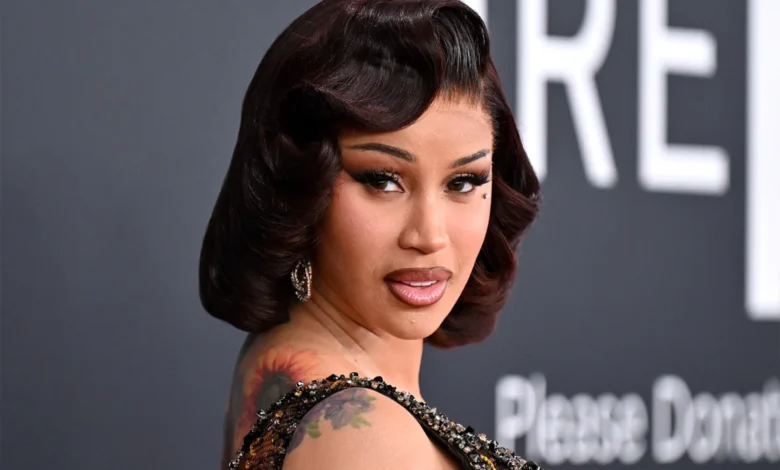
The annual Hoptoberfest celebration at Johns Hopkins University, hosted by the Hopkins Student Organization for Programming (HOP), took an unexpected turn this year, culminating in a headline performance by Grammy-winning rap icon Cardi B. The event, which serves as a cornerstone of the university’s autumn social calendar, became a stage for both musical entertainment and candid social commentary. Beyond the performance, the rapper used her platform to address the growing presence of artificial intelligence in academia, issuing a blunt directive to the student body regarding the integrity of their coursework.
A Last-Minute Pivot: The Logistics of the Headliner Change
The path to this year’s Hoptoberfest was marked by significant logistical adjustments. Originally, the festival was scheduled to feature Canadian R&B artist Daniel Caesar. However, just days before the event, the university administration and the Hopkins Student Organization for Programming issued an urgent notification to ticket holders. The communication cited "unforeseen circumstances" as the reason for Caesar’s sudden withdrawal from the lineup.
To mitigate disappointment and maintain the momentum of the annual celebration, organizers moved quickly to secure a replacement. The announcement that Cardi B would be stepping into the headlining slot was met with a mixture of shock and enthusiasm. This change necessitated a rescheduling of the festivities, shifting the event from its original date of October 31 to November 1. Despite the late-stage transition, student reception remained overwhelmingly positive, as the high-profile nature of the replacement generated significant campus buzz.
Academic Integrity in the Age of Artificial Intelligence
During her set, Cardi B paused the music to engage directly with the audience, pivoting from performance to advice regarding the academic climate at the university. Her remarks focused specifically on the usage of generative AI tools, such as ChatGPT, for completing assignments.
"Y’all better pass y’all motherf—kin’ semester," she told the crowd, before adding a pointed warning: "And don’t ask ChatGPT for the answer."
This commentary reflects a broader public discourse regarding the ethical implications of AI in higher education. As universities worldwide grapple with the integration of large language models into learning environments, student reliance on these tools has become a point of contention for faculty and administrators. While Cardi B’s comments were delivered in her characteristic, informal style, they echo the concerns of many educators who fear that the convenience of automated writing platforms may undermine critical thinking and original research.
The rapper’s stance on AI is consistent with her previous public statements on the subject. In February 2025, she utilized her social media presence to express frustration over the proliferation of AI-generated misinformation, particularly regarding its impact on older generations. Her call to "free my older family members from Facebook AI" highlighted a growing concern about the psychological and social costs of an increasingly automated digital landscape.
Contextualizing the Impact of AI on Modern Education
The emergence of AI in academic settings has prompted a paradigm shift in how institutions measure student progress. According to recent reports from the National Center for Education Statistics, a significant percentage of undergraduate students have experimented with generative AI tools for academic tasks. This shift has forced universities to redesign assessment strategies, moving away from take-home essays toward in-person examinations and oral defenses.
Cardi B’s intervention at Johns Hopkins underscores the cross-generational reach of this issue. By addressing the topic during a concert, she brought the discussion out of the lecture hall and into the cultural mainstream. For a university like Johns Hopkins, which is renowned for its rigorous academic research and high standards, the intersection of celebrity influence and educational integrity is a topic of ongoing internal deliberation.

Student Sentiment and Campus Culture
Despite the sudden shift in the event’s lineup, the student body’s reaction was largely one of excitement. Interviews conducted by The News-Letter, the university’s student-run publication, indicated that while many students had initially anticipated a performance by Daniel Caesar, the opportunity to see an artist of Cardi B’s stature was widely welcomed.
"I was actually pretty excited about Daniel Caesar, I do listen to a good amount of his music," noted sophomore Bhavya Guru. "When they switched it to Cardi B, I was a little surprised and honestly thought it was fake. I’m honestly really hyped for Cardi B and think it’s going to be a lot of fun."
This sentiment was echoed by other students, such as Lana Hakma, who emphasized that the change in artists—and the shift in the event’s date—did not diminish the overall appeal of the festival. The successful execution of the event, despite the administrative hurdles, highlights the agility of the Hopkins Student Organization for Programming in managing high-stakes event management.
Cardi B’s Recent Public Trajectory
The appearance at Johns Hopkins comes at a time of personal and professional reflection for the artist. Throughout the latter half of 2025 and into 2026, Cardi B has utilized digital platforms to candidly address the challenges of fame and the dynamics of the music industry. In recent appearances on X (formerly Twitter) Spaces and Instagram Live, she has expressed a degree of detachment from the traditional "rap beef" culture that has historically defined her genre.
"I don’t even give a f—k about these b—ches anymore," she told her followers, characterizing current rivalries as "boring."
Furthermore, she has opened up about the complexities of success and the difficulty of discerning genuine relationships within an inner circle. Her comments regarding the "scary" nature of fame—specifically the fear of hidden animosity—suggest a maturation of her public persona. She has frequently expressed skepticism toward those who may project support while harboring secret negative intentions, a sentiment that resonates with her broader themes of independence and self-reliance.
Broader Implications and Future Outlook
The event at Johns Hopkins University serves as a case study in the evolving role of public figures as cultural influencers on college campuses. By combining entertainment with unsolicited, yet culturally relevant, advice on academic integrity, artists like Cardi B are increasingly influencing the discourse surrounding student behavior.
As artificial intelligence continues to permeate various sectors of society, the debate over its utility versus its potential to degrade human capability will only intensify. Cardi B’s vocal opposition to the misuse of these technologies acts as a reflection of a wider societal anxiety. Whether her message resonates with the student body in the long term remains to be seen, but the moment highlighted the rapper’s ability to pivot from a musical entertainer to a voice for ethical accountability.
For the university, the successful hosting of Hoptoberfest amidst a major change in programming serves as a testament to the resilience of campus traditions. As the semester progresses, the impact of such events on student morale and their subsequent engagement with academic and extracurricular responsibilities will remain a primary focus for the university administration. For now, the takeaway from this year’s Hoptoberfest is clear: the students of Johns Hopkins were given a high-energy show and a reminder that, in the era of AI, personal effort remains the only true currency for success.