In the current New York City real estate market, finding a residence that balances square footage, historical character, and a location in a premier neighborhood for under $1 million has become an increasingly rare feat. As inventory remains tight and interest rates continue to shape buyer behavior, the search for "value" has driven prospective homeowners to look beyond standard studios. Today, the sub-$1 million segment of the market reveals a diverse landscape, ranging from pre-war carriage house conversions to expansive one-bedrooms that prioritize layout over traditional room counts. This week, we examine four distinct properties that illustrate the tactical compromises and unique rewards available to those navigating the current residential landscape in New York.
The Gramercy Transformation: Park Towers
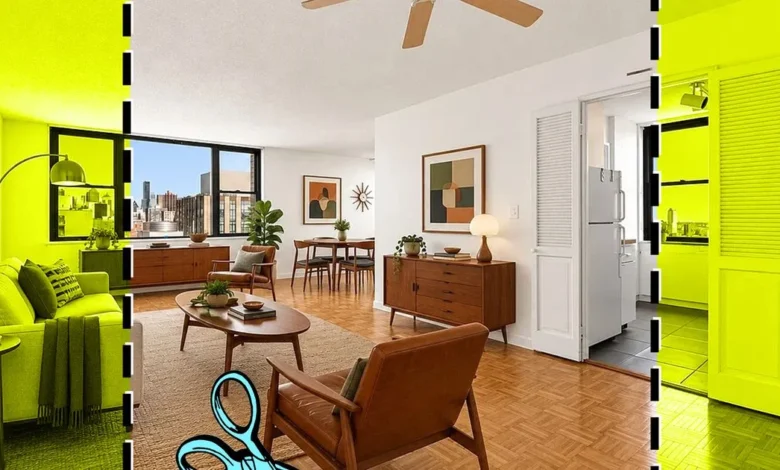
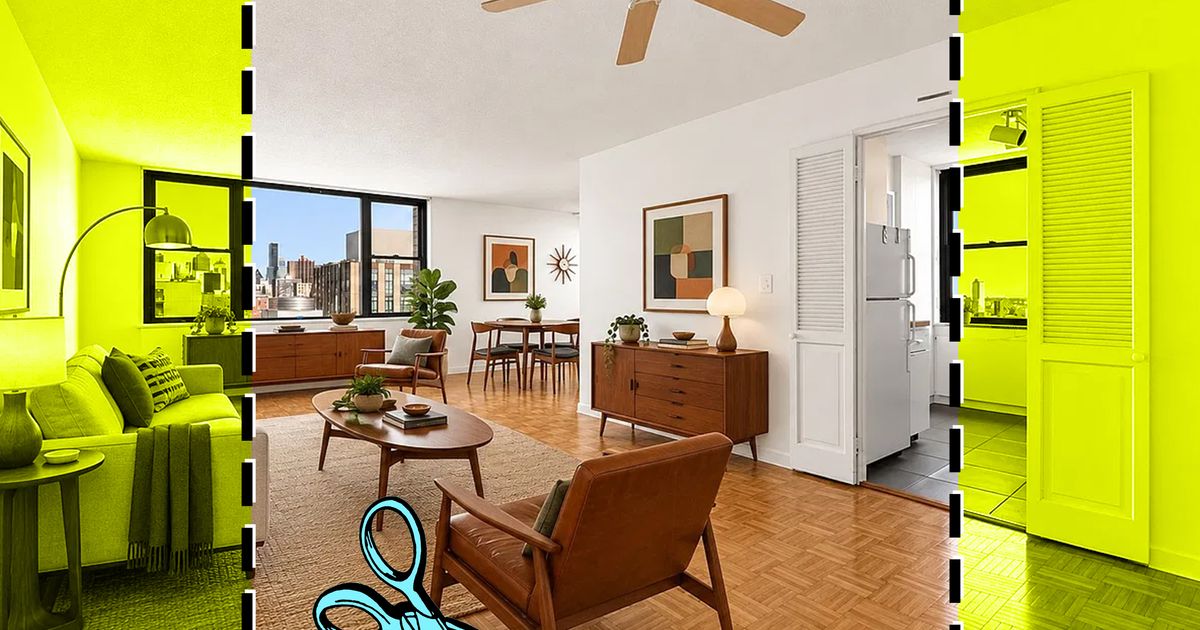
At 201 East 17th Street, apartment 23H stands as a prime example of the "open-concept" shift currently influencing the resale value of mid-century co-ops. Originally constructed as a conventional two-bedroom unit, this residence has been thoughtfully reconfigured into a spacious one-bedroom. By removing internal partitions, the current owners have created a roughly 300-square-foot living area, bathed in light from expansive north-facing windows that capture unobstructed skyline views.
The architectural decision to repurpose the former second bedroom into an airy dining alcove—complete with secondary light from the west—reflects a broader trend in Manhattan real estate: the prioritization of common space over secondary sleeping quarters. While the kitchen retains a functional L-shaped flow with mid-century aesthetic touches, the primary bedroom remains the unit’s standout feature, offering substantial closet capacity and enough square footage to accommodate a dedicated reading nook.
For potential buyers, the financial profile of this unit is characteristic of large-scale co-op buildings in Gramercy. The maintenance fees, currently pegged at $2,376 per month, are significant but encompass a comprehensive suite of amenities, including a 24-hour doorman, a live-in superintendent, bike storage, a fitness center, and parking facilities. Its proximity to Union Square and the historic Joe Jr. diner underscores the appeal of a neighborhood that balances mid-town accessibility with a distinctively residential character.
Historic Preservation in Prospect Heights
Moving to Brooklyn, the floor-through apartment at 169 Park Place, unit 3, offers a different proposition. Located one flight above the parlor level of a classic brownstone, this property serves as a case study in the preservation of 19th-century Italianate architecture.
The unit’s layout is defined by high ceilings—exceeding nine feet—and meticulously maintained original moldings that frame the living space. The southwest-facing living area, centered around an arched fireplace, provides a level of craftsmanship rarely seen in modern construction. However, the property also highlights the "sweat equity" model: while the structure is sound, the kitchen and bathroom require comprehensive modernization. The inclusion of plumbing for a washer and vented dryer is a critical selling point, as it suggests the potential for a significant increase in future resale value following a renovation.
The maintenance fees here are a comparatively modest $1,095. This low cost is attributed to the fact that the co-op is self-managed and lacks the expansive amenities found in larger Manhattan towers. For the buyer, this represents a trade-off: higher autonomy and lower monthly overhead in exchange for the absence of professional building staff.
Pre-War Charm on the Upper West Side
At 304 West 88th Street, apartment 2D presents a quintessential Upper West Side pre-war experience. Situated less than a block from the green expanse of Riverside Park, this unit balances aesthetic charm with a "turnkey" readiness that appeals to buyers wary of construction projects.
The apartment features a distinctively curated kitchen with green-and-brass cabinetry, paired with contemporary stainless-steel appliances and quartz countertops. The living room serves as the focal point, anchored by crown molding and an exposed-brick wall featuring a decorative fireplace. While the bedroom is compact—optimized for a king-size bed and minimal furniture—the unit’s overall layout maximizes the available footprint. With monthly fees at $1,791, the property is a reminder that in the U.S. housing market, the tax-heavy nature of New York City co-ops requires buyers to view monthly maintenance as a fixed cost that must be weighed against the intrinsic value of the building’s location and historical status.
The Garden-Level Utility of the West Village
The garden apartment at 107 Morton Street offers a rare entry point into the far West Village, a neighborhood historically known for its high price floor. As with many garden-level residences, natural light is a constraint. However, the unit utilizes nine-foot ceilings and a well-conceived floor plan to mitigate the subterranean feel.
The layout emphasizes a seamless transition between the living area and a private patio adorned with ivy, effectively extending the living space outdoors. The kitchen has been renovated with modern gray cabinetry, while the bathroom utilizes a bold green tile and gold hardware palette. With maintenance fees of $1,242, the building provides practical value, including two live-in superintendents and shared amenities such as a common garden and bike storage. The proximity to Hudson River Park provides residents with immediate access to recreational space, a significant amenity for those seeking to balance urban density with outdoor access.

Market Context and Implications
The persistence of these listings under the $1 million threshold highlights the bifurcated nature of the NYC market. While luxury developments often dominate headlines, the "bread and butter" of the city remains these pre-war co-ops and converted spaces.
From an economic perspective, the viability of these units is currently being tested by interest rate volatility. As the cost of borrowing has risen, buyers are becoming increasingly discerning. Properties that require capital-intensive renovations, such as the Prospect Heights floor-through, are seeing their prices adjusted to reflect the cost of future work. Conversely, units that have been modernized—such as the Upper West Side and Gramercy offerings—command a premium, as buyers seek to avoid the logistical and financial burden of managing contractors in a city where labor and material costs remain at historic highs.
Furthermore, the structure of these co-ops—ranging from self-managed four-unit buildings in Brooklyn to large-scale, amenity-rich towers in Manhattan—dictates the long-term cost of ownership. Buyers must carefully analyze the financial health of the co-op boards. A low monthly maintenance fee, as seen in the Prospect Heights listing, can be an indicator of financial efficiency or a lack of long-term capital improvement planning. Conversely, high fees in buildings like Park Towers reflect the high overhead of professional maintenance.
As the city continues to address its housing shortage, these four listings underscore that for the prospective buyer, the "perfect" apartment is rarely a singular entity. It is instead a calculation of neighborhood trade-offs, maintenance capacity, and the tolerance for either immediate move-in readiness or the long-term investment of renovation. For those willing to navigate these nuances, the under-$1 million market continues to offer significant opportunities for long-term residential stability in one of the world’s most competitive real estate environments.