LG UltraGear 27-inch OLED QHD Gaming Monitor Hits Historic Low Price of $499.99 in Massive Amazon Discount

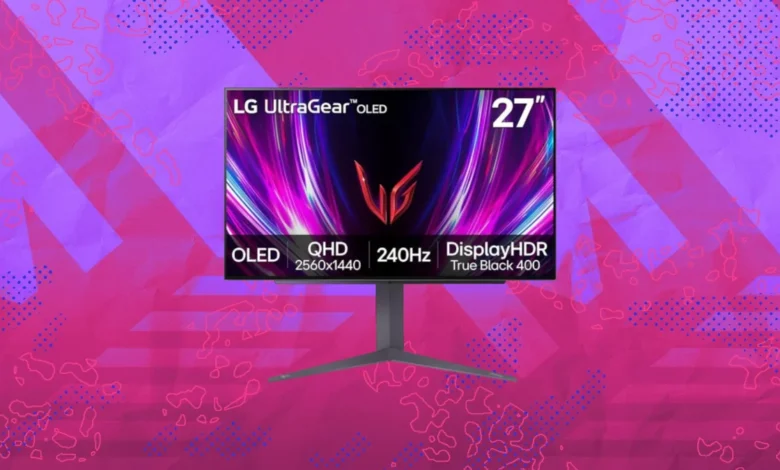
Amazon has introduced what market analysts are calling one of the most aggressive price drops for high-end gaming hardware this season, slashing the price of the 27-inch LG UltraGear OLED QHD Gaming Monitor (Model 27GS93QE) by a staggering 44%. Originally retailing at an introductory and standard manufacturer’s suggested retail price of $899.99, the premium display is now available to consumers for $499.99. This $400 discount matches the absolute lowest price ever recorded for the hardware since its introduction to the consumer market, according to major retail tracking metrics.
The promotion arrives at a pivotal moment in the consumer electronics landscape. As the holiday shopping season approaches and component manufacturing matures, high-end display technologies—particularly Organic Light Emitting Diode (OLED) panels—are seeing unprecedented price adjustments. For years, the barrier to entry for desktop OLED monitors remained prohibitively high, often restricting the technology to professional colorists, enterprise environments, and enthusiast-tier gamers willing to spend close to $1,000 for a single peripheral. This latest promotion from Amazon highlights a broader industry trend toward mainstreaming luxury display features.
Main Facts and Technical Specifications
At the core of the LG UltraGear 27GS93QE lies a meticulous blend of speed, resolution, and color accuracy designed to meet the rigorous demands of competitive esports athletes and cinematic single-player gamers alike.
The monitor utilizes a Quad High Definition (QHD) resolution of 2560×1440 pixels spread across a 27-inch canvas. This pixel density strikes a widely preferred sweet spot for modern desktop setups, offering significantly sharper image fidelity than standard 1080p displays while avoiding the massive graphical processing overhead demanded by native 4K gaming at high frame rates.
Performance metrics for the panel are equally robust. LG has engineered the display to feature a 240Hz refresh rate paired with a near-instantaneous 0.03-millisecond Gray-to-Gray (GtG) response time. In practical terms, this rapid response virtually eradicates motion blur, ghosting, and trailing artifacts—visual anomalies that frequently plague fast-paced first-person shooters, racing sims, and action-heavy multiplayer titles.
To ensure seamless visual synchronization between compatible graphics hardware and the display, the monitor incorporates official Nvidia G-Sync Compatibility alongside AMD FreeSync Premium Pro certification. These adaptive synchronization technologies dynamically match the monitor’s refresh rate to the output frames of the connected PC or console, effectively eliminating screen tearing and stuttering during unexpected frame rate fluctuations.
The Evolution of Desktop OLED Technology
To understand the significance of a sub-$500 price point for a 240Hz OLED monitor, one must examine the rapid trajectory of display technology over the past half-decade. Historically, OLED panels dominated the television market due to manufacturing constraints and scaling challenges associated with smaller desktop form factors. When OLED monitors finally debuted for personal computers, they carried a substantial "early adopter" tax.
Early iterations were plagued by concerns regarding burn-in, peak brightness limitations, and exorbitant production costs. However, continuous research and development by panel manufacturers—chief among them LG Display, Samsung Display, and AU Optronics—have revolutionized the sector. The introduction of micro-lens array (MLA) technology and advanced heat dissipation mechanisms has yielded panels that are not only brighter and more energy-efficient but also significantly more durable.
Throughout 2023 and 2024, the market witnessed a gradual descent in OLED pricing. Monitors that debuted at $1,000 or higher routinely saw temporary $100 to $200 price cuts during seasonal promotional events like Amazon Prime Day or Black Friday. However, a permanent or semi-permanent drop of $400—bringing a top-tier 240Hz OLED monitor down to the $500 threshold—marks a psychological and economic watershed moment for the industry. It places premium OLED technology directly in competition with high-end IPS (In-Plane Switching) and VA (Vertical Alignment) LCD panels, many of which occupy a similar price bracket despite lacking the infinite contrast ratios inherent to self-lit pixels.
Visual Fidelity and Ergonomic Versatility
Beyond raw speed, the defining characteristic of the LG UltraGear 27GS93QE remains its self-lit pixel architecture. Unlike traditional LCD panels that rely on a communal backlight—which often results in a hazy gray appearance in dark scenes and light bleeding along the edges—OLED technology allows every individual pixel to generate its own light or switch off entirely.
This self-illuminating capability is underscored by the monitor’s VESA DisplayHDR True Black 400 certification. The panel boasts an astounding contrast ratio of 1.5 million-to-one, allowing for exceptionally deep, inky blacks alongside vibrant highlights. Consequently, users consuming multimedia content or playing atmospheric video games benefit from enhanced shadow detail and visual depth that traditional backlit monitors struggle to reproduce.
Color reproduction is another critical pillar of the display. The monitor covers up to 98.5% of the DCI-P3 color spectrum, ensuring that hues appear rich, saturated, and true to life. For content creators, video editors, and digital artists who also utilize their rigs for gaming, this wide color gamut provides a reliable canvas for color-critical work. Furthermore, LG has integrated an anti-glare and low-reflection (AGLR) coating onto the panel surface. This treatment minimizes ambient light diffusion from overhead fixtures or windows, preserving contrast and focus even in brightly lit office or bedroom environments.
Physical design and ergonomics have also received careful attention. The monitor features an ultra-thin frame with ultra-slim bezels on three sides, maximizing screen estate and lending a modern aesthetic to any desktop setup. The included ergonomic stand offers comprehensive adjustability, enabling users to modify the height, tilt, and pivot of the screen. For those seeking alternative mounting configurations, the display includes VESA mount compatibility, allowing it to transition easily to multi-monitor articulating arms or wall mounts.
Connectivity options are tailored to modern multi-device setups. The unit is equipped with both HDMI 2.1 and DisplayPort 1.4 inputs. This ensures that users can achieve the maximum 240Hz refresh rate and resolution whether they are tethered to a high-end gaming PC equipped with an advanced graphics card or leveraging current-generation gaming consoles such as the PlayStation 5 and Xbox Series X, which benefit heavily from HDMI 2.1 bandwidth capabilities.
Market Implications and Consumer Takeaways
The sudden availability of the LG UltraGear 27GS93QE at a historic low of $499.99 carries notable implications for the broader tech hardware ecosystem. Industry analysts suggest that such aggressive pricing from major manufacturers is indicative of healthier supply chains, increased manufacturing yields, and a strategic push to capture market share before competitors saturate the mid-range enthusiast segment.
For the average consumer, this price reduction removes one of the final remaining obstacles to adopting OLED technology: cost. While budget-conscious gamers previously had to settle for fast IPS panels that sacrificed contrast and black depth for speed, the gap between performance and visual fidelity has effectively closed at this price point.
However, prospective buyers are advised to weigh the inherent characteristics of OLED panels against their specific use cases. While advancements in burn-in mitigation software, pixel-shifting, and thermal management have drastically improved longevity, users who static-display productivity software, spreadsheets, or desktop user interfaces for prolonged periods must still exercise standard maintenance precautions. For mixed-use scenarios involving heavy gaming, cinematic media consumption, and casual web browsing, the benefits of infinite contrast and instantaneous response times generally outweigh these considerations.
As inventory levels fluctuate during major promotional periods, retail analysts anticipate high demand for discounted OLED inventory. Whether this price point represents a temporary promotional clearance or a new baseline for mid-tier enthusiast monitors remains to be seen. Nonetheless, for consumers who have monitored the evolution of desktop displays from the sidelines, the current Amazon discount presents an unprecedented opportunity to acquire flagship-tier visual technology at a mid-tier price point.
Related posts: