Navigating the 2026 Real Estate Market: Should You Sell Your House Now or Wait Until 2027?

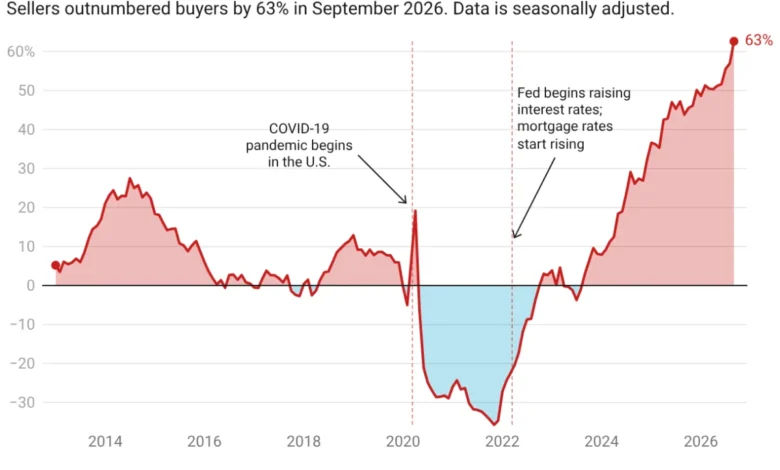
For homeowners contemplating a move, the autumn housing market presents a complex financial landscape defined by high costs, fluctuating mortgage rates, and a pronounced shift toward a buyer-driven environment. Throughout the year, economic pressures have steadily favored buyers, with inventory levels rising as more property owners feel an urgency to relocate. However, stubbornly high housing costs continue to suppress overall demand, leaving prospective sellers to weigh whether to list their properties now or defer their plans until 2027.
The national median home sale price stands at approximately $393,000 as of September 2026, marking a modest 1.3% increase from the previous year. While this slower rate of price appreciation has allowed wage growth to slightly improve long-term housing affordability, the typical monthly housing payment has surged past $2,600. Combined with persistent inflation impacting everyday consumer goods, these elevated expenses have made buyers notably cautious. Consequently, the broader housing market is experiencing a period of sluggish activity characterized by surplus inventory and subdued transaction volumes.
Macroeconomic pressures have further complicated the real estate sector. Geopolitical tensions in the Middle East, rising global oil prices, emerging trade tariffs, and broader anxieties surrounding artificial intelligence and the bond market have injected fresh volatility into the financial system. These factors have kept mortgage rates hovering above the 7% threshold since September, reigniting inflation worries and making it increasingly difficult for buyers to plan major financial commitments with confidence.
Shifting Dynamics in a Buyer-Driven Market
The structural balance of the national real estate market has tilted firmly in favor of purchasers. Across the United States, there are currently nearly 600,000 more active home sellers than buyers. While this supply-and-demand gap narrowed briefly earlier in the year, it has expanded rapidly as prospective buyers press pause on their home searches in response to affordability constraints and macroeconomic uncertainty.
This imbalance requires sellers to adopt flexible pricing strategies and offer meaningful concessions to remain competitive. Recent data indicates that asking prices have dipped to their lowest levels in a year. Furthermore, market friction is evident in elevated rates of contract cancellations, sudden delistings, and a reluctance among potential sellers to enter the market altogether.
Nevertheless, regional disparities remain stark. In the Midwest and Northeast, localized housing shortages persist. Cities such as Rochester, New York, and Milwaukee, Wisconsin, continue to see robust buyer demand outpace available inventory, frequently resulting in competitive bidding wars and rapid home sales. Conversely, major metropolitan areas across the Sun Belt heavily favor buyers, largely due to a prolonged surge in new residential construction that has steadily boosted local housing supply.
Economic Volatility and Mortgage Rate Pressures
The trajectory of the housing market remains inextricably linked to broader economic indicators, chief among them being mortgage rates and inflation. Economists point out that financial markets are highly sensitive to external shocks, ranging from energy price fluctuations driven by Middle East conflicts to broader fiscal policy shifts.
Daryl Fairweather, Chief Economist at Redfin, notes that sellers must prepare for an entrenched buyer’s market. Elevated inventory offers purchasers a wider selection, but record-high costs and economic volatility breed hesitation. According to Fairweather, affordability has improved only marginally over the past year, meaning those buyers who do enter the market are well-prepared to lead hard negotiations and demand fair pricing. While the near-term outlook remains challenging for both sides of a transaction, viable deals continue to close for motivated participants.
Chen Zhao, Head of Economics Research at Redfin, emphasizes the external forces acting upon mortgage rates. Zhao highlights that rising energy costs, inflation concerns, and bond market adjustments place persistent pressure on the broader economy. Unless residential construction experiences an unprecedented boom or the broader economy enters a severe recession, buyer activity and overall housing affordability are unlikely to see substantial improvements in the near term. The long-term economic influence of artificial intelligence also remains a significant wildcard for future market forecasting.
Evaluating Timelines: When to Sell and When to Wait
Historical seasonality dictates that spring remains the optimal window for home sales, with data consistently showing that sellers close transactions faster and secure higher net proceeds in late April. Conversely, late summer historically affords buyers the greatest degree of leverage. However, individual circumstances and localized market conditions frequently override general seasonal trends.
Industry experts outline several key indicators that can help homeowners determine whether listing their property aligns with their financial goals:
- Low Housing Supply: In regions where inventory is constrained—particularly in parts of the Midwest and Northeast—fewer competing properties can drive up prices and accelerate the sales timeline.
- Declining Mortgage Rates: A downward trend in mortgage rates historically triggers a surge in buyer demand, fostering competitive environments characterized by stronger offers and potential bidding wars.
- Personal Necessity: Life milestones, including family expansion, long-distance career relocations, or the need to downsize, often override purely economic considerations. In such scenarios, collaborating with an experienced real estate agent is essential to craft a tailored selling strategy.
Conversely, market analysts advise caution under specific adverse conditions:
- High Mortgage Rates: When borrowing costs are elevated, buyer purchasing power shrinks significantly, frequently resulting in lower initial offers and prolonged market times.
- Recent Refinancing: Homeowners who recently locked in low pre-pandemic mortgage rates may find that selling quickly neutralizes their accumulated savings once closing costs, fees, and the higher cost of a subsequent mortgage are factored into the equation.
- Deferred Maintenance: Properties requiring substantial structural or cosmetic repairs face heightened scrutiny from wary buyers, often translating into reduced offers or extended periods on the market.
Market Velocity and the Extended Sales Timeline
The combination of economic headwinds and affordability challenges has visibly altered the velocity of real estate transactions. The typical American home currently remains on the market for approximately 51 days before securing a buyer. While this duration represents a notable increase compared to the hyperactive pandemic-era market of 2022—when homes routinely sold in under a month—it remains considerably faster than the historical 60-to-100-day averages typical of the 2010s.
Sellers entering the current market must adjust their expectations, price their properties realistically, and prepare for a longer transactional timeline than what was observed during the post-pandemic boom.
Broader Implications and Strategic Outlook
Deciding whether to sell a home in the current economic climate depends heavily on individual financial preparedness and local market conditions. With a nationwide surplus of inventory and persistent affordability challenges, the prevailing buyer’s market is unlikely to undergo a dramatic reversal in the immediate future.
For homeowners with a solid financial foundation and clear personal motivations, proceeding with a sale remains a viable option, provided they partner with a knowledgeable real estate professional, price competitively, and remain open to negotiation. Waiting until 2027 is unlikely to eliminate macroeconomic uncertainty; therefore, crafting a deliberate, data-driven strategy remains far more effective than attempting to perfectly time the housing cycle.