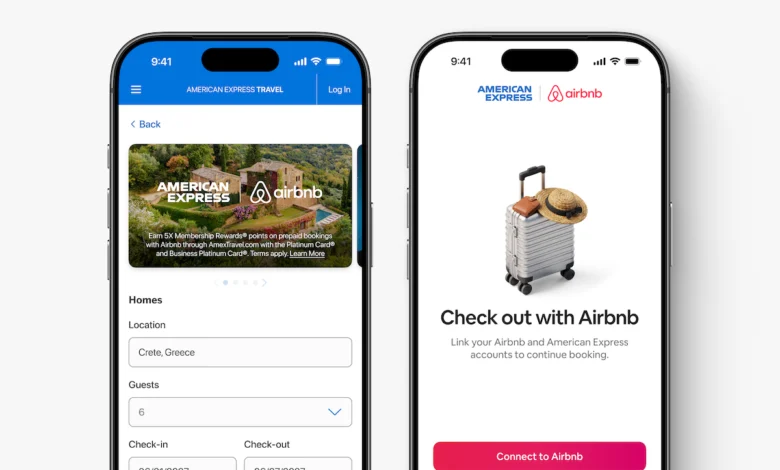
In a strategic development that reshapes the digital travel distribution landscape, American Express has integrated Airbnb as the exclusive vacation rental partner for Amex Travel. This collaboration brings together two distinct giants of the global tourism ecosystem, placing traditional online travel agency infrastructure and alternative accommodations side by side on a major credit card issuer’s proprietary booking platform.
Under this new agreement, more than one million curated listings from Airbnb are now accessible via a dedicated Homes tab on both AmexTravel.com and the Amex Travel mobile application. For American Express cardmembers, this means the ability to browse and book private accommodations directly through the financial institution’s portal, utilizing existing reward points, travel credits, and cardmember benefits.
However, the arrangement introduces a fascinating dynamic to the backend of the travel technology sector. American Express Travel continues to maintain a deep, long-standing business-to-business relationship with Expedia Group, which powers flights, hotels, and core technical infrastructure for the Amex travel portal. Consequently, Expedia-supplied hotel inventories and flights now sit alongside Airbnb’s vast inventory of alternative accommodations within the same booking environment, effectively uniting former marketplace rivals under the umbrella of a single credit card rewards ecosystem.
Background Context and The Evolution of Amex Travel
To understand the magnitude of this partnership, it is necessary to examine the structural evolution of credit card travel portals over the past decade. Financial institutions have increasingly recognized that travel is the single most desired reward category for premium cardholders. By owning the booking experience, issuers like American Express, Chase, and Capital One can keep affluent consumers within their proprietary financial ecosystems, capturing not only transaction fees but also valuable consumer behavioral data.
American Express has historically positioned itself as a luxury travel lifestyle brand. Beyond its network of proprietary Centurion Lounges and fine dining programs, Amex Travel has served as a cornerstone of the company’s value proposition for cardholders holding products such as the Platinum Card and American Express Gold Card.
Historically, hotel bookings through Amex Travel relied heavily on traditional hotel chains and wholesale aggregators. While these properties met the needs of corporate travelers and luxury vacationers seeking full-service amenities, a significant demographic of cardmembers increasingly preferred private rentals, homes, villas, and apartments—particularly for family vacations, extended stays, and remote work trips.
By partnering with Airbnb, American Express is directly addressing this demographic shift. Rather than forcing cardmembers to book private accommodations independently and forfeit lucrative rewards multipliers, Amex has captured a high-volume travel segment that previously escaped its direct booking channels.
The Expedia Connection: A Complex B2B Ecosystem
The introduction of Airbnb to Amex Travel does not occur in a vacuum. Since 2015—following Expedia’s acquisition of Travelocity—Expedia Group has served as the foundational technology and inventory provider for American Express Travel.
Expedia’s business-to-business (B2B) division is one of the most powerful, yet least publicly visible, engines in the global travel industry. It supplies lodging, airline ticketing engines, and backend fulfillment services to hundreds of partners, including major financial institutions, airlines, and independent travel agencies. For Expedia, powering white-label travel portals represents a massive, highly scalable revenue stream that shields it from heavy consumer marketing acquisition costs.
When the partnership between Amex and Airbnb was announced, industry analysts immediately questioned how Expedia would react to a major alternative lodging supplier entering a platform it structurally powers. However, American Express officials have moved swiftly to reassure stakeholders regarding the stability of existing arrangements.
"There’s no change to our existing business with Expedia," an American Express spokesperson stated in communications following the launch. "The Airbnb partnership is focused on expanding our short-term rental offering and giving cardmembers more of what they want when planning their journeys."
This clarification highlights the segmented nature of modern travel technology. Expedia remains the primary supplier for traditional flights and hotels on the platform, while Airbnb operates as a specialized vertical integration focused exclusively on alternative accommodations.
Chronology of the Partnership
The integration of Airbnb and American Express is the culmination of years of changing consumer habits and behind-the-scenes technological negotiations.
The relationship between credit card issuers and alternative accommodation providers began modestly years prior, typically through transient promotional offers, targeted statement credits, or specialized redemption options. For instance, cardmembers could occasionally redeem reward points at a fixed statement credit rate to offset past Airbnb purchases, but direct integration at the point of sale was virtually nonexistent.
As short-term rentals matured from an alternative lodging trend into a dominant pillar of global tourism, major financial institutions realized they needed deeper integration. Preliminary talks between American Express and Airbnb reportedly intensified over the course of the preceding year, focusing on how to align Airbnb’s distinct inventory management systems with Amex Travel’s secure, rewards-driven transaction architecture.
By October, the technical infrastructure was finalized. The rollout introduced the new Homes tab to AmexTravel.com and the companion mobile application, instantly making Airbnb’s massive global inventory searchable to millions of eligible cardmembers.
Strategic Implications for the Travel and Fintech Industries
The collaboration between American Express and Airbnb carries profound implications for the broader travel and financial services sectors.
First, it signals a blurring of lines between traditional hospitality and alternative lodging. For decades, traditional hotels and vacation rentals operated in separate spheres, catering to different traveler profiles. Today, major travel distributors recognize that modern consumers expect a unified marketplace where they can compare a boutique hotel room directly against a private downtown apartment.
Second, the move intensifies competition among credit card issuers. Premium travel rewards cards are locked in a continuous arms race to offer the most comprehensive travel benefits. By securing an exclusive partnership with Airbnb—the undisputed global leader in short-term rentals—American Express has established a significant competitive differentiator against rivals like Chase, whose travel portal is powered by Expedia and traditionally features vacation rentals through Vrbo, an Expedia subsidiary.
The exclusion of Vrbo in favor of Airbnb on the Amex platform is a particularly notable strategic win for Airbnb. While Vrbo remains a major player in the vacation rental space—especially in North American suburban and resort markets—Airbnb’s global brand recognition and urban inventory depth provide Amex cardmembers with an unmatched breadth of choices spanning rural retreats to international metropolitan apartments.
Economic and Data-Driven Insights
The timing of this partnership aligns with robust global travel demand. According to recent tourism and financial data, travel expenditures among affluent consumers have remained resilient despite macroeconomic fluctuations. Premium cardholders, in particular, continue to prioritize experiential spending, allocating a significant share of their disposable income toward travel and leisure.
Furthermore, co-branded and proprietary card spend heavily drives credit card issuer profitability. By channeling Airbnb bookings through its proprietary portal, American Express captures interchange fees, reinforces card loyalty, and encourages higher card utilization. When cardholders use their Amex points or earn accelerated rewards on these bookings, the perceived value of the card increases, directly lowering churn rates for high-fee products like the Platinum Card.
Industry Reaction and Expert Analysis
Travel industry analysts have widely praised the move as a pragmatic response to consumer demand. In interviews following the announcement, market experts noted that modern travelers do not view travel planning through rigid category silos. A traveler might book a luxury business hotel for a midweek conference in London, followed by an Airbnb villa for a family holiday in Tuscany the following month.
By accommodating both use cases within the same digital portal, American Express reduces friction and captures a larger share of the customer’s annual travel wallet.
However, some analysts point out potential challenges, particularly regarding customer service and dispute resolution. Short-term rentals inherently involve different operational dynamics than traditional hotels. Issues such as property access, cleanliness discrepancies, and host cancellations have historically required specialized support workflows. Ensuring that Amex Travel customer service agents are fully equipped to handle Airbnb-specific inquiries will be critical to maintaining the high service standards associated with the American Express brand.
Looking Ahead: The Future of Integrated Travel Portals
As the dust settles on the initial launch, industry observers are watching closely to see how competitors will respond. Will other major financial institutions seek exclusive partnerships with alternative accommodation networks? Will Expedia expand its own alternative lodging capabilities within its B2B white-label frameworks to counter Airbnb’s direct integration with Amex?
What remains clear is that the digital travel booking experience is becoming increasingly consolidated around super-apps and financial ecosystems. Consumers no longer need to jump between a dozen different websites to piece together a complex itinerary.
For American Express, the integration of Airbnb represents a masterclass in ecosystem expansion. By bridging the gap between traditional travel agency services and the modern sharing economy, Amex has reinforced its position as a dominant force in travel distribution, ensuring that its cardmembers never have to look outside the Amex universe to plan their ideal journey.