Iberseries and Platino Industria Showcases Six Innovative Ibero-American Series Projects in Madrid Following Collaboration with Fundación SGAE

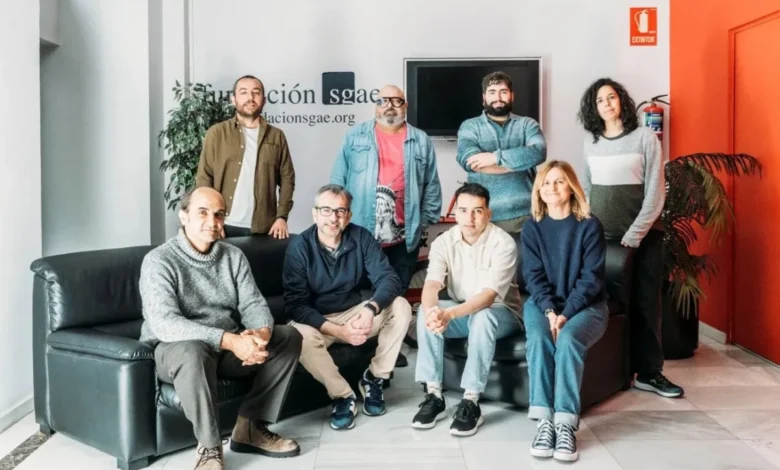
The sixth edition of Iberseries & Platino Industria has officially commenced in Madrid, bringing together thousands of professionals from the global audiovisual ecosystem, streaming executives, independent producers, and creative talent from across Ibero-America. As part of its extensive and carefully curated agenda, this year’s summit features a prominent pitching session dedicated entirely to six groundbreaking television series projects. Developed by seven talented screenwriters through a strategic and ongoing collaboration with Fundación SGAE—Spain’s primary collective management organization for intellectual property rights—these projects represent the vanguard of contemporary Hispanic storytelling.
The high-profile showcase, scheduled for Thursday, Oct. 1, is positioned as a critical nexus for creative development and industry financing. By placing these unique narratives directly in front of international buyers, network executives, theatrical and streaming producers, and venture capital investors, the event aims to accelerate the transition of early-stage scripts into commercially viable productions. According to organizers, the initiative serves a dual purpose: fostering the domestic production, robust financing, and global reach of emerging fiction projects while decisively reinforcing the core mission of Iberseries & Platino Industria, which is to construct durable bridges between individual creative talent and the institutional powerhouses of the Ibero-American entertainment industry.
Background and Context of Iberseries & Platino Industria
Since its inception, Iberseries & Platino Industria has grown to become the premier international platform for Spanish- and Portuguese-language television and film. Designed to promote co-production opportunities, distribution networks, and artistic exchange, the annual summit in Madrid attracts key decision-makers from major global platforms such as Netflix, Amazon Prime Video, Movistar Plus+, HBO Max, and Disney+, alongside regional broadcasters and independent studios.
The partnership with Fundación SGAE underscores a concerted industry-wide effort to institutionalize support for screenwriters, granting them direct access to the financial apparatus required to bring complex, high-concept narratives to the screen. Fundación SGAE has long championed the rights and professional development of authors across Spain, and its collaboration with Iberseries & Platino Industria represents an evolution in how intellectual property is incubated, protected, and marketed on a global scale. In an era dominated by algorithmic commissioning and risk-averse content strategies, platform-backed pitching forums provide a vital sanctuary for original, culturally resonant storytelling that might otherwise struggle to find traditional funding channels.
Detailed Breakdown of the Six Selected Series Projects
The six selected projects selected for the Madrid showcase span a diverse array of genres, ranging from historical political satire and dystopian sci-fi to dark social drama and high-concept mystery. Each project reflects a distinct cultural preoccupation and narrative ambition, highlighting the versatility and depth of contemporary screenwriting in Spain.
La Librera: Pioneering LGBT History in the Post-Transition Era
Authored by Virginia Burgos, based in Seville, and Juan Sánchez, based in Madrid, La Librera transports viewers to the early 1990s—a transformative period of social modernization and shifting political landscapes in post-Franco Spain. The narrative centers on a resilient woman who takes the bold entrepreneurial and political risk of opening the country’s very first LGBT bookstore.
Over the course of several decades, the establishment evolves far beyond a retail space, functioning as a vital physical sanctuary, an intellectual hub, and a clandestine political backroom for a marginalized community fighting for civil rights and social visibility. However, as societal norms slowly shift and the surrounding neighborhood undergoes rapid gentrification and institutional normalization, the protagonist faces a bitter paradox. The very community she helped build and sustain eventually outgrows its need for her pioneering outpost, leaving the aging bookseller to confront a devastating existential crisis: What do you do when nobody needs you anymore?
Industry analysts note that La Librera taps into the growing global appetite for historical narratives centered on grassroots activism and marginalized histories, offering a nuanced character study of the personal costs associated with pioneering social change.
Avión: The Transatlantic Clash of Wealth, Poverty, and Rural Aging
Written by Miguel Cavadas and rooted in the Galician city of Vigo, Avión tackles a fascinating and unique socio-economic phenomenon. The series is set in the real-life Galician village of Avión, a settlement that serves as the ultimate embodiment of the complex utopia of Galician emigration—the historical trajectory of leaving a landscape of deep rural poverty to seek fortune abroad, only to return years later as men of means.
The narrative explores the jarring seasonal duality of the village. During the harsh winter months, Avión mirrors the grim reality of rural Spain: deep economic precarity, depopulation, and an aging demographic left behind by the modern economy. Yet, in the summer, the village undergoes a staggering metamorphosis. It transforms into an explosion of wealth, vibrant ranchera music, and Mexican flags as affluent expatriates return from Latin America. The local population quadruples overnight, creating a surreal microcosm where two completely incompatible worlds collide: community versus individualism, the historical past versus the present, and the lowest state pensions in Galicia rubbing shoulders with some of the greatest fortunes amassed in Mexico.
The project promises a sharp, atmospheric social clash drama that steers clear of lighthearted tropes, offering a gritty, penetrating look at the economic fractures shaping modern regional Spain.
El Capricho: Eighteenth-Century Court Intrigue Through a Modern Lens
Penned by Alberto Grondona, El Capricho offers a sharp, satirical historical comedy that reimagines the volatile landscape of the late 18th-century Spanish court. The plot tracks a high-stakes power struggle among three formidable women vying for supreme influence: Queen María Luisa of Parma, the charismatic and politically astute Duchess of Alba, and the enlightened Duchess of Osuna.
Set against a backdrop of a decaying Spanish monarchy teetering on the brink of geopolitical and institutional collapse, these figures engage in relentless battles for political sway, public image, and personal desire. What elevates the project conceptually is its framing device: the entire theater of palace intrigue is observed, evaluated, and narrated with fierce, biting irony by Francisco de Goya. Operating as an uneasy, deeply conflicted witness within the court, the iconic painter translates the madness of the elite into a surprisingly contemporary mirror of political vanity and corruption.
Development executives have drawn preliminary thematic comparisons to a female-led, darkly comedic Game of Thrones infused with distinct Spanish temperament and stylistic audacity.
Teléfonos Fijos: The Supernatural Mystery of the Dead on the Line
Created by Ángel Mirou, Teléfonos Fijos introduces a chilling speculative premise set in the modest, working-class neighborhood of Recalde in Bilbao. In the dead of night, old-fashioned landline phones begin to ring, waking up residents who still maintain legacy landline connections in an era dominated by mobile devices and digital communication.
When the bewildered residents answer, they hear the familiar voices of relatives, friends, and acquaintances from their past. The callers share one chilling common denominator: they are all deceased. The central mystery of the narrative hinges on an ambiguous and destabilizing question: Are these nocturnal transmissions definitive, terrifying proof of an afterlife, or are they the product of an elaborate, highly sophisticated fraud utilizing cutting-edge technology and artificial intelligence? As the phenomenon spreads, the psychological equilibrium and interpersonal relationships of the neighborhood are shattered forever.
The project arrives at a time of heightened societal anxiety surrounding digital manipulation, deepfakes, and the ethical boundaries of emerging technologies, making its central theme profoundly resonant for contemporary audiences.
La Edad Menor: Dystopian Family Structures and State-Sanctioned Infantilization
Conceived by Roberto Osa, La Edad Menor presents a grim, high-concept dystopian Madrid where the social contract between generations has been entirely inverted. In this alternate reality, children legally become the guardians of their parents once the latter reach a designated age threshold, assuming total legal and administrative control over their elders.
The plot follows María, a woman thrust into frantic resistance against the system when her mother is abruptly admitted to La edad menor—a bureaucratic, irreversible process of state-mandated infantilization and institutional erasure. As María attempts to mount a defense, her brother becomes politically and emotionally compromised, torn between loyalty to his family and the seductive machinery of institutional power. A web of devastating secrets ultimately reveals that individual resistance and personal sacrifice may be entirely futile against an apparatus designed to enforce collective oblivion.
The project’s unsettling exploration of state control, filial duty, and demographic management has drawn interest from producers specializing in high-concept, socially conscious speculative fiction.
Trueque: Domestic Chaos and the Ultimate Adolescent Swap
Rounding out the selection is Trueque, written by Pedro Pablo Picazo. Opting for a comedic and grounded approach to contemporary family dynamics, the series follows three families who are close friends, each struggling daily with the universal trials and tribulations of raising difficult teenagers.
Frustrated by their lack of progress with their own offspring, the parents arrive at a seemingly logical yet catastrophically misguided conclusion: if each family possesses the exact psychological tools and disciplinary strategies needed to manage the others’ children, they should simply execute a domestic swap. The premise sets the stage for a cascading series of cultural, psychological, and domestic disasters, updating the classic body-swap or home-exchange comedy format for the anxieties of modern parenting.
Broader Industry Implications and Future Outlook
The inclusion of these six distinct projects in the Iberseries & Platino Industria showcase highlights a broader maturation within the Ibero-American television sector. As global streaming platforms increasingly seek out localized content with universal thematic resonance, creators from Spain and Latin America are moving beyond traditional telenovela formats to experiment with complex narrative structures, high-concept genre fiction, and socially critical satire.
Industry observers note that the success of these pitching sessions will depend heavily on the ability of the creators and their respective production partners to secure robust co-production agreements during the Madrid meetings. With international buyers casting a wider net for distinctive intellectual property, the platform provided by Fundación SGAE and Iberseries & Platino Industria offers a vital launchpad. As the multi-day conference continues, all eyes in the audiovisual community remain fixed on Madrid to see which of these ambitious projects will successfully transition from script development to global screens.