Ultimate Autumn Escapes: The Best Remote Airbnbs Across the United States for Peak Fall Foliage Viewing

For millions of residents across the United States, the transition from late summer to mid-autumn marks a fleeting meteorological phenomenon that draws travelers outdoors in search of vibrant seasonal landscapes. As the chlorophyll in deciduous tree leaves breaks down, forests transform into a dynamic tapestry of crimson, amber, gold, and deep purple. However, this visual spectacle is notoriously transient, typically lasting only a few weeks depending on latitude, elevation, and regional weather patterns. Consequently, a lucrative and highly competitive segment of the domestic tourism market has emerged around late-season travel, with travelers rushing to secure accommodations situated directly within primary foliage corridors.
In response to this annual seasonal migration, travel analysts and hospitality experts have highlighted a curated selection of remote vacation rentals. Leveraging platforms like Airbnb, travelers are increasingly seeking out off-grid cabins, woodland retreats, and backcountry ranches that offer immersive nature experiences without sacrificing modern comforts. While destinations in the northeastern United States—most notably Vermont, New Hampshire, and upstate New York—have historically dominated the autumn tourism economy, remote properties in the Midwest, the Pacific Northwest, and the Rocky Mountains are capturing a rapidly growing share of seasonal bookings.
The Science and Timeline of Autumn Foliage
Understanding the mechanics of fall foliage is essential for timing an autumnal excursion accurately. The seasonal color change is primarily driven by decreasing daylight hours and dropping temperatures, which trigger trees to cease food production. As chlorophyll—the pigment responsible for the green color of leaves—dissipates, other pigments that were previously masked begin to emerge. Carotenoids produce yellow, orange, and brown hues, while anthocyanins, which develop in response to bright light and excess plant sugar, produce vibrant reds and purples.
The chronology of peak foliage follows a predictable latitudinal and altitudinal gradient. The transformation typically begins in late September in the far northern reaches of New England, the upper Midwest, and high-elevation regions of the Rocky Mountains, such as Colorado and Wyoming. Throughout October, the color wave progresses southward and toward lower elevations, sweeping through the Mid-Atlantic states, the Ohio River Valley, and the Pacific Northwest. By early to mid-November, the season concludes as leaves fall to the forest floor, marking the final transition into winter.
Because the window for peak color in any single location often lasts less than fourteen days, travelers face significant logistical challenges. Unpredictable weather events, such as early heavy winds or unseasonable frosts, can strip branches bare prematurely, rendering advance planning a high-stakes endeavor. Travel economists note that booking flexibility and proximity to dense forestry have become the two most critical factors for consumers navigating the autumn travel market.
Evolution of the Autumn Tourism Economy
The domestic fall foliage tourism market generates billions of dollars annually for rural economies that might otherwise experience a post-summer lull. According to tourism boards in states like Vermont and Maine, autumn represents the single most lucrative tourism season, frequently eclipsing summer revenues. Historically, this economic activity centered around traditional country inns, bed-and-breakfasts, and scenic rail tours.
However, structural shifts in consumer preferences over the past decade have fundamentally altered where and how tourists experience the season. The rise of platform-based home-sharing has decentralized autumn tourism, allowing travelers to bypass crowded commercial hubs in favor of remote, secluded properties. According to hospitality industry data, demand for secluded cabins featuring amenities such as floor-to-ceiling glass windows, wood-burning fireplaces, and outdoor wellness features like barrel saunas and hot tubs has surged.
Industry analysts point out that properties achieving Superhost or Guest Favorite status on platforms like Airbnb command significantly higher nightly rates during October than during shoulder seasons. This pricing premium reflects a broader consumer trend favoring experiential travel, where the accommodation itself—specifically its architectural integration with the surrounding natural environment—serves as the primary attraction.
Regional Diversity: Beyond New England
While New England remains the cultural epicenter of American leaf-peeping, geographic diversity characterizes contemporary autumn travel patterns. Properties selected by travel editors for seasonal excellence span vastly different ecosystems, each offering unique botanical compositions and architectural responses to the landscape.
In the Intermountain West, particularly Colorado, autumn brings a distinct monocolor brilliance dominated by the golden-yellow quaking aspen. Unlike the multi-colored hardwood forests of the East Coast, high-elevation groves in the Rocky Mountains create vast, shimmering yellow expanses against dark evergreen conifers and jagged mountain peaks. Remote properties in regions such as the San Juan Mountains or the Roaring Fork Valley offer guests off-grid isolation paired with high-altitude vistas.
Meanwhile, the Pacific Northwest presents a rich palette influenced by native maples, alders, and cottonwoods set against temperate rainforests. Properties nestled in the Cascade foothills or the Columbia River Gorge allow travelers to experience the convergence of evergreen canopies and explosive bursts of seasonal color. In the Midwest, the rolling hills of Wisconsin, Michigan, and Minnesota provide dense oak and maple woodlands that attract regional drive-market tourists seeking lakeside cabins and quiet woodland retreats.
Architectural Trends in Remote Autumn Rentals
The physical design of modern vacation rentals has evolved to capitalize on seasonal landscapes. Traditional woodland cabins, characterized by small windows and heavy timber framing, have increasingly given way to contemporary architectural designs that prioritize transparency and visual connection with the outdoors.
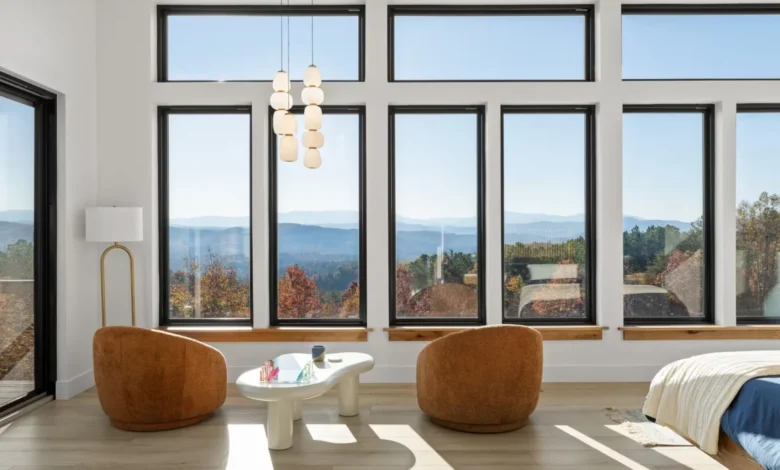
Architects specializing in remote hospitality structures frequently employ expansive, floor-to-ceiling glass walls that frame the surrounding forest like a living canvas. This design philosophy, often aligned with the principles of biophilic design, aims to reduce stress and enhance psychological well-being by dissolving the barrier between indoor living spaces and the natural world. In autumn, these glass facades allow changing light conditions and shifting leaf colors to permeate the interior of the home throughout the day.
Complementing these visual elements are curated amenities designed to counteract the brisk temperatures associated with autumn weather. High-end rentals increasingly feature outdoor hot tubs, wood-fired barrel saunas, and stone hearths. Industry stakeholders report that properties combining immersive natural scenery with wellness-oriented amenities experience higher occupancy rates and longer average lengths of stay during the autumn months.
Industry Statements and Economic Implications
Tourism officials and hospitality executives have closely monitored the shifting dynamics of seasonal travel. Representatives from regional economic development agencies emphasize that the influx of remote workers and flexible travelers has successfully extended the autumn tourism window, transforming what was once a strictly weekend-focused phenomenon into a mid-week travel opportunity.
"The demand for remote, nature-centric accommodations during the autumn shoulder season reflects a permanent change in consumer behavior," notes a hospitality market researcher who tracks short-term rental trends. "Travelers are no longer satisfied with simply driving through a scenic area; they want an immersive residential experience that places them directly inside the landscape. This has created substantial economic opportunities for rural property owners who invest in modernizing their spaces while maintaining a connection to the natural surroundings."
Economic analysts also highlight the broader implications for rural real estate markets. The sustained demand for high-end remote cabins has driven investment in rural infrastructure, local artisan economies, and sustainable tourism management. At the same time, local municipalities face ongoing policy challenges regarding short-term rental density, zoning regulations, and environmental conservation in ecologically sensitive forest zones.
Future Outlook for Seasonal Travel
As global climate patterns continue to shift, climatologists and arborists warn that the timing and vibrancy of future autumn foliage seasons may become increasingly variable. Extended droughts, rising average temperatures, and unseasonal storms can impact the health of deciduous forests, potentially muting color intensity or altering the duration of peak viewing periods. Consequently, travel providers and tourists alike are placing a premium on real-time data, flexibility, and localized forecasting when planning autumn itineraries.
Despite these environmental variables, the cultural appeal of the autumn season remains deeply embedded in domestic travel habits. Whether through a secluded A-frame cabin tucked into the Green Mountains of Vermont or an off-grid ranch overlooking an aspen-filled valley in the Colorado backcountry, the desire to witness the fleeting transition of the seasons continues to drive robust activity across the United States hospitality sector. As the market matures, the intersection of thoughtful architectural design, remote wilderness access, and experiential travel will undoubtedly define the future of autumn tourism.