Navigating Personality Clashes in the Classroom: How Imperfect Teacher-Student Matches Build Lifelong Resilience

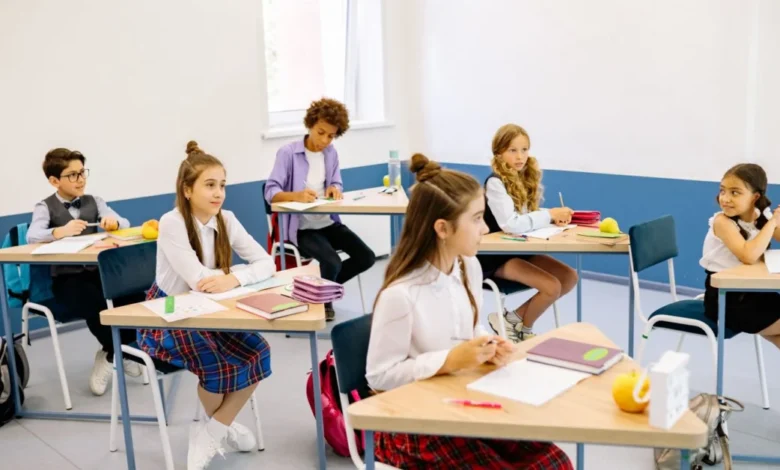
Every academic year brings a fresh wave of anticipation, marked by new school supplies, updated syllabi, and the inevitable anxiety surrounding classroom placements. For parents, the desire to see children thrive under the guidance of nurturing, perfectly attuned educators is entirely natural. Yet, the reality of modern education dictates that no single educator will align seamlessly with every student’s unique learning style, temperament, and personal preferences. Educational psychologists and child development experts increasingly emphasize that these inevitable pedagogical friction points are not necessarily failures of the educational system, but rather critical developmental milestones in disguise. As children progress from kindergarten through their senior year of high school, they will routinely encounter upwards of twenty distinct teaching styles, managerial approaches, and personality frameworks. Understanding how to navigate these disparities without fostering a victim mentality remains one of the most vital, yet overlooked, components of contemporary parenting and youth development.
The Anatomy of Educational Friction and Learning Styles
To comprehend the dynamics of a challenging teacher-student relationship, one must first examine the inherent diversity within any given school environment. Educators bring their own psychological profiles, professional histories, and instructional methodologies to the classroom. Some instructors favor rigorous, highly structured environments characterized by strict adherence to deadlines and meticulous attention to detail. Others operate within flexible, highly collaborative frameworks that emphasize creative exploration and emotional support.
Simultaneously, students possess equally diverse cognitive profiles. A child who thrives under gentle, highly encouraging guidance may experience acute stress when placed under the supervision of a strict, no-nonsense disciplinarian. Similarly, a student who requires clear, unambiguous boundaries may struggle in a chaotic, unstructured creative workshop. Educational research consistently demonstrates that cognitive diversity is a hallmark of successful learning institutions; however, it inherently guarantees that perfect ideological and stylistic alignment between an instructor and a pupil is a statistical impossibility.
This phenomenon extends far beyond the K-12 educational landscape. In the professional world, adults frequently find themselves reporting to supervisors whose management styles diverge sharply from their personal preferences. The ability to decode managerial expectations, adapt to varying communication styles, and maintain productivity under less-than-ideal leadership is a cornerstone of adult career success. Consequently, encountering a difficult educator during formative years serves as a low-stakes rehearsal for the complexities of the adult workforce.
The Developmental Timeline of Classroom Adaptation
The trajectory of a child’s educational journey requires progressive adaptation to increasingly complex social and institutional structures. Tracing this developmental timeline highlights why early intervention by parents regarding minor pedagogical disagreements can disrupt a child’s natural maturation process.
During the early elementary years, spanning kindergarten through third grade, children view teachers as authoritative figures akin to surrogate parents. Disagreements during this phase are typically minor, often centered around sharing, behavioral expectations, or basic instructional pacing. As students enter upper elementary and middle school (grades four through eight), the academic structure shifts toward departmentalized instruction. Students transition between multiple classrooms daily, interacting with three to six different teachers, each with distinct grading rubrics, behavioral expectations, and interpersonal styles. This period represents the primary testing ground for independent organizational skills and social navigation.
By the time students reach high school, the academic stakes escalate significantly. Coursework impacts cumulative grade point averages, class ranks, and college admissions portfolios. High school educators operate with heightened autonomy, often prioritizing subject-matter expertise over individualized pastoral care. It is during these secondary school years that friction over grading policies, perceived bias, or instructional rigor most frequently materializes. When parents intervene aggressively at the first sign of stylistic incompatibility during these crucial years, they inadvertently rob adolescents of the opportunity to develop autonomous conflict-resolution strategies.
Data and Psychological Implications of Parental Intervention
Recent studies in educational psychology and family dynamics reveal a direct correlation between parental advocacy styles and student academic resilience. According to data compiled by child development researchers, children whose parents systematically validate complaints about teacher fairness or instructional competence exhibit significantly lower frustration tolerance and reduced intrinsic motivation over time.
When parents voice vocal disapproval of an educator within earshot of their child, a psychological shift occurs. The child is immediately compelled to align with the parental viewpoint to preserve cognitive and emotional harmony within the family unit. Once this alliance is formed, the student possesses a socially acceptable mechanism for avoiding academic accountability. A grade of C, which might accurately reflect a failure to meet rigorous assignment rubrics, is reinterpreted by the student as the byproduct of teacher bias or poor pedagogy.
This behavioral loop yields measurable negative outcomes. Longitudinal surveys tracking student performance indicate that youth who adopt a persistent victim narrative in response to strict or unpopulous grading policies experience a measurable decline in classroom engagement, increased rates of disciplinary infractions, and diminished long-term retention of course material. Conversely, students guided toward introspection, problem-solving, and adaptive coping mechanisms demonstrate higher emotional intelligence scores and greater resilience when facing professional and academic adversity later in life.
Expert Perspectives and Institutional Responses
Educational administrators and school counselors frequently encounter situations where parental anxiety regarding teacher assignments eclipses the actual pedagogical needs of the student. Guidance departments across public and private school networks report a steady rise in requests for schedule changes and teacher reassignments based primarily on stylistic mismatches rather than documented instances of professional misconduct or pedagogical incompetence.
Child psychologists emphasize that institutional policies generally restrict wholesale teacher reassignment for non-emergency reasons precisely because overcoming interpersonal adversity is recognized as a developmental necessity. School districts maintain that accommodating every preference for specific instructional styles would ill-prepare students for a diverse and demanding society where individuals must collaborate with colleagues, clients, and supervisors regardless of interpersonal affinity.
Family therapists and educational consultants advocate for a measured, objective approach when families encounter classroom friction. Rather than validating grievances about a teacher’s personality, experts recommend utilizing the situation as a coaching opportunity. Parents are encouraged to guide students through a structured inquiry process: What are the specific expectations of the assignment? How can the student adjust their study habits to meet the teacher’s stated rubrics? What proactive steps can the student take to communicate directly and respectfully with the instructor during office hours?
Broader Societal Impact and Future Outlook
The implications of how children learn to manage difficult authority figures extend far beyond the classroom walls. In an era marked by rapid technological advancement, shifting labor markets, and increasing polarization in public discourse, the capacity for patience, tolerance, and empathy toward individuals with contrasting perspectives is more critical than ever.
When educational communities and families unite in reinforcing the value of adaptability, children learn to decouple personal affection from professional respect. They discover that an instructor does not need to be a close confidant or an ideological match to impart valuable knowledge and discipline. By reframing educational friction as an essential training ground for emotional resilience, parents and educators can transform a potentially negative academic year into a cornerstone of lifelong maturity and self-reliance.
Related posts: