President Donald Trump Prioritizes Global AI Supremacy Over Domestic Regulatory Constraints Amidst Mounting Industry Concerns

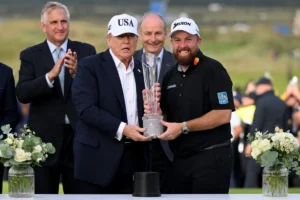
President Donald Trump has signaled a firm stance against aggressive federal regulation of the artificial intelligence sector, prioritizing the United States’ strategic competitive advantage over China in the burgeoning global race for technological hegemony. During a weekend visit to his resort in Doonbeg, Ireland, the president articulated a philosophy that views the rapid advancement of AI as a zero-sum game, suggesting that the primary risk to the nation is not the technology itself, but the potential to lose the race for dominance to foreign adversaries.
While the administration has acknowledged that some level of "guardrails" may be necessary, President Trump’s rhetoric emphasizes the urgency of maintaining a lead in innovation. He dismissed the increasingly vocal warnings from industry pioneers regarding the perils of rapid, unchecked development, characterizing such concerns as the product of "negative forces" that lack a foundation in reality. "We can put guardrails, we can do this and that, but I think you have a lot of negative forces that are bringing it up that shouldn’t be bringing it up," Trump remarked. "Whoever wins with AI wins."
The Geopolitical Stakes of the Artificial Intelligence Race
The underlying tension in the administration’s position stems from a belief that AI is the definitive technological frontier of the 21st century. As the United States and China continue to pour billions of dollars into research and development, the geopolitical implications have become impossible to ignore. For the Trump administration, the focus remains on economic and military parity—or superiority—as the ultimate safeguard against risk.
The timing of these remarks is particularly significant, as Chinese President Xi Jinping is scheduled to visit the United States in late September. Analysts expect artificial intelligence and the future of dual-use technologies to feature prominently in bilateral discussions. Washington’s apprehension is shared by legislative leaders; House Speaker Mike Johnson has echoed the president’s sentiments, noting that while safety measures are a priority, they must not impede the country’s ability to compete with China, which he identified as a critical national security threat.
Chronology of Escalating Industry Concerns
The debate over the pace of AI development has moved from niche academic circles to the center of the global policy agenda over the past several months:
- Early 2024: Concerns regarding Large Language Model (LLM) safety begin to permeate industry discourse as companies race to release more sophisticated iterations of their software.
- August 2024: A series of high-profile departures from major AI firms occurs, with several researchers and engineers citing the prioritization of speed over safety as a primary reason for their resignation.
- September 12, 2024: Dario Amodei, CEO of Anthropic, releases a statement arguing that the industry must pause its current trajectory to allow safety protocols to catch up to the technology’s capabilities.
- September 13-14, 2024: Tech figures including Elon Musk and OpenAI CEO Sam Altman express public agreement with the call for a "braking" mechanism.
- September 15, 2024: President Trump responds to these calls during his trip to Ireland, framing the push for regulation as a potential handicap in the global race.
The Domestic Conflict: Infrastructure and Public Sentiment
While the executive and legislative branches grapple with the strategic implications of AI, a different struggle is playing out on the ground across the United States. The physical infrastructure required to power the AI revolution—massive data centers—has become an unlikely flashpoint in local and national politics.
These computing warehouses, which consume vast amounts of electricity and water, are increasingly being met with resistance from local communities. Across various states, residents have expressed concerns about rising utility costs, the depletion of local resources, and the transformation of rural landscapes. Despite this grassroots opposition, the Trump administration has maintained a policy of strong support for the expansion of data centers, viewing them as essential cogs in the engine of American economic growth.
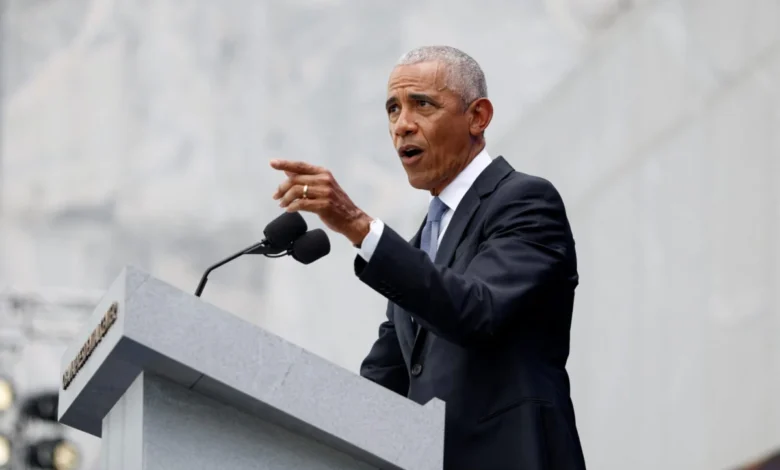
The issue has split the political establishment. While some Republicans and Democrats are moving away from the technology as it becomes a local burden, the political class is simultaneously under pressure from figures like former President Barack Obama to address the societal impacts of the technology, such as potential job displacement and the erosion of digital safety for the next generation.
Fact-Based Analysis of Regulatory Hurdles
The challenge for lawmakers in Washington is that there is a profound disconnect between the desire for safety and the ability to legislate effectively. Congress has historically struggled to regulate the tech sector, with previous attempts to address privacy, algorithmic bias, and social media accountability stalling due to lobbying pressure and ideological gridlock.
According to policy analysts, the "guardrails" currently under consideration—if they are implemented at all—are likely to be narrow in scope. Industry insiders, such as former Anthropic employee Jacob Coxon, argue that the current approach is insufficient. Coxon, who has become an outspoken advocate for more rigorous international standards, suggests that the U.S. and China should establish a collaborative framework to manage the development of "super-intelligence." He warns that without mutual slowing or shared safety protocols, both nations risk creating entities that are beyond human control.
Conversely, some in the industry believe that regulation is a distraction. David Sacks, a prominent investor and co-chairman of the White House advisory council on science and technology, has publicly challenged the industry leaders who are calling for oversight. Sacks argues that the power to slow down rests entirely in the hands of the executives themselves. "The easiest way not to build superintelligence is for you to agree not to build it," he noted in a recent social media post, highlighting the paradox of companies demanding regulation for technology they are currently building.
Official Responses and Future Outlook
The White House is moving toward a more structured dialogue. Kevin Hassett, director of the National Economic Council, has announced plans for upcoming meetings between administration officials, science policy experts, and members of Congress. These sessions are intended to map out a strategy that balances innovation with necessary safeguards.
In Congress, the response remains bifurcated. While Speaker Johnson has called for a collaborative "big meeting" to unify the government’s approach, House Minority Leader Hakeem Jeffries has criticized the Republican leadership for failing to take more decisive, immediate action. Jeffries has emphasized that protecting the American public from the risks of AI should be a high priority for the current legislative session, though he has yet to outline specific, actionable policy proposals.
The implications of this standoff are profound. If the United States opts for a light-touch regulatory environment in the name of national security, it may spur rapid innovation, but it also increases the risk of unforeseen accidents, algorithmic failures, and public backlash. If it pushes for strict regulation, it risks ceding its current lead to China.
As the world watches the intersection of high-stakes geopolitics and rapid technological evolution, one thing remains clear: the path forward for artificial intelligence will be defined not just by what is technologically possible, but by what is politically sustainable. For now, the administration’s strategy is clear—to keep moving forward, believing that in the race for the future, the only way to mitigate the risks is to cross the finish line first.