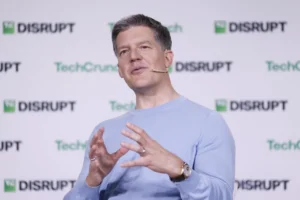
TechCrunch Disrupt 2026 to Feature Landmark ‘Smart Money Stage,’ Exploring the Collision of Fintech, AI, and Global Payments

San Francisco, CA – The landscape of finance has undergone a profound transformation, moving far beyond traditional cash and bank accounts to embrace a complex ecosystem driven by technology and innovation. Recognizing this pivotal shift, TechCrunch Disrupt 2026, one of the technology industry’s most anticipated annual gatherings, is set to introduce a groundbreaking "Smart Money Stage." This dedicated forum will delve into the dynamic convergence of fintech, payments, and artificial intelligence, promising an unparalleled exploration of the forces reshaping global finance. Scheduled from October 13 to 15 at San Francisco’s Moscone Center, the event will convene a stellar lineup of industry leaders and visionaries to dissect the intricacies of modern money.
The Evolution of TechCrunch Disrupt and the Dawn of Smart Money
TechCrunch Disrupt has long been synonymous with identifying and championing the next wave of technological innovation. Since its inception, the conference has served as a critical launchpad for countless startups, a nexus for venture capitalists, and a vital platform for thought leadership across diverse tech sectors. Over the years, Disrupt has evolved from a showcase of nascent startups to a comprehensive examination of macro trends, consistently attracting a global audience keen on understanding where technology is headed.
The introduction of the Smart Money Stage for the 2026 event marks a strategic evolution for Disrupt, signaling the undeniable maturity and pervasive influence of financial technology. Historically, fintech discussions were often embedded within broader enterprise or consumer tech tracks. However, the sheer scale, complexity, and rapid pace of innovation within fintech—encompassing everything from blockchain and digital currencies to AI-driven financial advice and embedded payments—now demand a dedicated platform. This stage will serve as a crucible for ideas, fostering discussions on how technological advancements are not merely optimizing existing financial systems but fundamentally redesigning them. The decision reflects a broader industry consensus that "money" itself is undergoing a definitional expansion, becoming increasingly digital, programmable, and intelligent.
A Deep Dive into the Smart Money Stage Agenda
The Smart Money Stage promises a meticulously curated agenda designed to provide founders, operators, investors, and policymakers with actionable insights rather than mere speculation. The sessions are structured to address the most pressing questions at the intersection of finance and technology, featuring C-suite executives and leading thinkers from companies at the forefront of this revolution.
The Future of Money Movement: Stablecoins, Instant Payments & What’s Next
One of the cornerstone discussions will revolve around "The Future of Money Movement," focusing on the seismic shifts instigated by stablecoins and instant payment systems. The global financial architecture, largely built on decades-old infrastructure, is facing unprecedented pressure from these agile, digital alternatives. Stablecoins, cryptocurrencies pegged to stable assets like the U.S. dollar, have seen their market capitalization surge, reaching hundreds of billions of dollars. Their appeal lies in offering the speed and borderless nature of cryptocurrencies while mitigating the volatility associated with traditional digital assets. This has opened new avenues for cross-border remittances, decentralized finance (DeFi), and corporate treasury management.
Simultaneously, instant payment networks are gaining significant traction. In the United States, the Federal Reserve’s FedNow Service, launched in 2023, represents a monumental leap in real-time payments, allowing financial institutions to offer instant funds availability to their customers 24/7. This system complements existing private networks like The Clearing House’s RTP network, collectively pushing the U.S. towards a ubiquitous real-time payment ecosystem, aligning with similar advancements seen in Europe (e.g., SEPA Instant Credit Transfer) and other regions.
The session at Disrupt 2026 will feature a robust comparison between these nascent digital payment rails and the entrenched legacy banking infrastructure. Experts will dissect the operational efficiencies, security implications, and scalability challenges inherent in both. A key point of discussion will be the interplay between private innovation and public sector initiatives, such as FedNow, and how they collectively shape the future of financial transactions. Regulatory frameworks, often struggling to keep pace with technological innovation, will also be a central theme, exploring how legislative and policy changes could either accelerate or impede the adoption of these new systems.
Nikhil Chandhok, Chief Product & Technology Officer at Circle, a leading issuer of the USDC stablecoin, is set to offer insights into the practical application and future trajectory of stablecoins in a regulated environment. Rodney Robinson, Co-founder and CEO of TabaPay, Inc., a prominent payment processing firm, will contribute expertise on the operational realities and infrastructure demands of instant payments. Their perspectives will be complemented by Lotti Siniscalco, General Partner at Emergence, who will provide a venture capital lens on where investment opportunities are emerging and which challenges need overcoming for widespread adoption. This panel promises a comprehensive overview of how money is set to flow in the coming years, highlighting both the opportunities for innovation and the regulatory hurdles that remain.
Winning the Modern Financial Consumer
The second pivotal session, "Winning the Modern Financial Consumer," will explore the dramatic evolution of consumer expectations and behaviors in managing, investing, and transacting with money. The digital age has empowered consumers with unprecedented access to financial tools and information, leading to a demand for seamless, personalized, and intuitive experiences. Traditional financial institutions, once the sole arbiters of financial services, are now contending with agile fintech startups that prioritize user experience and digital-first approaches.
Robinhood, a company that began as a commission-free stock trading app, serves as a prime example of this evolution. With a market capitalization that has, at times, exceeded $90 billion, Robinhood has successfully diversified its offerings to become a comprehensive financial platform. It now encompasses not only investing but also banking services, credit products, cryptocurrency trading, and even prediction markets. This trajectory illustrates a broader trend: consumers expect their financial platforms to be holistic, integrated, and responsive to their diverse financial needs.
Abhishek Fatehpuria, Head of Product at Robinhood, will be a key speaker in this session. He is expected to share critical insights into how technology, particularly mobile-first design and data analytics, is reshaping the delivery of financial services. His discussion will likely touch upon the strategies Robinhood employs to build trusted products that can withstand massive user growth and market volatility. The session will also delve into the challenges of balancing rapid innovation with regulatory compliance and user security, a constant tightrope walk for modern fintech companies. Understanding how companies like Robinhood cultivate customer loyalty and expand their product ecosystem will be invaluable for any entrepreneur or executive aiming to capture the attention of the digitally native financial consumer.
AI, Trust & Verification in Financial Services
The emergence of artificial intelligence as a generative and, increasingly, an agentic force presents both immense opportunities and significant challenges for the financial sector. The session "AI, Trust & Verification in Financial Services" will address how AI is moving beyond content generation to actively influence and execute financial decisions, compelling institutions to fundamentally rethink trust, oversight, and security protocols.
AI’s applications in finance are vast and rapidly expanding. From automating customer service and personalizing financial advice to sophisticated fraud detection and algorithmic trading, AI is permeating every facet of the industry. However, as AI models become more autonomous and capable of taking action, questions surrounding transparency, accountability, and the potential for bias become paramount. The financial industry, heavily regulated and built on trust, must navigate these complexities with extreme caution.
The panelists will explore how AI agents are transforming traditional financial workflows, potentially streamlining operations, reducing costs, and enhancing efficiency. However, they will also emphasize why human judgment, ethical considerations, and robust oversight mechanisms remain indispensable. Discussions will cover critical areas such as privacy protection in an AI-driven world, where vast amounts of personal financial data are processed. Furthermore, strategies for advanced fraud prevention, leveraging AI to detect anomalies and predict threats in real-time, will be examined. Identity verification, a cornerstone of financial security, is also being revolutionized by AI, with new biometric and behavioral analysis techniques offering enhanced security but also raising new privacy concerns.
Hannah Bozian, VP, Agentic Partnerships & Strategy at American Express, will bring a perspective from a global financial services giant on how established players are integrating cutting-edge AI while maintaining customer trust. Pedro Sanzovo, Head of Fraud and Identity at Plaid, a company central to connecting financial accounts, will share insights on how AI is bolstering security and verification in the open banking era. Victoria Zuo, Partner at QED Investors, a leading fintech venture capital firm, will provide an investor’s view on the most promising AI applications in finance and the ethical considerations driving investment decisions. This session will be crucial for understanding how to harness the power of AI responsibly within the highly sensitive financial ecosystem.
Building the Infrastructure for Global Commerce
The global economy demands financial infrastructure that is as interconnected and dynamic as the businesses it serves. The session "Building the Infrastructure for Global Commerce" will highlight the shortcomings of traditional financial systems, which were often designed for domestic transactions and struggle to efficiently support today’s borderless businesses. Cross-border payments alone constitute a multi-trillion-dollar market, fraught with complexities, high fees, and slow settlement times.
Airwallex, an Australian-Chinese fintech company now valued at an impressive $11 billion, stands as a testament to the urgent need for modernized global financial infrastructure. Airwallex is pioneering an AI-native financial operating system designed to empower companies to seamlessly move money across borders, manage global finances, and embed financial products directly into their own platforms. This represents a significant departure from the fragmented, correspondent banking model that has historically characterized international transactions.
Jack Zhang, Founder & CEO of Airwallex, will be a featured speaker, offering a firsthand account of how AI is fundamentally reshaping global payments. He is expected to elaborate on the architectural principles behind building regulated financial infrastructure capable of powering millions of businesses worldwide. His insights will cover the technological innovations required to achieve real-time international transfers, multi-currency accounts, and integrated payment solutions that support e-commerce, gig economy platforms, and multinational corporations. The discussion will also likely touch upon the regulatory complexities of operating across diverse jurisdictions and how Airwallex navigates these challenges to provide a unified financial experience. This session is critical for anyone involved in international trade, global e-commerce, or developing financial solutions for an increasingly interconnected world.
Broader Implications and Market Context
The topics explored on the Smart Money Stage at TechCrunch Disrupt 2026 are not merely academic discussions; they represent the leading edge of a profound transformation with far-reaching implications for the global economy. The rise of stablecoins and instant payments signifies a move towards a more efficient, inclusive, and potentially disintermediated financial system, challenging the dominance of traditional banking paradigms. The innovations championed by companies like Robinhood reflect a fundamental shift in consumer power, forcing financial institutions to prioritize user experience and digital fluency. Meanwhile, the integration of AI into financial services is redefining everything from risk management and fraud detection to personalized financial advice, while also raising critical questions about ethics, bias, and human oversight. Finally, the development of robust infrastructure for global commerce, exemplified by Airwallex, is essential for fostering international trade, supporting small and medium-sized enterprises (SMEs) in cross-border operations, and enabling the continued growth of the digital economy.
According to various industry reports, the global fintech market is projected to reach well over a trillion dollars in the coming years, driven by these very trends. The market for stablecoins alone has seen exponential growth, while the adoption of real-time payments continues to accelerate worldwide. Investment in AI within financial services is also skyrocketing, with banks and fintechs pouring billions into developing and deploying intelligent systems. These statistics underscore the immense economic significance and transformative potential of the discussions scheduled for the Smart Money Stage.
Event Logistics and Unmissable Opportunities
TechCrunch Disrupt 2026 is more than just a series of panels and keynotes; it is a comprehensive ecosystem designed to foster connections, facilitate learning, and ignite innovation. Beyond the Smart Money Stage, attendees will have access to the full breadth of the Disrupt experience, including the renowned Startup Battlefield, where promising new companies compete for significant investment and recognition. The exhibition floor will feature hundreds of innovative startups showcasing their latest products and services, offering unparalleled networking opportunities.
The conference also provides structured networking sessions, mentor office hours, and dedicated spaces for investors and founders to connect. These opportunities are crucial for forging partnerships, securing funding, and gaining invaluable advice from industry veterans. The three-day sprint in the heart of San Francisco’s vibrant startup community is designed to immerse participants in the very forefront of technological advancement, leaving them inspired and equipped for the next year of innovation.
Prospective attendees are encouraged to act swiftly, as the current pricing window for tickets is rapidly closing. Securing tickets now offers the best available rates for what promises to be an indispensable event for anyone serious about understanding and shaping the future of money. Whether an entrepreneur building the next generation of payment rails, an executive grappling with the implications of AI in fraud and identity verification, or an investor seeking to identify the next big trend in consumer finance, the Smart Money Stage at TechCrunch Disrupt 2026 is explicitly designed to deliver critical "signal, not spin." It is an essential gathering for those who demand clarity and actionable insights in an increasingly complex financial world. Register today to ensure participation in this landmark event.
Related posts: