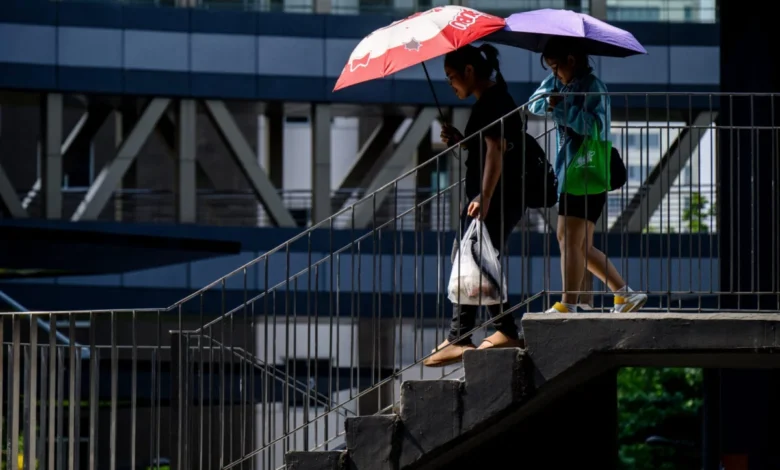
Bangkok’s heat index reached a scorching 51.9 degrees Celsius in late June, capping a relentless stretch of danger-zone readings that began in April. For the city’s millions of residents, it was yet another sweltering day, a stark reminder of the escalating climatic challenges. However, for policymakers and city leaders, including the newly re-elected Bangkok governor Chadchart Sittipunt, this alarming figure served as a profound wake-up call, underscoring the immediate and long-term dangers of extreme heat. The record-breaking temperatures are not isolated incidents but rather symptomatic of a broader, rapidly accelerating warming trend that threatens to fundamentally reshape the very fabric of urban life in the Thai capital.
The implications of these soaring temperatures are far-reaching and multifaceted, extending beyond mere discomfort to critically impact public health, economic productivity, and the city’s overall livability. Higher temperatures are already visibly reshaping how Bangkok functions: outdoor workers struggle to maintain productivity, businesses face escalating energy costs for cooling, and the city’s vital tourism sector experiences a significant downturn during its hottest months. This current reality is merely a prelude to a much hotter future, demanding immediate and strategic interventions to safeguard Bangkok’s future.
A City on the Brink: The Accelerating Warming Trend
Bangkok, alongside other rapidly urbanizing centers across Southeast Asia, finds itself on the front lines of climate change. The city’s average daily maximum temperature, which stood at 33.3 degrees Celsius in 2000, is projected to climb to an alarming 38.1 degrees Celsius by 2050. This represents the steepest rise forecast for any major Southeast Asian capital, signaling a profound shift in the regional climate landscape. Further exacerbating this outlook, the ASEAN Centre for Energy forecasts a near tripling of "extreme heat days"—those with temperatures exceeding 35 degrees Celsius—to approximately 120 days a year by mid-century. This means that for a third of the year, Bangkok’s residents could be enduring dangerously high temperatures, far beyond mere discomfort.
The concept of the "heat index" is crucial in understanding the severity of these figures. Unlike a simple air temperature reading, the heat index combines air temperature with relative humidity to determine the perceived temperature, or what the human body actually feels. When humidity is high, the body’s ability to cool itself through sweat evaporation is significantly reduced, making even moderate air temperatures feel much hotter and posing a greater risk of heat-related illnesses. A heat index of 51.9 degrees Celsius signifies an extremely hazardous environment, where the risk of heatstroke and other severe health complications is dangerously high for anyone exposed for prolonged periods, especially those engaged in physical activity.
This escalating heat is largely attributed to a combination of global climate change and localized urban heat island (UHI) effects. The UHI phenomenon occurs when urban areas, with their dense concentrations of concrete, asphalt, and buildings, absorb and retain more heat than surrounding rural areas. This stored heat is then slowly released, particularly at night, leading to significantly higher temperatures within the city. Bangkok’s rapid urbanization, characterized by extensive impervious surfaces and a diminishing green canopy, intensifies this effect, creating localized hot spots that amplify the regional warming trend.
Profound Economic and Social Repercussions
The economic and social costs associated with Bangkok’s warming climate are staggering, as highlighted by comprehensive analyses from institutions like the World Bank. A mere one-degree Celsius rise in Bangkok’s average temperature could trigger a cascade of devastating impacts:
- Public Health Crisis: More than 2,300 additional heat-related deaths each year, placing immense strain on public health infrastructure and emergency services. These deaths disproportionately affect vulnerable populations, including the elderly, young children, outdoor workers, and those with pre-existing health conditions.
- Productivity Losses: Over 44 billion Thai baht (approximately $1.3 billion USD) in lost wages annually due to reduced labor productivity. This primarily impacts sectors reliant on outdoor work, where employees are forced to reduce working hours or suffer decreased efficiency in extreme heat conditions.
- Soaring Energy Costs: Roughly 17 billion baht (approximately $509 million USD) in additional electricity costs, primarily driven by the increased demand for air conditioning in homes, offices, and commercial establishments. This burden falls on both households and businesses, potentially stifling economic growth and increasing the cost of living.
The sectors that form the bedrock of Thailand’s economy—tourism, manufacturing, agriculture, and construction—are particularly vulnerable to these escalating temperatures. Outdoor workers in construction and agriculture face not only reduced productive hours but also increased health risks, leading to potential labor shortages and project delays. Manufacturing facilities, while often air-conditioned, still face higher cooling costs and potential disruptions to supply chains if extreme heat affects transportation or worker attendance. The tourism industry, a major contributor to Thailand’s GDP, suffers as international visitors, seeking comfortable experiences, opt for cooler destinations or choose to avoid Bangkok during its hottest months. Street vendors, tuk-tuk drivers, and countless small businesses that thrive on outdoor activity find their livelihoods directly threatened. The cumulative effect is a significant erosion of the city’s competitiveness as an attractive place to live, work, and visit.
The gravity of this economic hit will undoubtedly be a central theme during the 2026 meetings of the International Monetary Fund and World Bank Group, which are scheduled to return to Thailand for the first time since 1991. These high-level discussions, likely held amidst robust air conditioning, will provide a global platform for Bangkok to showcase its challenges and potential solutions, drawing international attention and potentially catalyzing further support for climate adaptation efforts. The presence of global financial leaders will underscore the universal nature of climate change impacts and the critical need for investment in resilience.
Bangkok’s Current Response: A Foundation, But Not a Full Solution
To its credit, the Bangkok Metropolitan Administration (BMA) has not been passive in the face of this escalating crisis. Under its comprehensive Urban Heat Management Framework, the BMA has implemented a range of immediate response measures designed to mitigate the acute risks posed by heatwaves. These include:
- Cooling Centers: The establishment of more than 300 designated cooling centers across the city, offering temporary refuge from the heat for vulnerable populations.
- Hydration Stations: Deployment of hydration stations in public spaces to ensure access to water and prevent dehydration.
- Heat-Health Advisories: Regular issuance of public health advisories to inform residents about heat risks, preventive measures, and symptoms of heat-related illnesses.
- Heat-Risk Zones: Identification of 379 specific heat-risk zones to guide emergency responses and target interventions where they are most needed.
These emergency measures demonstrate a commendable commitment to public safety and provide crucial relief during intense heatwaves. However, experts and urban planners widely acknowledge that today’s emergency responses, while vital, are inherently reactive and may prove insufficient to keep pace with tomorrow’s accelerating climate challenges. Cooling centers, for instance, offer immediate respite but are not systemic, long-term solutions. They do little to address the root causes of urban heating or to reduce ambient temperatures in the subsequent week, month, or year. The challenge lies in transitioning from a reactive stance—responding to heat—to a proactive strategy of designing the city to withstand and mitigate heat, well before temperatures reach dangerous levels.
Shifting Towards Proactive, Data-Driven Design for Heat Resilience
True resilience in the face of increasingly frequent and intense heat events will depend less on the speed of a city’s emergency response and more on the quality and foresight of its long-term planning. This necessitates a fundamental shift in urban development philosophy, moving from merely coping with heat to strategically designing for it. Two critical priorities emerge for Bangkok in this strategic pivot:
1. Leveraging Data for Targeted Investment:
The first priority involves directing long-term investments more effectively to where they are most needed. The World Bank has noted that Bangkok’s expanded cooling initiatives, despite their good intentions, are not always optimally deployed to its hottest neighborhoods. This inefficiency stems from a lack of fully integrated, detailed microclimate data into urban planning processes. Without precise information on localized temperature variations, wind patterns, and the impact of urban structures, interventions risk being broad-brush rather than precisely targeted.
Here, Singapore’s Digital Urban Climate Twin offers an exemplary approach that Bangkok could adapt. This innovative tool allows urban planners to simulate and test various heat mitigation measures—such as strategic tree planting, the creation of ventilation corridors, or the use of cool pavements—in a virtual environment before committing substantial public resources to physical projects. This evidence-based approach quantifies the impact of interventions, revealing, for instance, that the cooling effect of a single park can extend up to a 300-meter radius. This insight is particularly critical in a dense city like Bangkok, where the urban heat island effect can hike localized temperatures by as much as seven degrees Celsius compared to surrounding rural areas.
However, researchers also caution that while green infrastructure is vital, simply planting an indiscriminate number of trees without strategic planning can yield diminishing, or even counterproductive, returns. Factors like tree species, canopy density, placement relative to buildings, and their potential to block wind circulation must be carefully considered. The goal is not merely to increase greenery but to optimize its cooling benefits. Bangkok does not need to replicate Singapore’s model wholesale, but it can—and should—adopt the underlying principle of using robust evidence and sophisticated modeling to direct investments to interventions that will yield the most significant and widespread cooling benefits. This requires investing in data collection, analytical capabilities, and the integration of climate scientists and urban planners into a collaborative framework.
2. Mobilizing Sustainable Financing for Adaptation:
Building a truly heat-resilient city demands substantial financial investment, far exceeding what municipal budgets alone can typically provide. Cities like Bangkok require a robust pipeline of "investable" resilience projects—projects that are well-defined, backed by reliable data, demonstrate clear benefits, and are supported by transparent policy signals. Such projects are essential to unlock both public and private capital, which will be crucial for scaling up adaptation efforts.
The current adaptation finance gap in Southeast Asia is alarmingly wide. A 2025 analysis by the Climate Policy Initiative revealed that the region needs an estimated $20 billion annually for adaptation investments but receives only about $2.5 billion—an astounding 88 percent shortfall. This represents one of the widest adaptation finance gaps of any subregion in Asia. This deficit highlights a critical barrier to implementing long-term resilience strategies. Addressing this gap requires innovative financing mechanisms, such as green bonds, public-private partnerships, and leveraging international climate finance instruments. It also necessitates policy frameworks that de-risk investments in climate adaptation, making them more attractive to private sector actors.
A Call to Action for Governor Chadchart’s Mandate
Governor Chadchart Sittipunt, recently re-elected with a strong mandate from the city’s populace, stands at a pivotal juncture. His second term presents an unprecedented opportunity to elevate heat adaptation to one of his signature priorities, moving beyond immediate crisis management to strategic, transformative urban planning. Bangkok has unequivocally demonstrated its capacity to respond swiftly and effectively when temperatures spike dangerously high. The more profound and enduring test, however, lies in whether the city can now invest deliberately and strategically in building a future-proof metropolis—a city intentionally designed and constructed for the intensified heat it already knows is coming.
This requires bold leadership, inter-agency collaboration, and a sustained commitment to integrating climate resilience into every aspect of urban development, from infrastructure planning and building codes to public health initiatives and community engagement. By embracing data-driven planning and actively seeking innovative financing solutions, Bangkok can transform its vulnerability into an opportunity, emerging as a global leader in urban heat resilience and securing a livable, prosperous future for its residents amidst a warming world. The decisions made today will define the quality of life for generations to come in this vibrant, yet increasingly challenged, Southeast Asian metropolis.
Related posts: