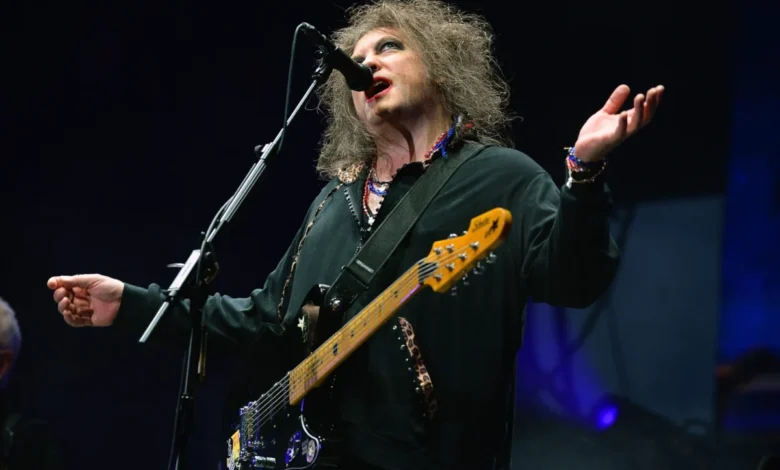
The upcoming FIFA World Cup final is set to make history by featuring its first-ever halftime show, a decision that has ignited a firestorm of controversy, drawing sharp criticism from Robert Smith, the enigmatic frontman of the iconic British rock band, The Cure. The announcement, which details a star-studded lineup curated by Coldplay’s Chris Martin, including global superstars Madonna, Justin Bieber, Shakira, and K-Pop sensation BTS, has been met with a visceral, albeit cryptic, backlash from Smith.
Smith took to The Cure’s official Instagram account to voice his extreme displeasure, posting a series of all-caps expletives accompanied by hashtags that clearly articulated his sentiment. The initial post read: "AAAAAAAAAAAAAAAAAAAGH! #Breadandcircuses #MUGWANK #pleasejustfuckoff." This outburst, while lacking explicit detail, conveyed a profound sense of dismay and outrage regarding the unprecedented entertainment spectacle planned for the pinnacle of global football.
FIFA President Gianni Infantino, in a statement accompanying the announcement, described the halftime special as a "groundbreaking spectacle" designed to celebrate "football, music and our shared values, ensuring a legacy that transcends the final whistle." He emphasized the event’s ambition to unite audiences through a harmonious blend of athletic prowess and artistic expression, aiming to create a memorable experience that resonates beyond the immediate conclusion of the match.
However, Smith’s ire was not directed at the individual performers themselves. In a subsequent post, he clarified his position, stating: "IT IS ABOUT THE #MUGWANK I D E A OF A FOOTBALL WORLD CUP FINAL HALF TIME SHOW… IF YOU NOW UNDERSTAND MY ‘AAAAAAAGH!’ A BIT BETTER, BUT STILL DON’T AGREE, PLEASE ADJUST YOUR RED CAP, YOUR ‘JANNY + DONNY + $$$’ TSHIRT AND… KNOCK YOURSELF OUT? ONWARDS." This elaboration suggests that Smith’s objection stems from the fundamental concept of commercializing and transforming the World Cup final’s intermission into a pop concert, rather than a brief respite for the athletes and a moment of reflection for the fans. The reference to "red cap" and "Janny + Donny + $$$" appears to be a thinly veiled jab at the perceived commercial interests and political machinations that Smith believes are driving such a decision.
FIFA representatives have not immediately responded to requests for comment regarding Smith’s outspoken criticism.
The Unfolding Controversy: Beyond the Music
The controversy surrounding the halftime show extends beyond Robert Smith’s artistic objections and delves into practical and regulatory concerns. A significant point of contention has been the proposed duration of the performance. Sources have indicated to BBC News that the halftime show could potentially last up to 25 minutes. This clashes directly with established tournament regulations, which stipulate that players’ breaks during halftime should not exceed 15 minutes. The logistical implications of extending the interval by a full ten minutes raise questions about potential delays to the match itself and the overall flow of the game, a concern likely to be amplified among purists and traditionalists of the sport.
Adding another layer to the diverse entertainment planned, Variety exclusively reported that the halftime show will also feature performances from members of the New York Philharmonic and the Simón Bolívar Symphony Orchestra of Venezuela. This segment is reportedly a tribute to Venezuela, intended to honor the region following devastating earthquakes. This inclusion, while aiming for a more profound artistic statement, further broadens the scope and ambition of the halftime show, potentially increasing the complexity of its staging and execution.
A Brief Chronology of the Halftime Show Announcement and Reaction
The announcement of the historic halftime show at the FIFA World Cup final marks a significant departure from tradition. While major sporting events in some regions, particularly in North America with the Super Bowl, have long incorporated elaborate halftime entertainment, its introduction to the World Cup final, the most globally watched single sporting event, represents a notable shift in FIFA’s approach to event presentation.
Timeline of Key Developments:
- Announcement of Historic Halftime Show: FIFA confirms that the upcoming World Cup final will feature its first-ever halftime show. Details emerge regarding a star-studded lineup, including Madonna, Justin Bieber, Shakira, and BTS, curated by Chris Martin.
- Robert Smith’s Initial Outburst: The Cure’s Robert Smith reacts vehemently on Instagram, posting a message expressing extreme displeasure using strong language and critical hashtags.
- FIFA’s Statement: President Gianni Infantino lauds the halftime show as a "groundbreaking spectacle" aimed at celebrating shared values.
- Smith’s Clarification: Smith elaborates on his stance, emphasizing his objection to the concept of a halftime show at the World Cup final, rather than the performers.
- Reports of Extended Duration: BBC News reports that the halftime show might extend to 25 minutes, raising concerns about adherence to tournament regulations limiting player breaks to 15 minutes.
- Exclusive Report on Orchestral Performance: Variety reveals plans for the New York Philharmonic and the Simón Bolívar Symphony Orchestra of Venezuela to perform a tribute during the halftime show.
Supporting Data and Context
The FIFA World Cup is an unparalleled global phenomenon, attracting billions of viewers worldwide. The 2022 FIFA World Cup in Qatar, for instance, reportedly reached an estimated 5 billion people, with the final match between Argentina and France drawing a record-breaking audience of 1.5 billion viewers. This immense viewership underscores the significance of any event associated with the final, amplifying the impact of decisions like the introduction of a halftime show.
The commercial landscape surrounding the World Cup is also vast. Sponsorship deals, broadcasting rights, and merchandise generate billions of dollars for FIFA and participating nations. The introduction of a high-profile halftime show, featuring globally recognized artists, is likely to be seen by FIFA as an opportunity to further enhance the event’s entertainment value, attract a broader demographic of viewers, and potentially generate additional revenue through associated sponsorships and media partnerships. This commercial imperative is a crucial backdrop against which to understand FIFA’s decision.
Broader Impact and Implications
Robert Smith’s critique, while delivered with characteristic bluntness, touches upon a deeper debate about the commercialization of sport and the erosion of traditional values in the face of global entertainment trends. For many long-time football fans, the World Cup final is a sacred event, a culmination of athletic dedication and national pride. The introduction of a large-scale musical performance, particularly one featuring contemporary pop artists, could be perceived by some as a dilution of the sport’s core identity, turning a moment of intense sporting drama into another platform for mainstream entertainment.
The "bread and circuses" hashtag used by Smith is a historical reference to the Roman Empire’s practice of appeasing the populace with food and entertainment to distract them from political issues. This analogy suggests Smith’s belief that the halftime show is a superficial distraction, diverting attention from potentially more substantive issues or concerns related to the sport or the organization itself.
Furthermore, the potential conflict between the planned duration of the halftime show and FIFA’s own regulations highlights the challenges of integrating such elaborate performances into the strict scheduling of elite sporting events. This could lead to a precedent that either compromises the integrity of match timing or necessitates a re-evaluation of the rules themselves, potentially impacting future tournaments.
The inclusion of the New York Philharmonic and the Simón Bolívar Symphony Orchestra, while offering a potentially poignant artistic element, also adds to the spectacle’s complexity and duration. The juxtaposition of classical music with contemporary pop acts within the same halftime interval reflects a broad attempt to appeal to diverse tastes, but it also raises questions about thematic coherence and the overall artistic direction of the event.
The Performers and Their Context
The curated lineup itself represents a significant strategic choice by FIFA. The inclusion of artists like Madonna, Justin Bieber, Shakira, and BTS signifies an ambition to capture the attention of a global, multi-generational audience, leveraging the immense popularity of these artists across different demographics and cultural backgrounds.
Madonna, a perennial icon of pop music, has a history of high-profile performances, including at Super Bowls and Olympics opening ceremonies. Justin Bieber is one of the world’s most commercially successful pop stars, with a massive following among younger audiences. Shakira, a global Latin music superstar, has performed at multiple World Cups, becoming synonymous with the tournament’s musical identity. BTS, the South Korean boy band, has achieved unprecedented global fame, commanding a dedicated fanbase and demonstrating significant cultural and economic influence.
Chris Martin, as the curator, brings his own experience as the frontman of Coldplay, a band known for its stadium-filling anthems and visually spectacular live shows. His involvement suggests an effort to imbue the halftime show with a sense of artistic direction and cohesion, aiming for a high-quality production that complements the grandeur of the World Cup final.
The Cure’s Current Endeavors
Meanwhile, The Cure, the band fronted by the dissenting Robert Smith, is currently on tour across Europe, with recent performances in locations like Plovdiv, Bulgaria. This touring schedule places them in the midst of a global music circuit, highlighting their continued relevance and engagement with live performance. Smith’s recent musical contributions also include a duet titled "What’s Wrong With Me" on Olivia Rodrigo’s latest album, indicating his ongoing creative output and willingness to collaborate across different musical spheres, albeit on his own terms.
The controversy surrounding the FIFA World Cup final’s halftime show, initiated by Robert Smith’s vocal opposition, serves as a potent reminder of the diverse perspectives and deeply held values that surround the world’s most popular sport. As the event approaches, the debate over the balance between tradition, sport, and commercial entertainment is likely to continue, with Smith’s impassioned "AAAAAAAGH!" echoing as a symbol of resistance against what some perceive as the over-commercialization of a global sporting spectacle.
Related posts: